

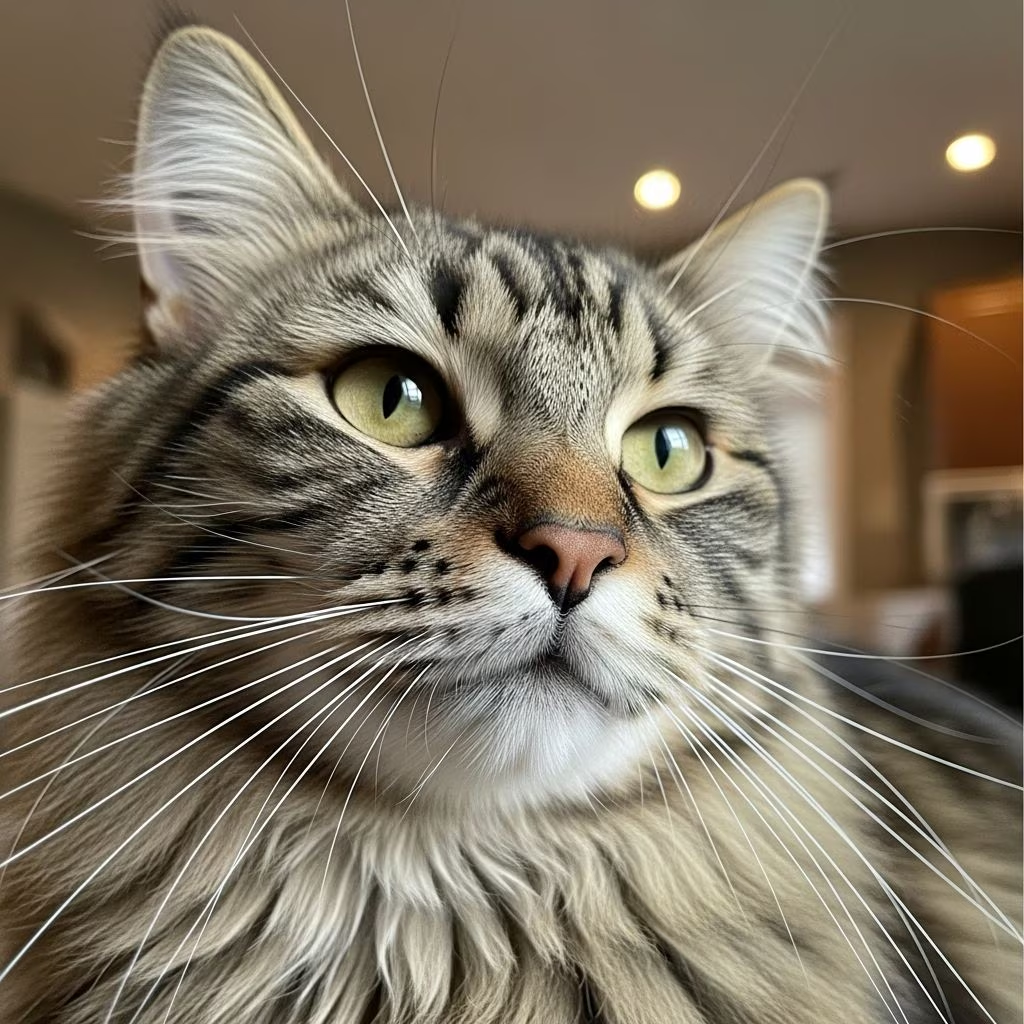
Cat whiskers, known scientifically as vibrissae, are far more than charming facial adornments. These specialized hairs equip cats with extraordinary sensory capabilities, aiding in navigation, hunting, and social interactions. Understanding their structure and purpose reveals why these features are indispensable to feline life.
The Anatomy of Vibrissae: Built for Sensitivity
Unlike ordinary fur, whiskers emerge from follicles three times deeper in the skin, packed with nerves and blood vessels. This setup makes them as sensitive as human fingertips, transforming a cat’s face into a primary touch receptor.
Typically, cats sport about 12 whiskers per side of the muzzle, arranged in four neat rows on the whisker pad—a fleshy area between the mouth and nose. Additional shorter vibrissae appear above the eyes, on the chin, near the ears, and even on the forelegs.
- Thickness: Two to three times thicker than regular hair, providing durability and flexibility.
- Root Depth: Embedded deeply for heightened mechanoreception, detecting subtle air currents and vibrations.
- Replacement Cycle: They shed and regrow naturally, but never trim them—doing so impairs sensory function.
Primary Functions: Navigation Masters of the Dark
Whiskers act as environmental scanners, especially in low light where feline night vision shines but close-range detail blurs. They detect airflow changes, helping cats gauge tight spaces and avoid collisions.
During navigation, whiskers forward when exploring narrow gaps, bending to signal if passage is safe. This ‘whisker walking’ prevents cats from getting stuck, a survival edge for wild ancestors in burrows or brush.
| Environment | Whisker Role |
|---|---|
| Darkness | Detects obstacles via air displacement |
| Tight Spaces | Measures width by bending against surfaces |
| Hunting | Tracks prey movements through subtle vibes |
Hunting and Survival: Precision Tools in Action
In predation, whiskers pinpoint prey location post-pounce. As a cat lunges, vibrissae on cheeks and legs sense final twitches, ensuring a clean kill even sightless.
Wild cats rely on this for survival; domestic ones retain the instinct, swatting toys with whisker-guided accuracy. Above-eye whiskers protect from branches or swipes during stalks.
Social Cues and Communication Through Whiskers
Whiskers convey emotions: fanned out signals curiosity, flattened back indicates fear or aggression. This visual language helps cats read each other and humans.
Positioning also aids in scent detection, as whiskers frame the muzzle, channeling odors efficiently alongside a cat’s superior olfactory system.
Why Cats Obsess Over Human Beards and Facial Hair
Cats often nuzzle, lick, or nibble men’s beards, mimicking grooming rituals. The coarse texture resembles their own fur, triggering allogrooming—a bonding behavior in colonies.
Beards trap food particles, intriguing cats’ acute noses. Licking transfers scents, while rubbing deposits feline pheromones, marking owners as family.
- Affection Display: Grooming you bonds the pair, releasing endorphins.
- Flavor Appeal: Residual crumbs from meals entice taste tests.
- Territorial Marking: Nose-bops refresh scent profiles for security.
- Comfort Seeking: Stressful times prompt beard-nuzzling for solace.
Though endearing, watch for over-enthusiasm; some cats view dense beards as threats, obscuring expressions and sparking caution.
Care Essentials: Protecting Your Cat’s Sensory Arsenal
Avoid cutting whiskers—regrowth takes weeks, leaving cats disoriented and accident-prone. Provide wide bowls to prevent whisker fatigue, where constant brushing causes discomfort while eating.
Monitor for excessive shedding, which might signal allergies, nutrition gaps, or illness. A balanced diet supports healthy vibrissae growth.
Whisker Variations Across Breeds and Ages
Breeds like Maine Coons boast extra-long whiskers matching their grandeur, while Sphynx cats grow fine ones suited to hairless frames. Kittens develop vibrissae early, using them for initial explorations.
Aging cats may thin out, but function persists unless health issues intervene.
Common Myths and Misconceptions Debunked
Myth: Whiskers grow indefinitely. False—they maintain optimal length via shedding.
Myth: All facial hairs are whiskers. No, only vibrissae in specific follicles qualify.
Myth: Shaving is harmless. It disrupts senses severely, like blinding a human temporarily.
Health Indicators: What Whiskers Reveal
Curling, asymmetry, or breakage can flag dental pain, skin conditions, or malnutrition. Consult vets if patterns change abruptly.
Enhancing Feline Environments with Whisker Knowledge
Design spaces with whisker smarts: spacious tunnels, elevated perches, and textured toys stimulate senses. Vertical territories mimic wild navigation, promoting welfare.
Frequently Asked Questions (FAQs)
Do cats feel pain if whiskers are pulled?
Yes, deeply rooted follicles make pulling painful, akin to yanking a nail. Avoid rough play near the face.
Can cats function without whiskers?
Temporarily impaired, yes—but navigation suffers until regrowth. They’re evolutionary must-haves.
Why do some cats have curly whiskers?
Genetics or nutrition; usually benign, but persistent curls warrant a vet check.
Will shaving my beard confuse my cat?
Initially startling, but voice and scent prevail. They adapt quickly.
How often do whiskers shed?
Naturally every few months, syncing with fur cycles. No intervention needed.
References
References
- Why Do Cats Have Whiskers? — VCA Animal Hospitals. Accessed 2026. https://vcahospitals.com/know-your-pet/why-do-cats-have-whiskers
- Why do cats have whiskers? — HowStuffWorks. Accessed 2026. https://animals.howstuffworks.com/pets/question592.htm
- Why Do Cats Have Whiskers? — Live Science. Accessed 2026. https://www.livescience.com/44196-why-do-cats-have-whiskers.html
- Why Do Cats Like Beards as Much as They Do? — Cats.com. Accessed 2026. https://cats.com/why-do-cats-like-beards-as-much-as-they-do
- What You Should Know About Cat Whiskers — Pawwei. Accessed 2026. https://www.pawaii.com/blogs/blog/what-you-should-know-about-cat-whiskers



