

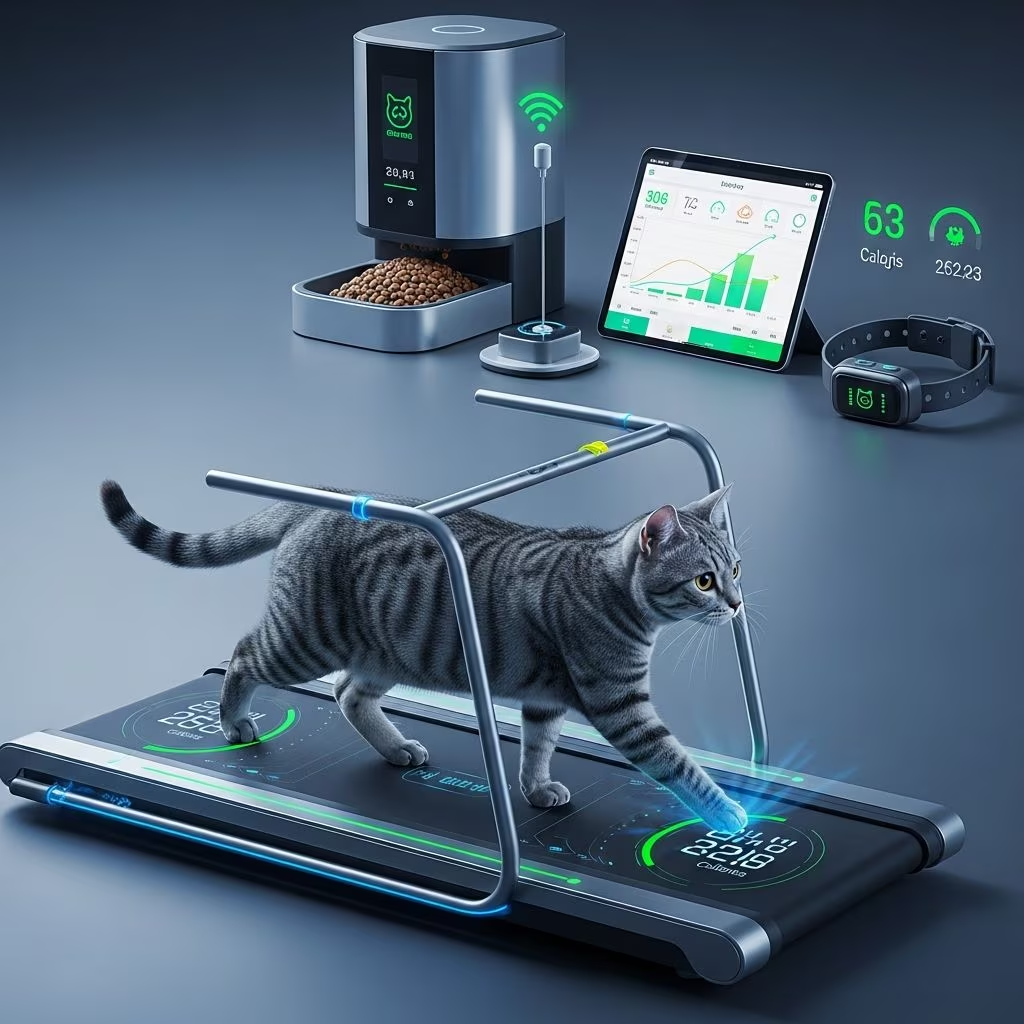
A groundbreaking study reveals that smart feeders and digital scales significantly boost success in cat weight-loss programs, with 100% of tech-assisted cats shedding pounds compared to 55% using traditional methods.
Obesity affects nearly 60% of cats, elevating risks for serious conditions like diabetes, arthritis, pancreatitis, and liver disease. In multi-cat households, food competition complicates portion control, making weight management challenging. Innovative pet tech offers precise solutions, transforming how cat parents tackle feline obesity.
The Story of Spudge: A Tech-Supported Success
When Spudge, a middle-aged black cat, was surrendered to the Dane County Humane Society in 2021, he weighed 37 pounds—280% of his ideal weight. Mobility-impaired and at high health risk, Spudge’s turnaround came through a vet-led program combining prescription diets with high-tech tools.
Dr. Ken Lambrecht, founder of West Towne Veterinary Clinic and co-founder of Healthy Pet Connect, oversaw Spudge’s care. Over 11 months, the cat lost 18 pounds using a calorie-restricted prescription diet dispensed via smart feeders and measured with digital scales. With seven pounds left to his goal, Spudge exemplifies tech’s potential in real-world obesity battles.
The Groundbreaking Study on Tech-Enabled Weight Loss
Published in the Journal of Feline Medicine and Surgery, a randomized controlled trial by Dr. Lambrecht and Dr. Barr Hadar tested tech’s efficacy in multi-cat homes. Participants were divided into two groups over 12 weeks:
- Traditional Group: Calorie-restricted prescription diet measured with cups and fed from conventional bowls.
- Tech Group: Same diet, but portions weighed on digital scales, dispensed via microchip-enabled smart feeders, monitored by treat cameras, and tracked with activity collars. Data logged in the Healthy Pet Connect app for vet adjustments.
Results were stark: 55% of traditional group cats lost weight, while 100% of tech group cats succeeded, losing four times more weight on average. All tech users reported improved cat quality of life via app metrics.
| Group | Weight Loss Success Rate | Average Weight Loss Multiplier |
|---|---|---|
| Traditional (Cups & Bowls) | 55% | 1x |
| Tech (Scales, Feeders, Trackers) | 100% | 4x |
This table summarizes the study’s key outcomes, highlighting tech’s superior precision and reliability.
Why Tech Outperforms Traditional Methods
Dr. Hadar identifies two primary advantages: precise portion control via digital scales (accurate to grams, unlike imprecise cups) and anti-theft feeding with microchip feeders that only release food to the authorized cat.
In multi-cat homes, dominant cats often steal from others, disrupting diets. Smart feeders prevent this, though clever cats still attempt workarounds. Tech also enforces slower eating: cats shifted from bolting large meals to grazing 6-8 smaller ones daily—a healthier pattern mimicking natural foraging, though not directly tied to weight loss in the study.
“We want the cat to eat six to eight times a day; we do not want them bolting their food.” — Dr. Ken Lambrecht
Key Tech Tools for Cat Weight Management
Digital Scales: Precision Portioning
Digital pet or baby scales ensure exact calorie measurements. Owners weigh food before loading feeders, eliminating guesswork. Study participants trained cats to step on scales voluntarily using non-slip mats and treats.
- Accuracy: Measures to 0.1 oz or better.
- Benefit: Reduces overfeeding by 10-20% in practice.
- Tip: Weekly weigh-ins track progress.
Microchip-Enabled Smart Feeders
These devices scan a cat’s microchip, dispensing programmed portions on schedule. Models like SureFeed or PetSafe integrate with apps for remote monitoring.
- Prevents food stealing in multi-cat homes.
- Promotes slow feeding with timed dispensing.
- App integration logs intake for vet review.
Users in the study and personal accounts praise them for stress-free multi-cat management.
Treat Cameras and Activity Trackers
Cameras monitor feeding behavior, deterring theft and capturing eating patterns. Collars track steps and activity, identifying low-movement cats needing stimulation.
- Cameras: Real-time video via app.
- Trackers: Daily step counts and calorie burn estimates.
Companion Apps: Data-Driven Vets
Apps like Healthy Pet Connect centralize weight, food, and activity data, sharing seamlessly with vets for real-time adjustments.
Challenges and Cost Considerations
The study’s tech setup exceeded $750, a barrier for many. Participants balked at retail prices, preferring ~$149 setups. Dr. Hadar notes falling prices with tech advancements.
Despite costs, benefits—healthier cats, reduced vet bills—often justify investment. Alternatives like manual scales (~$20) offer entry-level precision.
Holistic Weight Loss: Beyond Tech
Tech amplifies, but doesn’t replace, vet guidance. Key steps include:
- Vet Assessment: Rule out underlying issues; get prescription diets preserving muscle while burning fat.
- Slow Loss: Aim for 0.5-2% body weight weekly (e.g., <7 oz for 20-lb cat) to avoid hepatic lipidosis.
- Increase Activity: Laser pointers, puzzle feeders, catios, climbing towers. Indoor cats need scheduled play.
- Feeding Schedule: Eliminate free-feeding; portion treats (<10% calories).
“Obesity is a 100 percent preventable disease.” — Dr. Lambrecht. Vets need better tools to empower owners.
Ideal Cat Weight and Obesity Risks
A healthy cat weighs 8-11 lbs, varying by breed. Use body condition score (BCS): Feel ribs (1-5/9 ideal); visible waist. Obesity doubles diabetes risk and shortens lifespan.
Frequently Asked Questions (FAQs)
Can tech work for single-cat homes?
Yes, precision tools benefit all overweight cats, though multi-cat homes see biggest gains from anti-theft features.
How fast should my cat lose weight?
0.5-2% body weight weekly; consult vet to avoid complications.
Are smart feeders worth the cost?
For multi-cat homes or precise control, yes—users report happier cats and easier management despite upfront expense.
What if my cat won’t use the scale or feeder?
Use treats, mats, and patience; most adapt within weeks.
Can tech replace vet visits?
No—apps share data, but professional monitoring is essential.
Future of Pet Tech in Feline Health
Emerging tools promise affordability and AI-driven insights, like predictive obesity alerts. Studies affirm tech’s role, urging vets to integrate it routinely. With obesity epidemic raging, these innovations offer hope for leaner, longer cat lives.
References
- How Tech Helps Cats Lose Weight — Kinship (Jodi Helmer). 2022-06-21. https://www.kinship.com/cat-health/cat-weight-loss-tech-tools
- A technology-enhanced weight-loss program in multiple-cat households: a randomized controlled trial — Hadar, B. N., et al. Journal of Feline Medicine and Surgery. 2021. https://journals.sagepub.com/doi/10.1177/1098612X211044412
- Is Your Cat Overweight? — Kinship. Accessed 2026. https://www.kinship.com/cat-nutrition/how-heavy-should-my-cat-be



