

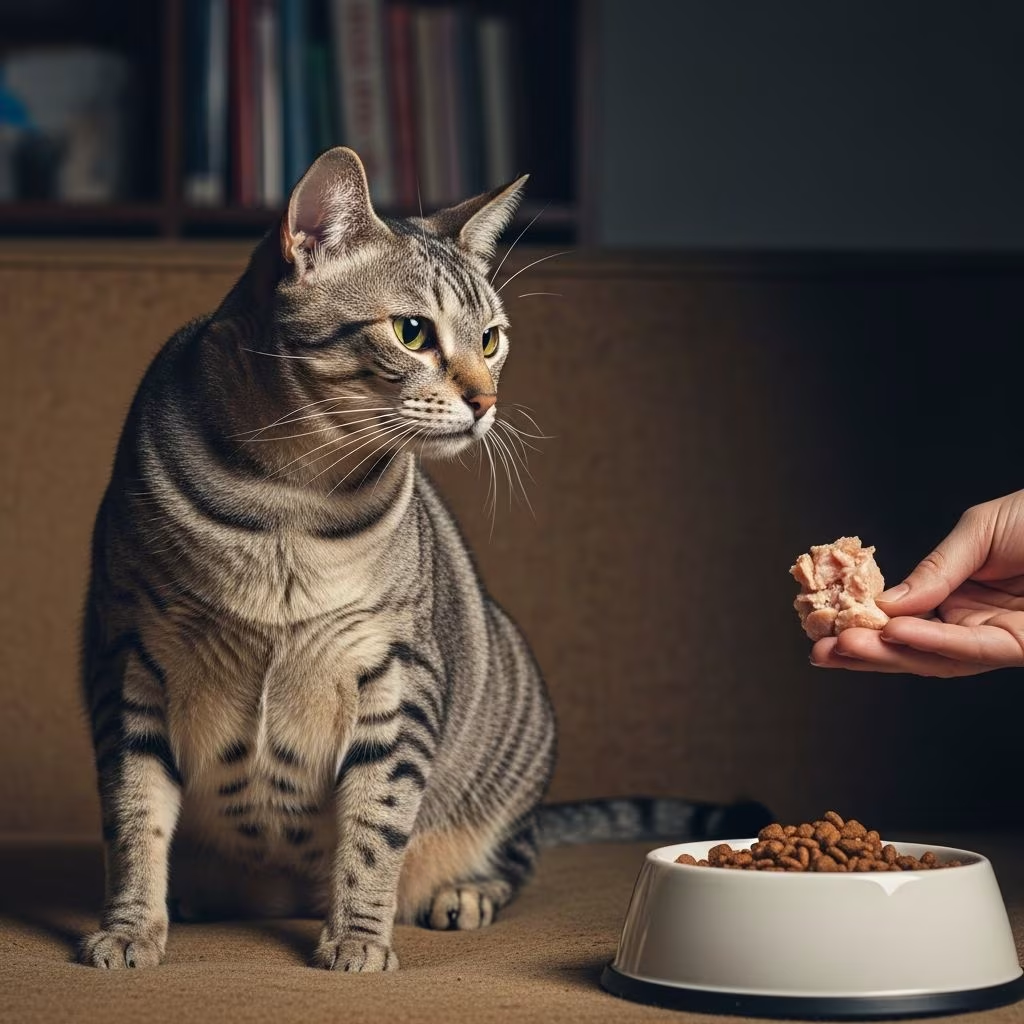
Overweight cats often face significant barriers to shedding excess pounds, rooted in their unique biology, lifestyle, and dietary habits. While simple calorie cuts rarely work alone, tailored approaches combining nutrition, monitoring, and enrichment can lead to sustainable results without health risks.
The Biology Behind Feline Fat Persistence
Cats’ bodies adapt to weight gain in ways that make loss challenging. Obesity triggers glucose intolerance and reduced insulin secretion, increasing diabetes risk nearly fourfold compared to lean cats. This metabolic shift in white adipose tissue (WAT) slows fat breakdown and promotes storage, creating a cycle where the body resists slimming.
Indoor lifestyles exacerbate this: sedentary routines lower energy needs, while stress from confinement alters hormones, favoring fat accumulation. Unlike dogs, cats evolved as obligate carnivores with high protein demands; carb-heavy dry foods mismatch their needs, leading to overeating without satisfaction.
Common Pitfalls in Standard Weight Loss Attempts
Simply switching to ‘light’ kibble often fails because cats compensate by eating more, negating calorie reductions. Rapid restrictions risk hepatic lipidosis, a fatal fatty liver condition from sudden fat mobilization overwhelming the liver.
Owners overlook portion control in multi-cat homes or fail to account for treats adding hidden calories. Without weekly weigh-ins, progress stalls unnoticed, and behavioral boredom drives stress-eating.
Effective Nutritional Strategies for Fat Reduction
Success hinges on diets preserving muscle while curbing calories. Key options include:
- High-Protein Formulas: These minimize lean mass loss, boost metabolism via protein turnover, and enhance fullness, aiding adherence.
- Increased Moisture Content: Wet foods lower energy density; cats may not fully compensate intake for weeks, promoting gradual loss.
- Fiber Enrichment: Bulky, low-calorie dry options trigger self-regulation in some cats by stretching the stomach.
- Reduced Fat Levels: Limits dense calories, though high-protein, moderate-fat variants suit some preferences.
Therapeutic diets formulated for obesity outperform generics, balancing nutrients like selenium, choline, and amino acids to prevent deficiencies during restriction.
Partial vs. Complete Calorie Restriction: A Comparison
Research contrasts full diet swaps with gradual ‘partial’ cuts, allowing some non-therapeutic food. Both achieve ~23-25% body weight loss, but partial methods speed results (178 vs. 294 median days) and spare lean tissue.
| Approach | Weight Loss (%) | Time (Days) | Lean Mass Change | Best For |
|---|---|---|---|---|
| Complete Restriction | 23% (10-39%) | 294 (113-967) | Decreases significantly | Milder cases |
| Partial Restriction | 25% (10-41%) | 178 (54-512) | Stable | Obese/older cats |
Partial protocols suit severely obese or senior cats, minimizing muscle loss despite higher starting fat.
Behavioral and Environmental Adjustments
Obesity often stems from unmet needs: bored cats sleep excessively and overeat for stimulation. Enrich environments with climbing towers, puzzle feeders, and play sessions mimicking hunts to burn calories and reduce stress.
- Feed multiple small meals daily to mimic grazing and prevent begging.
- Separate eating in multi-pet homes for precise monitoring.
- Target 1-1.5% weekly loss toward 90% ideal weight for safety.
Weight loss boosts mobility, grooming, and mood, reinforcing healthy habits.
Monitoring Progress and Avoiding Risks
Weigh biweekly; plateaus signal metabolic adaptation—adjust calories down 10-20% or switch proteins. Track body condition scores: ideal cats have visible waist and palpable ribs without protrusion.
Beware nutrient shortfalls in restrictive plans: studies note low choline/arginine in many, though clinical health persists. Vet oversight ensures bloodwork catches issues early.
When Weight Loss Fails: Ruling Out Medical Causes
Though focused on overweight cats, stalled loss warrants checks for confounders like early hyperthyroidism or diabetes, mimicking obesity resistance. Unintended loss signals emergencies: hyperthyroidism, CKD, IBD, parasites, or stress.
- Hyperthyroidism: Accelerates metabolism, causing appetite despite thinness.
- Diabetes: Poor nutrient use leads to wasting.
- CKD: Toxin buildup suppresses appetite.
Diagnostics include labs, imaging, and fecals; treat root causes before dieting.
Step-by-Step Home Weight Management Plan
- Consult Vet: Baseline exam, ideal weight calculation, rule out illness.
- Calculate Needs: Use resting energy requirement (RER = 70 x (body wt kg)^0.67), then 70-80% for loss.
- Choose Diet: Vet-recommended therapeutic, prioritizing protein >40% calories.
- Implement Changes: Gradual transition over 7-10 days; measure kibble by weight.
- Enrich Daily: 15-20 min interactive play; rotate toys.
- Track Weekly: Weigh, log intake, adjust as needed.
- Reassess Monthly: Vet check for body comp via DEXA if available.
Real-World Success Factors
Programs emphasizing owner education, frequent feeds, and monitoring yield 90% compliance. Older, fatter cats thrive on partial plans, losing faster without lean erosion.
Post-loss maintenance prevents rebound: continue moderate calories, activity, and weigh-ins.
Frequently Asked Questions
How fast should my cat lose weight?
Aim for 0.5-1.5% body weight weekly to avoid hepatic lipidosis.
Can wet food alone fix obesity?
It aids via low density but pair with protein focus and monitoring for best results.
What if my cat won’t eat the diet?
Mix gradually, add toppers like tuna juice, or try partial restriction.
Is exercise essential?
Yes—play increases expenditure 20-30% daily without stress.
How do I know the ideal weight?
Vet uses breed, frame, and BCS; target palpable waist.
References
- From Problem to Success: Feline weight loss programs that work — NIH/PMC. 2024. https://pmc.ncbi.nlm.nih.gov/articles/PMC11132260/
- Partial weight reduction protocols in cats lead to better… — Frontiers in Veterinary Science. 2023. https://www.frontiersin.org/journals/veterinary-science/articles/10.3389/fvets.2023.1211543/full
- Unexplained Weight Loss in Cats: Is It an Emergency? — GSVS. 2023. https://gsvs.org/blog/unexplained-cat-weight-loss-emergency/
- 9 Reasons Your Cat May Be Losing Weight — Brandner Veterinary. N/A. https://brandnervet.com/articles/general/614234-9-reasons-your-cat-may-be-losing-weight
- Testing for Weight Loss in Cats — VCA Animal Hospitals. N/A. https://vcahospitals.com/know-your-pet/testing-for-weight-loss-in-cats
- Cat Weight Loss Information — Pet Obesity Prevention. N/A. https://www.petobesityprevention.org/weight-loss-cats
- Feline weight-loss study — Virginia Tech Vet Med. N/A. https://vetmed.vt.edu/news/featured-stories/fat-cat-weight-loss-study.html



