

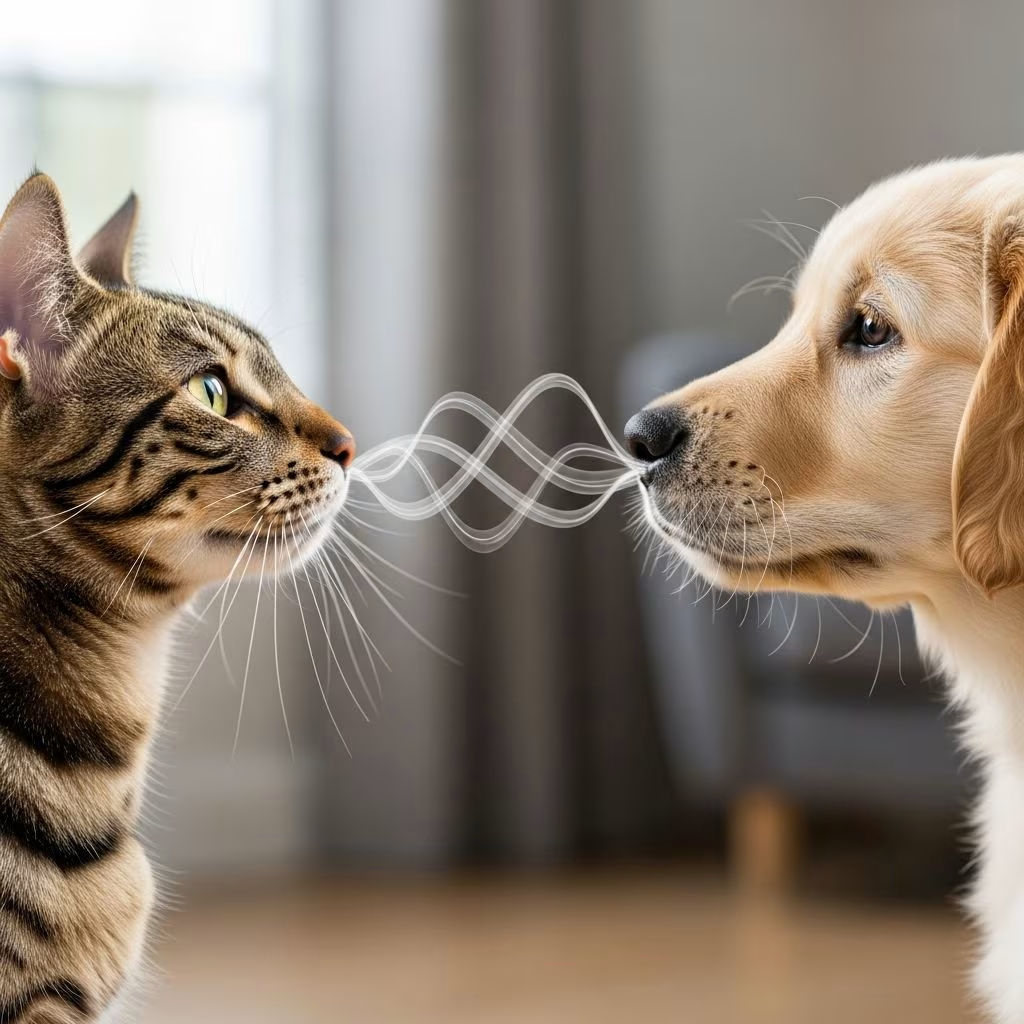
The age-old debate between cat lovers and dog enthusiasts often extends to their pets’ abilities, particularly their sense of smell. While dogs are celebrated for tracking scents over vast distances, cats possess a refined olfactory system that allows for precise scent differentiation. This article delves into the science behind these capabilities, comparing receptor counts, specialized organs, and practical applications to determine which pet truly dominates in the world of scents.
The Building Blocks of Olfaction in Pets
At the core of any animal’s sense of smell lies the olfactory epithelium in the nasal cavity, packed with receptors that detect odor molecules. Humans manage with a modest 5-6 million of these receptors, but our feline and canine companions operate on an entirely different level. Cats typically have between 45-200 million olfactory receptors, varying by source and breed, while dogs range from 100-300 million, with elite trackers like bloodhounds reaching the upper end.
This numerical advantage gives dogs an edge in raw detection power, enabling them to pick up faint traces from afar. However, quantity isn’t everything. Cats compensate with superior sensitivity in specific receptor types, particularly V1R receptors, which specialize in distinguishing subtle differences between similar odors. Cats possess around 30 V1R receptors, compared to dogs’ 9 and humans’ mere 2, making felines unmatched in parsing complex scent profiles.
| Species | Olfactory Receptors (millions) | V1R Receptors | Key Strength |
|---|---|---|---|
| Humans | 5-6 | 2 | Basic detection |
| Cats | 45-200 | 30 | Scent discrimination |
| Dogs (average) | 100-300 | 9 | Distance tracking |
| Bloodhounds | ~300 | 9 | Extreme range |
This table highlights the trade-offs: dogs prioritize volume and reach, while cats focus on acuity and nuance.
Jacobson’s Organ: Cats’ Secret Weapon
What truly sets cats apart is the vomeronasal organ, or Jacobson’s organ, located in the roof of their mouth. Connected to the nasal passages via specialized cavities, this structure allows cats to analyze pheromones and chemical signals that evade standard nasal detection. When a cat encounters an intriguing scent, it may exhibit the ‘Flehmen response’—curling its upper lip, opening its mouth slightly, and drawing air over the organ for deeper processing.
- Pheromone Detection: Essential for mating, territory marking, and social communication.
- Enhanced Precision: Combines with nasal input to sort scents in milliseconds.
- Behavioral Triggers: Explains why cats rub against objects or people to deposit their own scents.
Dogs lack this organ to the same degree, relying more on their expansive nasal receptors for environmental scanning. This feline feature elevates their smell from mere detection to sophisticated analysis.
How Pets Harness Their Sniffers in Daily Life
Cats leverage their olfactory prowess for survival instincts honed over millennia as solitary hunters. They use smell to locate prey hidden in underbrush, assess food freshness (crucial for obligate carnivores), and navigate territories by recognizing familiar scents. Indoor cats might mark furniture or urinate inappropriately if cleaning products erase their territorial cues, prompting re-marking behaviors.
Dogs, bred for pack hunting and herding, excel at following trails left by moving targets. Their larger nasal cavities and more receptors allow detection up to several miles under ideal conditions, far surpassing cats’ estimated 4-mile maximum range. Breeds like beagles and retrievers shine here, while brachycephalic dogs (e.g., pugs, bulldogs) have reduced capabilities due to shorter snouts.
Breed Variations and Real-World Performance
Not all dogs are olfactory superstars. Sighthounds like Greyhounds prioritize vision over smell, with fewer receptors, while scent hounds dominate. Cats show less breed-specific variance, but purebreds with flatter faces might have slightly diminished senses compared to domestic shorthairs.
In practical applications, dogs star in search-and-rescue, drug detection, and medical diagnostics (e.g., sensing seizures or cancer). Cats’ precision could suit niche roles like pest control or pheromone-based therapy, though training lags due to their independent nature.
Comparing Detection Limits and Sensitivity
Raw sensitivity tests reveal dogs detecting odors at parts per trillion, but cats match or exceed in discrimination tasks. For instance, a cat can differentiate between two nearly identical fish scents faster than most dogs, thanks to V1R abundance. Distance-wise, dogs prevail: a bloodhound tracks a days-old trail over miles, while cats focus on immediate environs.
Environmental factors like wind, humidity, and scent volatility influence both. Cats’ organ gives them an indoor edge, reading household pheromones imperceptible to dogs.
Health Impacts on Pet Olfaction
A diminished sense of smell signals health issues in pets. In cats, upper respiratory infections, dental disease, or nasal polyps can impair function, leading to appetite loss since smell drives eating. Dogs face similar risks from allergies or tumors. Regular vet check-ups, including nasal exams, preserve this vital sense.
Owners can support olfaction with scent enrichment: puzzle feeders for cats, tracking games for dogs, and pheromone diffusers mimicking natural signals.
Evolutionary Perspectives on Feline vs Canine Noses
Evolution shaped these senses distinctly. Cats, as ambush predators, needed acute, close-range smell for stealthy kills. Dogs, endurance hunters in packs, evolved for long-distance pursuit. Fossil records and genetic studies confirm cats’ V1R expansion around 10-15 million years ago, coinciding with small prey specialization.
FAQs: Common Questions on Pet Smells
Can cats smell better than dogs overall?
No clear winner—dogs for range, cats for discrimination.
Why do cats sniff faces?
To gather pheromonal info for bonding and identification.
Do all cat breeds smell equally well?
Generally yes, but brachycephalic breeds lag slightly.
How to test your pet’s sense of smell?
Hide treats and observe retrieval speed; consult vets for concerns.
Can aging affect smell in pets?
Yes, cognitive decline reduces olfaction; enriched environments help.
Enhancing Your Pet’s Olfactory Experience
To stimulate these senses, introduce novel safe scents: herbs for cats, trails of treats for dogs. Avoid strong chemicals that overwhelm. Understanding these differences fosters better care, appreciating each pet’s unique sensory world.
References
- Cats vs Dogs, which has the Better Sense of Smell? — Oo La Lab. 2023. https://oola-lab.com/blogs/notes/cats-vs-dogs-which-has-the-better-sense-of-smell
- Cats Vs. Dogs: Who Has the Best Sense of Smell? — Dr. Bill’s Pet Nutrition. 2023. https://drbillspetnutrition.ca/cats-vs-dogs-who-has-the-best-sense-of-smell/
- Dogs Vs. Cats: A Comparison of the 5 Senses — Midoricide. 2023. https://www.midoricide.com/blogs/midoricide-blog/dogs-vs-cats-a-comparison-of-the-5-senses
- Do Dogs Really Have More Sensitive Noses Than Cats? — Beverly Hills Veterinary. 2023. https://www.beverlyhillsvets.com/blog/do-dogs-really-have-more-sensitive-noses-than-cats/
- Nose Smarts: What Pets Can Tell With Their Sense of Smell — VCA Animal Hospitals. 2023. https://vcahospitals.com/resources/conditions-cat/eyes-ears-nose/nose-smarts-what-pets-can-tell-with-their-sense-of-smell



