

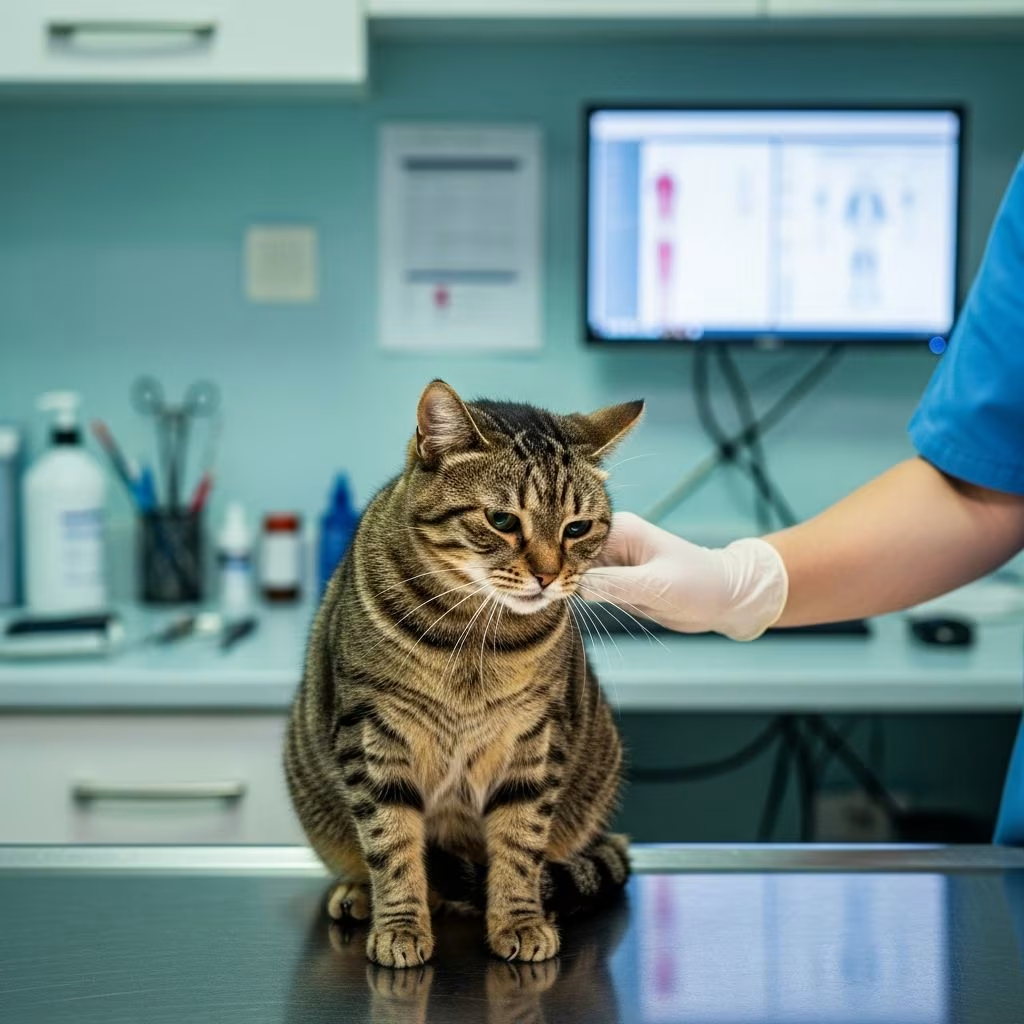
Recurrent urinary tract infections (UTIs) in cats can be frustrating for pet owners, often signaling deeper issues beyond simple bacterial overgrowth. While initial infections may resolve with antibiotics, persistent or relapsing cases require thorough investigation to identify underlying causes and prevent chronic problems.
What Is a UTI in Cats?
A urinary tract infection in cats involves bacterial invasion of the bladder (cystitis), urethra, or kidneys, leading to inflammation and discomfort. Unlike dogs, UTIs are less common in cats, affecting primarily older, female, or cats with comorbidities like diabetes or hyperthyroidism. Symptoms include frequent urination, straining, blood in urine, and vocalizing during litter box visits.
Why Won’t My Cat’s UTI Go Away?
Persistent UTIs often stem from reinfection, relapse, or complicating factors. True bacterial UTIs must be confirmed via urine culture, as many cases mimic feline lower urinary tract disease (FLUTD) without infection. Key reasons include:
- Underlying diseases: Diabetes mellitus, hyperthyroidism, or chronic kidney disease impair immune response and urine concentration, fostering bacterial growth.
- Urinary stones or crystals: Struvite or oxalate stones provide a nidus for bacteria, resisting clearance.
- Anatomical issues: Narrow urethra in males or tumors can cause obstruction and stasis.
- Pyelonephritis: Kidney infection leads to systemic signs like fever and lethargy, requiring longer treatment.
- Antibiotic resistance: Inappropriate drug choice or short courses promote resistant strains.
- Subclinical bacteriuria: Asymptomatic bacteria in immunocompromised cats may not need treatment.
Diagnosis starts with urinalysis, sediment exam, and ideally cystocentesis for culture/sensitivity to guide therapy.
Common Causes of Recurrent Cat UTIs
Recurrence affects up to 20-30% of cases, often linked to incomplete resolution or predisposing factors. In one study, cats with diabetes had higher UTI rates due to glucosuria. Other triggers:
| Cause | Description | Risk Factors |
|---|---|---|
| Diabetes | Sugar in urine feeds bacteria | Obese, older cats |
| Stones/Crystals | Harbor bacteria | Mineral-rich diets, pH imbalance |
| Pyelonephritis | Kidney ascent | Untreated cystitis, catheters |
| Hyperthyroidism | Increased urine production | Senior cats |
| Immunosuppression | FIV/FeLV, steroids | Outdoor cats |
Addressing the root cause is crucial; for instance, managing diabetes reduces UTI incidence by 50%.
Diagnosis of Persistent UTIs
Veterinarians use a stepwise approach:
- History & Exam: Note recurrence patterns, diet, litter habits.
- Urinalysis: Checks for bacteria, white cells, crystals; specific gravity assesses concentration.
- Culture & Sensitivity: Gold standard; identifies pathogen (e.g., E. coli) and effective antibiotics.
- Imaging: Ultrasound or X-rays detect stones, tumors, kidney changes.
- Bloodwork: Screens for diabetes (glucose), kidney function (BUN/creatinine), thyroid (T4).
Avoid empirical antibiotics without culture to prevent resistance.
Treatment Options for Recurrent UTIs
Treatment duration varies: 3-5 days for uncomplicated, 7-14 for complicated, 10-14 for pyelonephritis. First-line drugs include amoxicillin, trimethoprim-sulfamethoxazole, based on sensitivity.
- Antibiotics: Narrow-spectrum preferred; e.g., amoxicillin for susceptible strains. Recheck culture post-treatment.
- Pain Relief: Buprenorphine or meloxicam for discomfort while awaiting results.
- Supportive Care: IV fluids for dehydration, especially obstructions.
- Stone Management: Dissolution diets for struvite; surgery for oxalate.
- Pyelonephritis: Fluoroquinolones empirically, then adjust; 10-14 days minimum.
For relapses, investigate nidus like uroliths; re-culture 7 days post-therapy.
Prevention Strategies for Cat UTIs
Prevent recurrence by:
- Increasing moisture: Wet food, fountains flush tract.
- Diet: Prescription urinary diets control pH/crystals.
- Stress reduction: Pheromones, multiple litter boxes.
- Monitoring: Regular vet checks for at-risk cats (diabetic, senior).
- Weight management: Obesity links to FLUTD.
Probiotics or non-pathogenic E. coli show promise but lack cat data.
When Is a Cat UTI an Emergency?
Seek immediate care for inability to urinate, vomiting, lethargy—urethral obstruction is fatal within 24-48 hours. Treatment: Catheterization, fluids, pain meds.
Frequently Asked Questions (FAQs)
What causes a cat UTI that won’t go away?
Underlying issues like diabetes, stones, or kidney disease often prevent resolution; culture-guided treatment addresses this.
How long do antibiotics take to work for cat UTI?
Improvement in 2-3 days, but complete 3-14 day course; recheck urine.
Can cat UTIs resolve without antibiotics?
Rarely; most need treatment, especially complicated cases. Supportive care aids.
Is wet food good for preventing cat UTIs?
Yes, boosts hydration to dilute urine and flush bacteria.
What are signs of pyelonephritis in cats?
Fever, kidney pain, poor appetite; requires imaging and prolonged antibiotics.
Long-Term Management
For chronic cases, pulse antibiotics or underlying disease control is key. Regular cultures monitor subclinical bacteriuria without overtreatment. Owners report 70% success with combined therapy.
Persistent UTIs impact quality of life; early intervention prevents kidney damage. Consult a vet for tailored plans.
References
- Urinary tract infection and subclinical bacteriuria in cats — Weese JS et al. PMC. 2019-10-17. https://pmc.ncbi.nlm.nih.gov/articles/PMC6826873/
- Urinary Tract Infections (UTIs) in Cats — VCA Animal Hospitals. 2023. https://vcahospitals.com/know-your-pet/urinary-tract-infections-utis-in-cats
- Use of Antibiotics for Treating UTIs in Dogs and Cats — Today’s Veterinary Practice. 2022. https://todaysveterinarypractice.com/pharmacology/antibiotic-use-urinary-tract-infections-dogs-cats/
- Infectious Diseases of the Urinary System of Cats — Merck Veterinary Manual. 2024. https://www.merckvetmanual.com/cat-owners/kidney-and-urinary-tract-disorders-of-cats/infectious-diseases-of-the-urinary-system-of-cats
- Feline lower urinary tract disease (FLUTD) — AVMA. 2023. https://www.avma.org/resources-tools/pet-owners/petcare/feline-lower-urinary-tract-disease



