

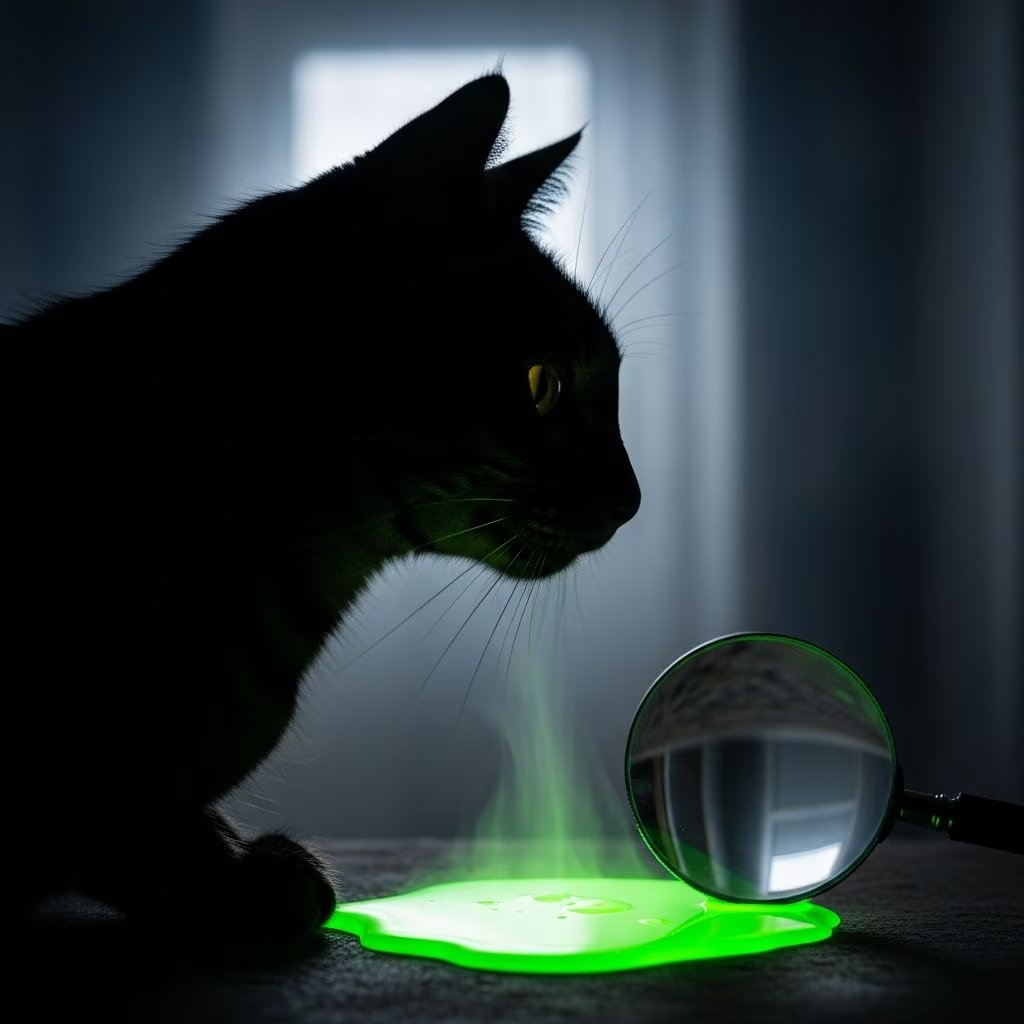
Cat urine serves as a vital indicator of feline health, a communication tool, and a notorious household challenge due to its distinctive chemistry and odor. Understanding its properties helps owners maintain a clean environment and detect potential medical issues early.
The Unique Chemical Profile of Feline Urine
Feline urine stands out from other mammals’ waste due to specialized compounds not found elsewhere. A key player is felinine, an amino acid unique to cats and certain wild felids like bobcats. This compound, chemically known as (R)-2-amino-3-(4-hydroxy-2-methylbutan-2-ylthio)propanoic acid, forms through a process involving cysteine, glycine, and glutamate, which combine to produce glutathione and eventually 3-methylbutanol-cysteinylglycine (3-MBCG). An enzyme called cauxin, exclusive to cat urine, hydrolyzes 3-MBCG into felinine and glycine, concentrating felinine in the bladder.
Felinine breaks down over time into 3-mercapto-3-methylbutan-1-ol (MMB), a volatile thiol responsible for much of cat urine’s pungent scent. Intact male cats produce higher MMB levels than females or neutered males, linking it to pheromonal signaling. Other components include urea, uric acid, creatinine, and electrolytes, mirroring metabolic waste in many animals but amplified by sulfur-rich elements absent in human urine.
| Compound | Source/Function | Odor Impact |
|---|---|---|
| Felinine | Produced via cauxin enzyme from 3-MBCG | Breaks down to MMB |
| MMB (3-mercapto-3-methylbutan-1-ol) | Degradation product; higher in males | Strong sulfurous smell |
| Urea | Metabolic nitrogen waste | Ammonia release upon bacterial breakdown |
| Cat Ketone (4-methyl-4-sulfanylpentan-2-one) | Natural odorant | Pungent, fruity notes |
Why Cat Urine Develops Such a Potent Odor
Fresh cat urine often smells mild, but exposure to air triggers rapid changes. Bacteria decompose urea into ammonia, creating a sharp scent. Simultaneously, felinine degrades enzymatically into MMB, a thiol compound evoking skunk-like sulfur notes. Cat ketone adds a musky, currant-like undertone, intensifying the mix.
Unlike human urine, which flushes away quickly, cat urine dries on fabrics or floors, oxidizing further. Long-haired cats produce less felinine due to cysteine diversion to fur proteins, potentially altering odor profiles slightly. Male urine smells stronger from steroids and elevated MMB, while older cats’ inefficient kidneys concentrate wastes more.
- Bacterial action: Urea → ammonia + CO2
- Enzymatic breakdown: Felinine → MMB (sulfurous)
- Oxidation: Thiols intensify on drying surfaces
Decoding Urine Color, Clarity, and Physical Traits
Normal cat urine appears pale yellow to amber, owing to urobilinogen, with a slightly cloudy texture from salts and cells. Specific gravity (concentration) typically ranges 1.020–1.060, reflecting hydration.
- Clear or watery: Overhydration or diabetes (dilute urine)
- Dark yellow/brown: Dehydration or liver issues
- Red/pink: Blood (hematuria) from stones, infections, or trauma
- Orange: Bilirubin from liver disease
- Cloudy: Crystals, pus, or bacteria signaling UTI
Urinalysis evaluates pH (acidic in cats, 6.0–6.5), protein, glucose, ketones, and blood. Glucose indicates diabetes; ketones suggest ketoacidosis. Persistent changes warrant veterinary tests like cystocentesis for accurate samples.
Urine Volume, Frequency, and Behavioral Patterns
Healthy cats urinate 2–3 times daily, producing 1–2 ml/kg/hour. Increased volume (polyuria) signals diabetes, kidney disease, or hyperthyroidism. Straining, blood, or vocalizing points to blockages, especially in males prone to urethral crystals.
Spraying—vertical urine marking—differs from box urination. Intact cats spray more for territory, with males ejecting smaller, pheromone-rich amounts. Neutering reduces this by 90%. Fecal volatiles like butanoic acid also vary by sex, aiding communication.
Health Conditions Reflected in Urine Changes
Urinary tract issues affect 1–3% of cats yearly. Crystals (struvite or calcium oxalate) form in alkaline or acidic urine, leading to stones or plugs. FLUTD (Feline Lower Urinary Tract Disease) encompasses infections, inflammation, and idiopathic cystitis.
| Condition | Symptoms in Urine | Risk Factors |
|---|---|---|
| UTI | Cloudy, bloody, foul-smelling | Females, diabetes |
| Stones/Blockage | Blood, straining, no urine | Males, dry diets |
| Diabetes | Sweet-smelling, high volume | Obesity, age |
| Kidney Disease | Dilute, increased frequency | Seniors |
Early detection via routine urinalysis prevents emergencies like urethral obstruction, fatal without intervention.
Effective Strategies for Cleaning Cat Urine Stains
Standard cleaners fail against cat urine’s proteins and thiols; they mask odors temporarily, prompting re-marking. Enzymatic cleaners hydrolyze urea to CO2 and ammonia, while targeting felinine and MMB for breakdown.
- Blot excess urine immediately with paper towels.
- Saturate with enzymatic cleaner; let sit 10–15 minutes.
- Blot and repeat if needed; avoid steam cleaning, which sets proteins.
- For fabrics, wash with enzyme boosters post-treatment.
Litter boxes with odor-absorbing litters (clumping clay) help, but daily scooping prevents buildup. UV blacklights reveal hidden stains.
Preventing Urinary Problems and Odor Buildup
Increase water intake via fountains, wet food, or flavor additives to dilute urine and inhibit crystals. Stress reduction through play and pheromones curbs spraying. Annual vet checks include urinalysis for at-risk cats (males, seniors).
- Feed urinary health formulas balancing pH.
- Provide multiple clean boxes (n+1 rule).
- Monitor for litter avoidance or accidents.
Frequently Asked Questions About Cat Urine
Why does male cat urine smell worse than female?
Males have higher MMB and steroids, especially if intact, amplifying the sulfurous pheromone scent.
Is cat urine toxic?
It’s a metabolic waste like human urine—irritating but not highly toxic unless from a sick cat. Wash hands after handling.
How often should my cat urinate?
2–4 times daily; deviations signal issues. Track box use.
Can diet affect urine smell?
Yes, high-protein dry foods concentrate urea; wet food dilutes it.
What if my cat’s urine is always dark?
Dehydration likely; ensure fresh water and consult a vet if persistent.
This comprehensive guide empowers cat owners to interpret urine cues, manage odors, and safeguard health through informed care.
References
- Felinine – Wikipedia — Wikipedia. 2023. https://en.wikipedia.org/wiki/Felinine
- Cat Chemistry — American Scientist. 2018-10-01. https://www.americanscientist.org/article/cat-chemistry
- Why is Cat Pee So Tough to Clean? — Dirty Labs. 2023. https://dirtylabs.com/blogs/the-dirt/why-is-cat-pee-so-tough-to-clean
- Semiochemicals from Domestic Cat Urine and Feces Reduce Use of… — PMC (NCBI). 2024-02-20. https://pmc.ncbi.nlm.nih.gov/articles/PMC10854617/
- Why does cat urine smell so bad and what can I do about it? — McGill University OSS. 2022. https://www.mcgill.ca/oss/article/you-asked/why-does-cat-urine-smell-so-bad-and-what-can-i-do-about-it
- Urinalysis for Cats: Understanding What’s in Your Cat’s Urine — West Hills Vet Centre. 2024. https://westhillsvetcentre.com/pet-laboratory-in-henderson-nc/urinalysis-for-cats-understanding-whats-in-your-cats-urine/
- Everything You Never Wanted To Know About Cat Urine — Advanced Animal Care. 2023. https://www.advancedanimalcare.com/services/cats/blog/everything-you-never-wanted-know-about-cat-urine



