

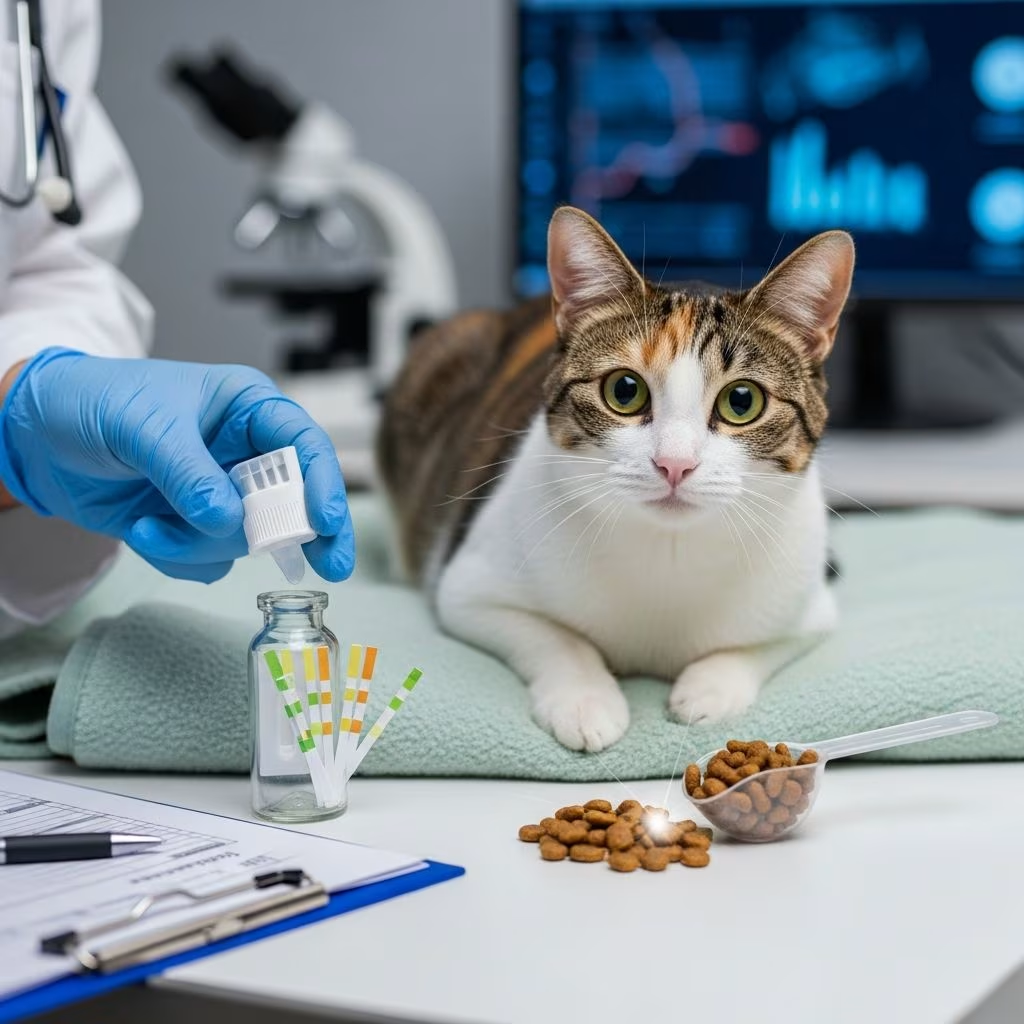
Feline urinary tract issues affect millions of cats yearly, with costs varying widely based on severity, location, and treatment type. Common problems like infections, crystals, stones, and blockages demand prompt care to avoid life-threatening complications.
Recognizing Urinary Problems in Cats
Cats with urinary distress often show subtle signs initially, such as straining in the litter box, frequent small urinations, blood in urine, or vocalizing during elimination. Male cats face higher risks due to their narrow urethras, leading to blockages that can cause kidney failure within 24-48 hours if untreated. Early detection through observation saves money by preventing emergency interventions.
- Dysuria: Painful urination, often with crying.
- Haematuria: Visible or microscopic blood in urine.
- Pollakiuria: Increased urination frequency.
- Stranguria: Straining without producing urine.
- Periuria: Urinating outside the litter box.
These symptoms stem from feline lower urinary tract disease (FLUTD), encompassing infections, inflammation, stones, and idiopathic cystitis.
Diagnostic Procedures and Their Price Ranges
Diagnosis starts with a veterinary exam, typically $50-$100. Urinalysis, crucial for detecting bacteria, crystals, or blood, costs $40-$80. Bloodwork to check kidney function and electrolytes runs $100-$250, essential for obstructed cats.
Imaging like X-rays ($100-$250) identifies stones, while ultrasound ($200-$500) assesses bladder walls and kidneys for deeper issues. In emergencies, these confirm blockages quickly.
| Diagnostic Test | Average Cost | Purpose |
|---|---|---|
| Physical Exam | $50-$100 | Initial assessment |
| Urinalysis | $40-$80 | Detect infections/crystals |
| Blood Panel | $100-$250 | Organ function/electrolytes |
| X-rays | $100-$250 | Stone visualization |
| Ultrasound | $200-$500 | Soft tissue evaluation |
Total diagnostic costs often range $300-$1,000, higher in 24-hour clinics.
Treatment Options for Common Urinary Conditions
Infections and Bacterial UTIs
Though rare in healthy cats, UTIs require vet-prescribed antibiotics for 10-14 days or longer in complicated cases. Costs: $20-$100 for medication, plus follow-up tests ($50-$100). Incomplete courses risk resistance, hiking future expenses.
Crystals and Bladder Stones
Struvite crystals dissolve with prescription diets ($50-$100/month), avoiding surgery. Calcium oxalate stones often need removal via surgery ($1,500-$4,000). Diet therapy success depends on stone type and urine pH management.
Urethral Obstructions
Emergencies demand catheterization under sedation ($500-$1,500 initial), fluids, and pain meds. Hospital stays (2-5 days) add $1,000-$3,000, including monitoring. Recurrent cases may require perineal urethrostomy ($2,000-$6,000), widening the urethra but risking incontinence.
Breakdown of Treatment Expenses
Costs escalate with hospitalization. Outpatient care for mild FLUTD: $200-$800. Blockage relief: $1,500-$5,000. Surgery: $3,000-$7,000+. Factors include clinic type (general vs. specialist), geography (urban 20-50% higher), and cat’s stability.
- Medications: Antibiotics/pain relief $20-$200.
- Hospitalization: $500-$2,000/day.
- Catheterization: $300-$800.
- Surgery: $2,000-$6,000.
- Follow-ups: $100-$300/visit.
Pet insurance covers 70-90% after deductibles ($100-$500), reducing out-of-pocket to $500-$2,000 for major cases.
Preventive Strategies to Lower Long-Term Costs
Proactive steps cut recurrence by 50%. Increase water intake via fountains or wet food ($30-$60/month). Urinary diets maintain ideal pH ($50-$100/month).
Stress reduction via pheromones ($20-$40/month), multiple litter boxes, and routines prevents idiopathic cystitis. Regular check-ups ($50-$100/year) catch issues early.
| Prevention Method | Monthly Cost | Benefit |
|---|---|---|
| Wet Food/Water Fountain | $30-$60 | Boosts hydration |
| Prescription Diet | $50-$100 | Prevents crystals |
| Pheromone Diffusers | $20-$40 | Reduces stress |
| Annual Vet Visits | $50-$100/year | Early detection |
Insurance and Financial Planning for Cat Owners
Plans cost $20-$60/month, reimbursing diagnostics to surgeries. Wellness add-ons cover preventives. Compare providers for FLUTD-specific coverage. Payment plans or Care Credit ease burdens for uninsured owners.
FAQs on Cat Urinary Treatment Costs
How much does it cost to unblock a cat’s urinary tract?
Expect $1,500-$5,000, covering catheterization, hospitalization, and meds.
Are urinary issues in cats always expensive?
No, mild cases resolve for $200-$800 outpatient, but delays inflate bills.
Does pet insurance cover urinary surgeries?
Yes, typically 70-90% after deductible for covered conditions like FLUTD.
Can diet alone fix cat bladder stones?
Struvite yes, via dissolving diets; oxalates often need surgery.
How to prevent costly urinary recurrences?
Hydration, stress management, urinary diets reduce risks significantly.
When to Seek Emergency Care
Rush to ER if no urine in 12-24 hours, lethargy, vomiting, or collapse. Delays risk $5,000+ in advanced treatment or euthanasia.
References
- Feline Lower Urinary Tract Disease — Cornell University College of Veterinary Medicine. 2023. https://www.vet.cornell.edu/departments-centers-and-institutes/cornell-feline-health-center/health-information/feline-health-topics/feline-lower-urinary-tract-disease
- A Cat Owner’s Guide to Feline Urinary Tract Infections — Vetster. 2024. https://vetster.com/en/wellness/a-cat-owner-s-guide-to-feline-urinary-tract-infections
- Urinary Tract Infection and Subclinical Bacteriuria in Cats — National Institutes of Health (PMC). 2019-10-15. https://pmc.ncbi.nlm.nih.gov/articles/PMC6826873/
- 2025 iCatCare Consensus Guidelines on the Diagnosis and Management of Lower Urinary Tract Diseases in Cats — SAGE Journals. 2025. https://journals.sagepub.com/doi/10.1177/1098612X241309176
- Cat Urinary Tract Disease and Infections — Hill’s Pet Nutrition. 2024. https://www.hillspet.com/cat-care/healthcare/cat-urinary-tract-disease
- Emergency Cat UTI Treatment — Georgia Veterinary Specialists. 2024. https://gsvs.org/blog/cat-uti-emergency-treatment/



