
Cat Urinary Blockage Guide
Recognize signs, understand causes, and act fast to save your cat from this life-threatening condition affecting mostly males.
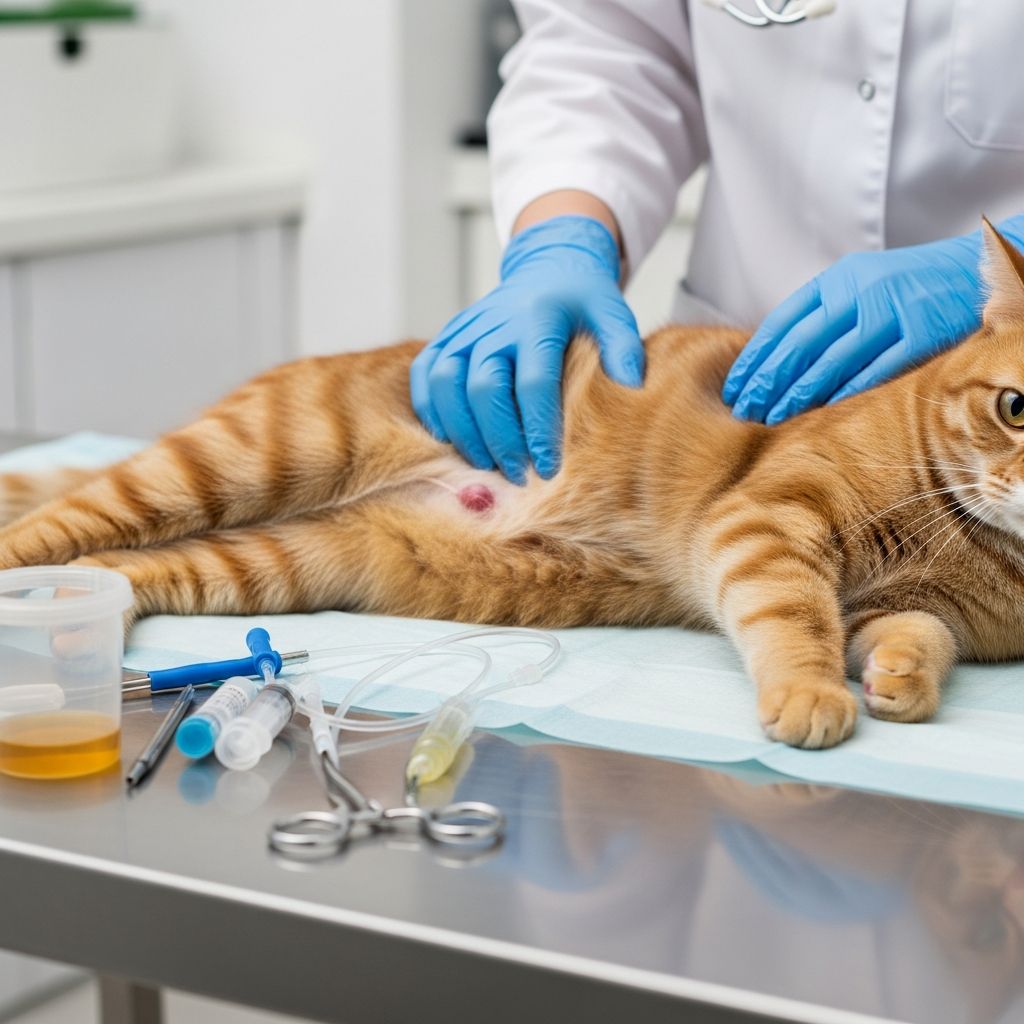
Urinary blockages in cats represent a critical health crisis that demands immediate attention, particularly in male cats due to their anatomy. These obstructions halt urine flow, leading to severe pain and potentially fatal complications if not addressed promptly.
Why Urinary Blockages Strike Cats
The urinary system in cats includes the kidneys, bladder, and urethra, with the narrow male urethra being especially vulnerable to clogs. Blockages occur when materials like crystals, mucus, or stones impede urine passage, causing buildup that toxifies the body.
Several underlying factors contribute to this condition:
- Crystals and stones: Mineral deposits such as struvite or calcium oxalate form in concentrated urine, lodging in the urethra.
- Urethral plugs: Combos of mucus, cells, and crystals create soft blockages, the top cause in males.
- Inflammation from FIC: Feline Idiopathic Cystitis, triggered by stress, swells the urethra.
- Strictures or spasms: Scarring or muscle contractions narrow the passage.
- Other rarities: Tumors or anatomical defects play minor roles.
Male cats face higher risks because their longer, thinner urethras clog easily compared to females.
Spotting the Danger Signs Early
Early detection hinges on observing litter box habits and behavior shifts. A blockage can escalate from discomfort to life-threatening in 24-48 hours.
| Symptom | Description | Severity Level |
|---|---|---|
| Straining to urinate | Frequent litter box visits with minimal or no output | High – Initial sign |
| Excessive genital licking | Constant grooming of rear area due to irritation | High |
| Pain vocalization | Crying or meowing during attempts to pee | High |
| Bloody urine | Visible red tinge in small drops | Medium |
| Lethargy and vomiting | Weakness, nausea from toxin buildup | Critical – Advanced |
| Loss of appetite | Refusal to eat, hiding behavior | Critical |
These align across veterinary reports; partial blockages show milder signs, but full ones demand instant action.
The Hidden Contributors to Blockages
Beyond direct causes, lifestyle elements amplify vulnerability. Indoor-only cats, dry-food diets, and multi-pet homes heighten odds via stress and dehydration.
- Dehydration: Low water intake concentrates urine, promoting crystals.
- Stress triggers: Routine changes or conflicts spark FIC.
- Obesity: Sedentary lifestyles worsen metabolism and hydration.
- Seasonal peaks: Colder months see more cases, possibly from activity drops.
Any breed or age (1-10 years typical) can be affected, but vigilance is key for at-risk males.
Immediate Steps When Suspecting a Blockage
Do not wait—rush to an emergency vet. Delays risk kidney failure, bladder rupture, or death.
- Observe litter box: Confirm straining/no urine over hours.
- Avoid home remedies like forcing water; they delay care.
- Contact vet or ER immediately; describe symptoms precisely.
Vets palpate for a distended bladder, a hallmark sign.
Professional Diagnosis and Relief Methods
Diagnosis starts with physical exam, then imaging like X-rays or ultrasound to pinpoint blockages. Bloodwork assesses kidney function via elevated toxins.
Treatment prioritizes unblocking:
- Catheterization: A tube relieves pressure, often under sedation; flushes clear debris.
- IV fluids: Rehydrate and support kidneys post-relief.
- Pain meds and anti-spasmodics: Ease discomfort and spasms.
- Antibiotics: If infection present.
Hospitalization lasts 24-72 hours for monitoring; surgery (perineal urethrostomy) for recurrent cases widens the urethra.
Recovery Roadmap After Treatment
Post-discharge, follow a strict plan:
- Special urinary diets to dissolve crystals/prevent recurrence.
- Encourage water via fountains, wet food.
- Stress reduction: Pheromone diffusers, safe spaces.
- Regular vet checkups, urinalysis.
Recurrence hits 15-50% without changes; proactive management cuts this.
Prevention Blueprint for Lifelong Urinary Health
Proactive strategies slash risks significantly.
| Strategy | How to Implement | Benefit |
|---|---|---|
| Hydration boost | Multiple bowls, running fountains, wet food mix | Dilutes urine, reduces crystals |
| Diet control | Vet-prescribed low-mineral formulas | Prevents stone/plug formation |
| Litter setup | One box per cat +1, unscented litter | Lowers stress |
| Weight management | Play sessions, portion control | Improves overall health |
| Stress mitigation | Consistent routine, enrichment toys | Curbs FIC |
Annual exams catch issues early.
Frequently Asked Questions
Can female cats get urinary blockages?
Yes, though rarer due to wider urethras; symptoms mirror males.
How long before a blockage becomes fatal?
24-48 hours for full obstructions without treatment.
Is surgery always needed?
No, only for repeats; most resolve with catheterization.
Does dry food cause blockages?
It contributes via dehydration risk, but not solely.
What home tests confirm a blockage?
Gently feel for firm bladder bulge; vet confirmation essential.
Long-Term Outlook and Monitoring
With prevention, most cats thrive post-blockage. Track urine output, behavior; revisit vet for any relapse signs. Owner education transforms outcomes.
References
- Urinary Blockages in Cats: Symptoms, Causes, and Urgent Care — Lewiston Vet Clinic. 2023. https://lewistonvetclinic.com/urinary-blockages-in-cats-symptoms-causes-and-urgent-care/
- Urinary Blockages in Male Cats: Signs, Causes, and Treatment — FV Pet Emergency. 2024. https://fvpetemergency.com/urinary-blockages-in-male-cats-signs-causes-and-treatment/
- Urinary Blockage in Cats: Causes and Care — CC Vet Specialists. 2023. https://www.ccvetspecialists.com/post/urinary-blockage-in-cats-causes-and-care
- Urinary Blockage in Cats: Symptoms, Causes, and Treatment — PetMD. 2025-02-15. https://www.petmd.com/cat/conditions/urinary/urinary-tract-blockage-cats
- Understanding Urinary Blockages in Male Cats — Cobb Vet. 2024. https://cobb.vet/understanding-urinary-blockages-in-male-cats/
- Urinary Obstruction in Male Cats — ACVS. 2023. https://www.acvs.org/small-animal/urinary-obstruction-in-male-cats/
Similar Articles








Read full bio of Sneha Tete




