

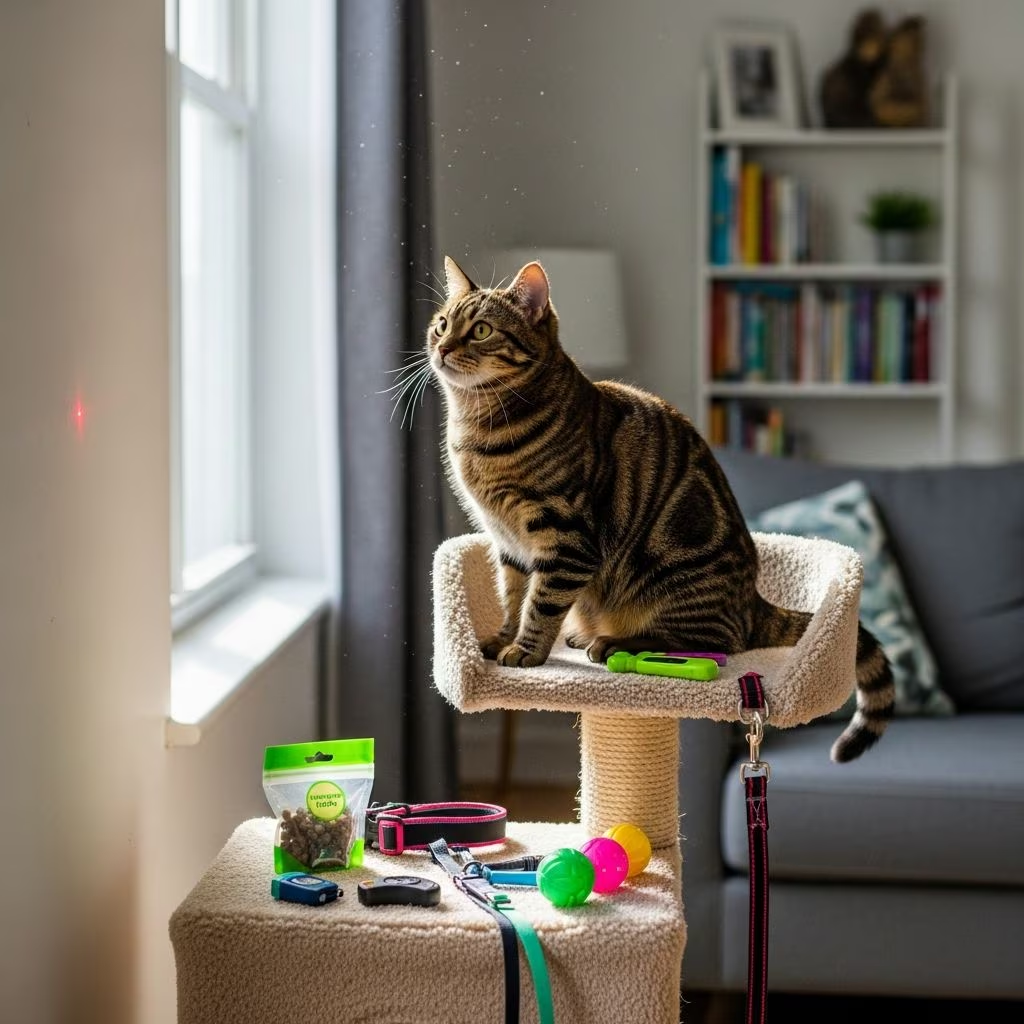
Training your cat can strengthen your bond and create a harmonious household. Cats are intelligent and responsive to positive reinforcement techniques. This guide covers essential training topics from litter box use to managing common behavior issues, drawing on ASPCA expertise in feline behavior assessment and modification.
Why Train Your Cat?
Cats thrive with structure and clear communication. Training prevents unwanted behaviors, enhances safety, and improves welfare. Using rewards like treats and praise encourages natural instincts while discouraging problems. Consistent, patient approaches yield the best results, as supported by behavior assessments like the ASPCA’s Feline Spectrum Assessment (FSA), which evaluates sociability through structured interactions.
Positive reinforcement—rewarding desired behaviors—builds trust without fear. Avoid punishment, which can increase stress and aggression. Start training early, especially with kittens, but adult cats respond well too. Sessions should be short (5-10 minutes) and frequent.
Litter Box Training
Most cats naturally use litter boxes, but issues arise from medical problems, stress, or improper setup. Place boxes in quiet, accessible locations away from food. Use unscented, clumping litter; experiment with types if needed.
- Choose the right box: Uncovered for kittens, covered for privacy-loving adults. One box per cat plus one extra.
- Scooping and cleaning: Daily scooping prevents odors; full clean weekly.
- Training kittens: Place in box after meals; reward use.
If accidents occur, rule out urinary tract infections (UTIs) via vet visit. Clean accidents with enzymatic cleaners to remove scent markers. Confinement to a small area with the box during retraining helps.
Scratching Solutions
Scratching fulfills cats’ needs to mark territory, stretch, and shed claw sheaths. Provide appropriate outlets to protect furniture.
- Scratching posts: Sisal, cardboard, or wood varieties. Place near problem areas initially.
- Attracting use: Rub with catnip, reward scratching.
- Deterrents: Double-sided tape or plastic covers on furniture.
- Trimming claws: Regular trims reduce damage; desensitize paws first.
Nail caps offer a humane alternative. If scratching persists, check for stress or pain.
Preventing Biting and Scratching
Play aggression is common, especially in young cats. Redirect energy to toys, not hands.
- Interactive play: Wand toys mimic prey; end sessions before fatigue.
- No hands as toys: Use toys to teach boundaries.
- Time-outs: Ignore or briefly isolate for rough play.
For fear-based aggression, create positive associations via treats from a distance. The ASPCA Feline-ality assessment identifies traits like “Independent” (low gregariousness) that may need gentle socialization.
Meowing and Vocalization Management
Meowing communicates needs, but excessive vocalizing signals hunger, attention-seeking, or stress.
- Schedule feedings: Prevents ‘learned’ meowing.
- Ignore attention meows: Reward quiet behavior.
- Enrich environment: Toys, perches reduce boredom.
Medical checks rule out hyperthyroidism or pain. Night meowing may indicate separation anxiety; gradual alone time helps.
Door Bouncing and Jumping
Cats jump on doors for attention or curiosity. Ignore the behavior; open door only when calm.
- Provide alternatives: Window perches for viewing.
- Training cue: ‘Sit’ and reward before opening.
- Deterrents: Sticky notes or motion-activated air puffs.
Consistency from all household members is key.
Counter Surfing Prevention
Cats seek food smells or vantage points. Make counters unappealing and provide alternatives.
- Citrus sprays or foil: Textures cats dislike.
- Training: Lift off counter, reward on floor.
- Alternatives: Cat shelves or towers.
Never leave food out; store securely.
Calming Cats for Grooming and Vet Visits
Many cats resist handling due to past stress. Desensitize gradually.
Grooming tips:
- Start with short sessions; reward tolerance.
- Use soft brushes; pair with treats.
- Flea comb as massage tool.
Vet prep:
- Carrier always out with bedding.
- Feed in carrier.
- Short car trips first.
Towel wraps (burrito method) calm during exams.
Clicker Training for Cats
Clicker training uses a sound marker for precise rewards, accelerating learning.
- Charge the clicker: Click and treat repeatedly.
- Target training: Touch nose to stick.
- Behaviors: Sit, come, high-five.
- Proofing: Add distance, distractions.
Cats excel due to food motivation. Sessions: 5 reps, multiple daily.
Addressing Aggression
Aggression types: fear, pain, redirected, territorial. Identify triggers.
| Type | Signs | Solution |
|---|---|---|
| Fear | Hissing, flattened ears | Counter-conditioning with treats |
| Pain | Sudden onset | Vet exam |
| Play | Ambush pouncing | Scheduled playtime |
| Status | Staring, swatting | Resource control |
Consult behaviorists for severe cases; medications may help.
Fear and Anxiety Management
Shelter assessments like FSA categorize cats as ‘Socialized’ or ‘Feral’ via behaviors (e.g., rubbing vs. freezing). At home:
- Safe spaces: Boxes, perches.
- Pheromones: Feliway diffusers.
- Routine: Predictability reduces stress.
Enrichment and Mental Stimulation
Boredom leads to issues. Rotate toys, puzzle feeders, foraging.
- Food puzzles dispense kibble.
- Scent games with hidden treats.
- Social play if gregarious.
Frequently Asked Questions (FAQs)
Why is my cat not using the litter box?
Possible causes: dirty box, medical issues, stress. Vet check first, then optimize setup.
How do I stop scratching furniture?
Provide posts, use deterrents, trim nails, reward post use.
Is clicker training suitable for all cats?
Yes, adaptable for ages; patient owners see fastest results.
What if my cat is aggressive?
Identify type; use positive methods. Seek pro help if unsafe.
Can older cats be trained?
Absolutely; motivation via treats works across ages.
Training Tools and Supplies
Essentials: clickers, treats, wand toys, scratchers, enzymatic cleaners. Invest in quality for success.
Track progress with journals. Celebrate small wins for motivation.
References
- The ASPCA’s Feline Spectrum Assessment (FSA) Training Manual — ASPCA. 2016. https://www.aspcapro.org/sites/default/files/ASPCA-FSA-manual-2016.pdf
- Feline-ality Manual and Training Guide — ASPCApro. N.D. https://www.aspcapro.org/sites/default/files/Feline-ality%20Guide_PRO.pdf
- General Cat Care — ASPCA. 2023. https://www.aspca.org/pet-care/cat-care/general-cat-care
- Common Cat Behavior Issues — ASPCA. 2023. https://www.aspca.org/pet-care/cat-care/common-cat-behavior-issues



