

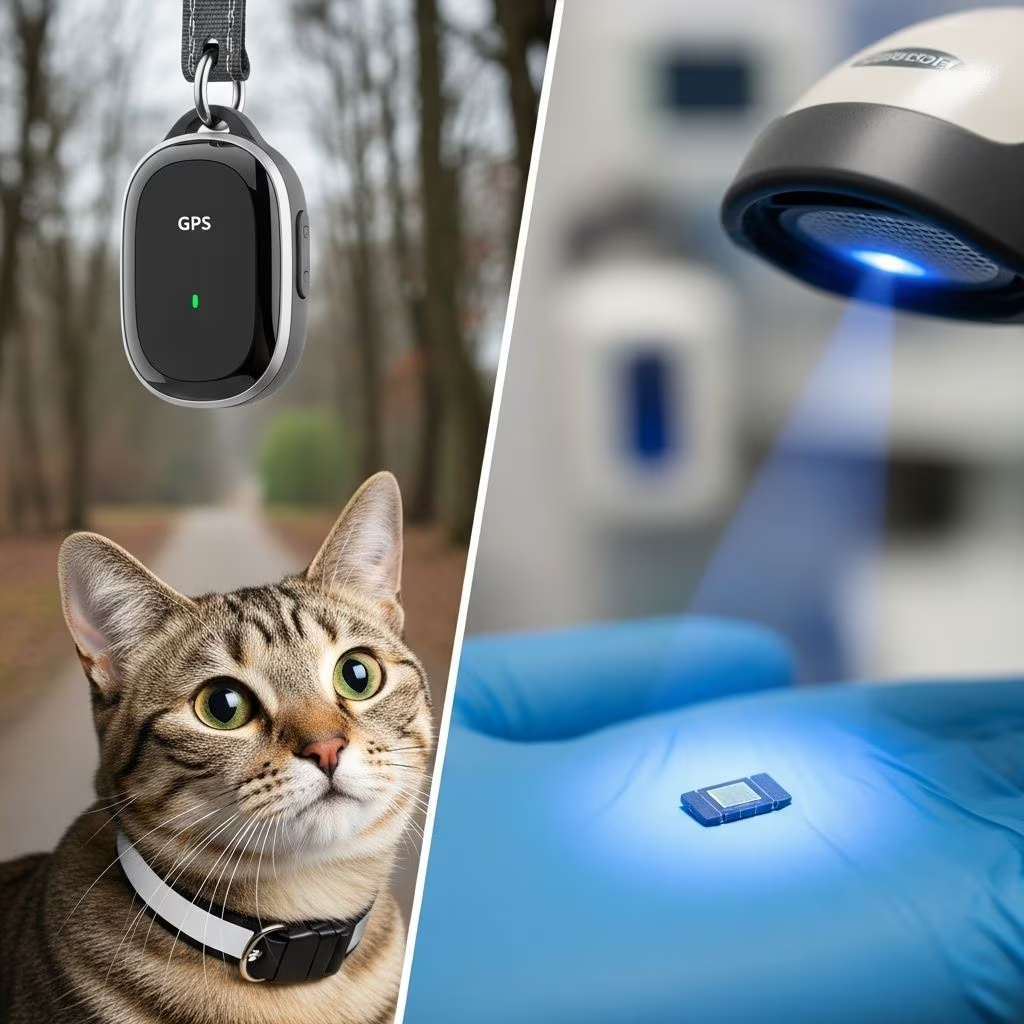
Cat Tracking Chips: GPS vs. Microchip Technology Explained
As a cat owner, one of your primary concerns is ensuring your feline companion stays safe, whether they roam outdoors or occasionally venture beyond your home. Modern pet safety technology has evolved significantly, offering multiple solutions to help locate and identify lost cats. However, many cat owners are confused about the difference between GPS trackers and microchips, often mistakenly believing that microchips can actively track their pets’ locations. Understanding how these two technologies work—and how they complement each other—is essential for making the best decision for your cat’s safety.
Understanding the Key Difference Between GPS Trackers and Microchips
The most critical distinction between GPS trackers and microchips lies in their fundamental purpose and capability. GPS trackers are active devices that continuously transmit your cat’s location data to a smartphone app or web interface, allowing you to monitor your pet’s whereabouts in real time. Microchips, by contrast, are passive identification devices that store only a unique identification number. They contain no battery, no power source, and no GPS technology. Instead, they rely on being scanned by a veterinarian or animal shelter to reveal your contact information.
This misunderstanding has led to countless lost pets remaining separated from their families. A cat owner who believes their microchipped cat can be tracked is placing their pet at significant risk, as the microchip cannot help locate a missing cat—it can only identify them if someone finds them and takes them to a facility equipped with a microchip scanner.
How Microchips Work
Physical Structure and Components
A cat microchip is an incredibly small device, approximately the size of a grain of rice. It consists of several key components: a biocompatible glass capsule that forms the main body, a silicon data chip that stores information, a tuning capacitor, and an antenna coil. Some newer microchip designs include a polymer casing or cap that helps the microchip bond with your cat’s body and remain securely in place over time.
Despite its tiny size, the microchip contains your cat’s unique identification number and, when properly registered, links to your contact information in a national database. The biocompatible materials used ensure the microchip is safe for your cat and won’t cause any adverse reactions.
RFID Technology Explained
Cat microchips use RFID (Radio-Frequency Identification) technology, which operates as a passive system. This means the microchip does not actively transmit data into the world. Instead, it remains inactive in your cat’s body until a specialized microchip scanner comes within close range and activates it. The scanner sends a radio frequency signal that powers the microchip momentarily, allowing it to transmit the unique identification number back to the scanner.
Because microchips are passive RFID devices, they require no battery and pose no risk of electrocution to your cat. This passive design makes them extremely durable and long-lasting, capable of functioning for the entirety of your cat’s life without requiring replacement or maintenance.
The Microchipping Process
Getting your cat microchipped is a straightforward procedure typically performed at a veterinary clinic. The process involves several steps:
- The veterinarian or implant technician verifies your cat’s identification and records
- Your cat’s entire body is scanned to check for any previously implanted microchips
- The new microchip is tested to ensure it functions properly before implantation
- The technician gathers the skin at the nape of your cat’s neck (between the shoulder blades) and uses a specialized needle to inject the microchip into the subcutaneous tissue
- The area is scanned again to confirm the microchip has been correctly implanted and is transmitting its identification number
The procedure is quick, causes minimal discomfort to your cat, and requires no anesthesia in most cases. Once implanted, the microchip becomes a permanent form of identification that cannot be lost, unlike collars or tags.
The Limitations of Microchips for Pet Recovery
Why Microchips Alone Are Not Enough
While microchips are valuable tools for pet identification, they have significant limitations when it comes to actually recovering a lost cat. A microchip can only help reunite your cat with you if specific conditions are met: someone must find your cat, take them to a veterinary clinic or animal shelter, have them scanned, and then contact you based on the information registered with the microchip database.
This reliance on external intervention means that if your cat is lost but not found, or if the person who finds your cat does not take them to a facility with a scanner, the microchip provides no assistance in locating your pet. Additionally, many microchip registrations are incomplete or outdated, with owners failing to update their contact information after moving or changing phone numbers. This results in lost cats not being reunited with their families, despite having a microchip.
The Registration Problem
One of the most common issues with microchips is inadequate or outdated registration. Simply having your cat microchipped is not enough—the microchip must be registered with a national database, and your contact information must be current and accurate. Many cat owners neglect to complete the registration process or fail to update their information when they move or change their phone number.
Without proper registration and current contact details, a microchip becomes essentially useless. Even if your cat is found and scanned, the veterinarian or shelter staff will not be able to contact you if your phone number is no longer in service or your address is outdated.
How GPS Trackers Work
Active Tracking Technology
Unlike passive microchips, GPS trackers are active devices that continuously transmit your cat’s location data. These devices typically attach to your cat’s collar as a small tag or are integrated directly into a specially designed collar. GPS trackers use satellite technology to determine your cat’s precise location and send this information to a smartphone app or web interface accessible from your computer or mobile device.
Many modern GPS trackers for cats employ multiple positioning technologies to improve accuracy, particularly in areas where GPS signals might be weak. These additional technologies include Wi-Fi positioning, cellular network triangulation, and Bluetooth connectivity. By combining multiple positioning methods, these devices provide reliable location data even in urban environments where buildings and infrastructure might otherwise block clear GPS signals.
Real-Time Location Monitoring
The primary advantage of a GPS tracker is its ability to provide real-time location updates. Once your cat wanders away from home, you can immediately check the dedicated app to see exactly where they are located. This real-time capability allows you to quickly respond if your cat goes missing, increasing the likelihood of a swift recovery.
Many GPS trackers also maintain a history of your cat’s movements throughout the day. This feature allows you to understand your cat’s behavior patterns, discover their favorite spots, and identify areas where they spend the most time. For indoor cats that occasionally escape, or outdoor cats with a wandering nature, this movement history can provide valuable insights into their daily activities.
Key Features of Modern Cat GPS Trackers
Geofencing Capabilities
One of the most useful features of contemporary GPS trackers is geofencing—the ability to establish virtual boundaries around specific locations such as your home or garden. When you set up geofences, you receive automatic notifications if your cat leaves these designated safe zones. This proactive alert system allows you to respond immediately if your cat strays further than intended, potentially preventing them from getting lost entirely.
Activity and Health Monitoring
Beyond location tracking, many advanced GPS trackers monitor your cat’s activity levels, sleep patterns, and calories burned. This health monitoring capability helps you track your cat’s wellness and can alert you to changes in behavior that might indicate health issues. By monitoring activity data over time, you can detect if your cat is becoming less active or exhibiting unusual patterns that warrant a veterinary visit.
Durability and Waterproofing
Cats are naturally adventurous and often find themselves in wet or rough environments. Quality GPS trackers are designed to be robust, waterproof, and capable of withstanding the various conditions your cat might encounter. This durability ensures the tracker continues functioning reliably whether your cat explores rainy gardens or muddy outdoor areas.
Battery Life and Charging
A practical concern for any electronic pet device is battery life. Modern cat GPS trackers are engineered with efficient batteries that can last several days on a single charge, minimizing the inconvenience of frequent charging. Some models offer even longer battery life, though this often comes with a trade-off in device size or additional features.
Compact and Lightweight Design
Comfort is paramount when selecting a tracking device for your cat. GPS trackers are intentionally designed to be compact and lightweight, ensuring they don’t hinder your cat’s natural movement or cause discomfort. The small size also means the device is less noticeable and less likely to be scratched off or caught on obstacles during your cat’s outdoor adventures.
Is a Microchip Enough?
The Case for Combined Protection
Many cat owners believe that once their cat is microchipped, they have adequate protection against loss. This is a dangerous misconception that has resulted in countless lost cats remaining separated from their families. While microchips serve an important purpose in pet identification, they cannot and should not be relied upon as a standalone pet recovery solution.
Some owners dismiss GPS trackers as unnecessary overkill, particularly if their cat already has a microchip. However, this perspective fails to account for the fundamental differences between these technologies and the specific scenarios in which each excels. A microchip is only useful after your cat has been found and taken to a scanning facility. A GPS tracker, conversely, helps you locate your cat before they become lost and separated from you.
The Optimal Safety Strategy
Veterinarians and pet safety experts universally recommend combining microchipping with GPS tracking technology as the most comprehensive approach to cat safety. This dual-technology strategy provides multiple layers of protection:
- Microchip: Serves as a permanent form of identification if your cat is found by a stranger and taken to a vet or shelter
- GPS Tracker: Allows you to locate your cat in real time and intervene before they become separated from you
- Collar and ID Tags: Provides immediate identification for anyone who encounters your cat
This layered approach ensures that whether your cat gets lost and is found by someone else, or you realize they’re missing and need to search for them yourself, you have the best possible chance of a safe reunion.
Additional Tracking Technologies for Cat Safety
Bluetooth Tracking Collars
In addition to GPS trackers, Bluetooth technology has become increasingly popular for pet tracking. Bluetooth trackers work over shorter distances than GPS but offer some advantages in urban environments and indoor settings. While Bluetooth trackers alone cannot replace GPS trackers for comprehensive location monitoring, they complement microchip technology effectively.
The combination of Bluetooth for immediate, local tracking and microchips for long-term identification creates a robust safety net. Pet owners benefit from both immediate awareness of their cat’s proximity and essential identification information that can be accessed if the cat is found by a stranger.
Frequently Asked Questions
Q: Can a microchip track my cat’s location in real time?
A: No. Microchips are passive identification devices that contain no GPS technology or tracking capability. They only store a unique ID number and can only be read when a microchip scanner activates them. A microchip will not help you locate a missing cat—it will only help identify your cat if someone finds them and takes them to a veterinary clinic or animal shelter for scanning.
Q: Is microchipping painful for my cat?
A: Microchipping is a quick, minimally invasive procedure that causes little to no discomfort to your cat. The microchip is injected between the shoulder blades using a specialized needle, and no anesthesia is required. Most cats experience no pain beyond a brief moment of mild discomfort similar to a vaccination injection.
Q: Do GPS trackers require a subscription or monthly fee?
A: Many GPS trackers for cats do require a monthly subscription to access location data through their apps and services. Fees typically range from a few dollars to twenty dollars per month, though some manufacturers offer different subscription tiers with varying features. It’s important to factor this ongoing cost into your decision when selecting a GPS tracker.
Q: Can I use just a GPS tracker without a microchip?
A: While a GPS tracker can help you locate your cat, it’s not a complete solution without a microchip. If your cat loses their collar or the GPS tracker malfunctions, and someone finds your cat, they will have no way to identify you without a microchip. A microchip provides permanent backup identification that cannot be lost or damaged.
Q: How long do microchips last?
A: Microchips are designed to last for the entire lifetime of your cat. Because they contain no battery and require no power source, they don’t degrade or require replacement. Once implanted, a properly functioning microchip will remain active and readable for your cat’s entire life.
Q: What’s the best age to microchip a cat?
A: Cats can be microchipped at any age, though many veterinarians recommend doing so when kittens are around 8 weeks old or during spay/neuter surgery. Adult cats can be microchipped just as easily. The earlier your cat receives a microchip, the sooner you have that permanent form of identification in place.
Conclusion: Creating a Complete Safety Plan for Your Cat
The confusion between GPS trackers and microchips has resulted in many cat owners believing they have adequate pet recovery solutions when they actually don’t. Understanding that microchips cannot track your cat’s location while GPS trackers cannot serve as permanent identification is crucial for making informed decisions about your cat’s safety.
The most effective approach combines microchipping for permanent identification, a GPS tracker for real-time location monitoring, and a collar with ID tags for immediate recognition. This comprehensive strategy ensures that your cat is protected regardless of whether they wander away and get found by a stranger, or you need to search for them yourself. By utilizing all available technologies appropriately, you provide your feline friend with the best possible chance of being reunited with you if they ever go missing.
References
- Cat Tracking Chips: GPS vs. Microchip Technology Explained & Vet — Catster. 2025. https://www.catster.com/lifestyle/cat-tracking-chips/
- How Do Cat Microchips Work? Vet-Reviewed Facts & FAQ — Catster. 2025. https://www.catster.com/cat-health-care/how-do-cat-microchips-work/
- How Much Does It Cost to Microchip a Cat? (2026 Update) — Catster. 2026. https://www.catster.com/cat-health-care/cost-to-microchip-a-cat/
- Why Every Cat Owner Should Consider a Cat Chip Tracker — Peeva. 2025. https://peeva.co/blog/cat-chip-tracker/
- Cat Microchips 101: A Guide to Keeping Your Feline Friend Safe — Cat Care Society. 2025. https://www.catcaresociety.org/cat-microchips-101/
- Navigating Pet Safety: The Role of Microchipping in Cat Care — Purrsong Global. 2025. https://purrsong-global.com/blogs/meows-letter/navigating-pet-safety-the-role-of-microchipping-in-cat-care



