

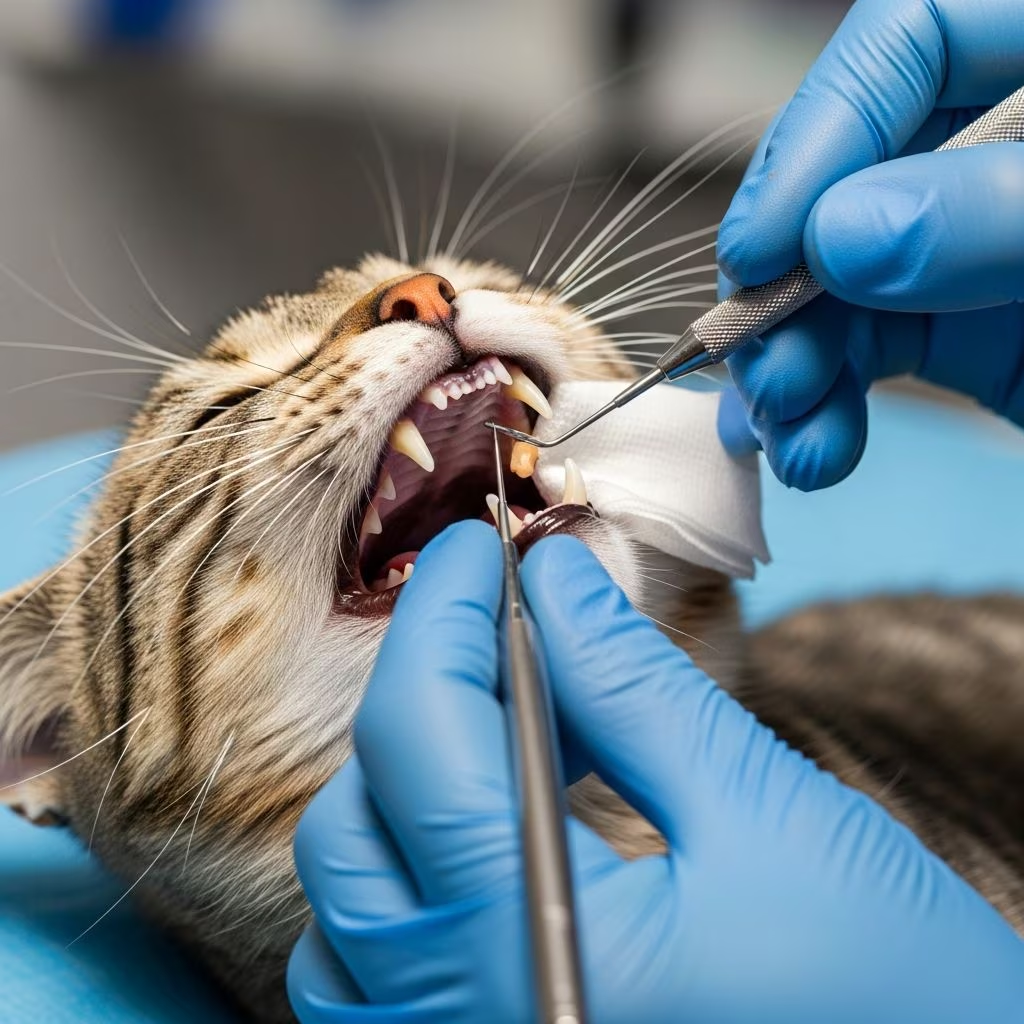
Feline tooth extraction is a common veterinary procedure performed to alleviate pain from severe dental diseases, ensuring your cat’s comfort and preventing further complications. This surgery involves removing damaged or diseased teeth under general anesthesia, with recovery typically smooth when proper aftercare is followed.
Understanding Feline Dental Anatomy
Cats possess 30 teeth in adulthood, differing from human dentition with sharp carnassial teeth for tearing meat. Key structures include the crown above the gumline and roots anchored in the jawbone by the periodontal ligament. Multi-rooted teeth like premolars and molars hold up to three roots, complicating extractions.
Common issues arise from plaque buildup leading to gingivitis or periodontitis. Tooth resorption, affecting up to 75% of cats over age five, causes painful defects where the tooth structure breaks down, often necessitating removal.
Reasons for Tooth Extraction in Cats
Veterinarians recommend extraction when conservative treatments fail. Primary indications include:
- Tooth resorption lesions: Progressive destruction of tooth substance, visible on radiographs as root anomalies.
- Severe periodontal disease: Deep pockets, bone loss, and mobility rendering teeth unsalvageable.
- Fractures: Traumatic breaks exposing pulp, risking infection.
- Persistent infections: Abscesses or endodontic disease unresponsive to root canals.
- Crowding or malocclusion: In breeds like Persians, causing chronic trauma.
Early detection via annual exams prevents escalation. Signs like drooling, pawing at mouth, or halitosis warrant immediate veterinary evaluation.
Pre-Surgical Preparation
Before extraction, comprehensive diagnostics ensure safety. Bloodwork assesses organ function, clotting ability, and anemia. Radiographs reveal hidden resorption or bone loss. ECG or chest X-rays screen for cardiac or respiratory risks, especially in seniors.
Fasting for 12 hours pre-op minimizes aspiration risks under anesthesia. Owners receive instructions on medications like preemptive pain relief or antibiotics.
The Extraction Procedure Step-by-Step
Performed by veterinary dentists or surgeons, extractions use sterile techniques. General anesthesia induces unconsciousness, muscle relaxation, and pain control via injectables and gas.
Simple Extractions
For single-rooted teeth like incisors or maxillary premolars, a closed technique suffices. A scalpel severs gingival attachments, followed by luxators inserted into the periodontal space to loosen the tooth. Elevators apply rotational pressure for 10-15 seconds per site, breaking ligament fibers. Forceps grasp apically for gentle rotation and removal.
Surgical Extractions
Multi-rooted or ankylosed teeth (fused to bone from resorption) require flaps. A mucoperiosteal envelope flap exposes bone. Buccal alveolar bone is removed with burs for root access. Teeth are sectioned into single roots using high-speed handpieces with coolant. Each segment elevates sequentially: distal first, then mesial and palatal.
For mandibular canines, labial or lingual approaches minimize fracture risk. Avoid excessive rotation to protect thin cat mandibles.
Crown Amputation Technique
In advanced feline odontoclastic resorption lesions (FORLs), roots may resorb completely. Radiographs confirm no ankylosis or pulpitis. A small flap elevates gingiva; crown amputates below alveolar crest with diamond burr. Remaining roots retain under mucosa, halting pain without full removal.
Post-extraction, alveoli curette to remove debris, smooth with burs (alveoplasty), flush with saline, and close with absorbable sutures like Monocryl.
| Extraction Type | Teeth Suitable | Key Tools | Complexity |
|---|---|---|---|
| Simple/Closed | Incisors, P2 max, M1 max | Luxator, Elevator, Forceps | Low |
| Surgical | Canines, Premolars, Molars | Flap, Bur, Sectioning | High |
| Crown Amputation | Resorbed teeth | Burr, Explorer | Moderate |
Anesthesia and Monitoring
Modern protocols use balanced anesthesia: premeds for sedation, induction with propofol or ketamine, maintenance on isoflurane/sevoflurane. IV fluids maintain blood pressure; technicians monitor heart rate, oxygen saturation, temperature, and capnography continuously.
Pain management integrates multimodal drugs: opioids, NSAIDs, local blocks with bupivacaine.
Post-Operative Recovery at the Clinic
Cats recover in a warm, quiet area. Extubation occurs when swallowing reflexes return. Initial grogginess lasts 1-2 hours; full alertness by evening. Vets check extraction sites for hemorrhage before discharge.
Home Care After Extraction
Discharge includes:
- Medications: Antibiotics (7-10 days), analgesics (buprenorphine, meloxicam), e-collar to prevent rubbing.
- Soft diet: Wet food or gruel for 7-14 days; avoid crunchies.
- Site monitoring: Check daily for swelling, discharge, or dehiscence.
Offer water immediately; hunger may delay 24 hours. Isolate from other pets initially.
Recognizing and Managing Complications
Most cats recover uneventfully, but watch for:
- Swelling/bruising: Normal first 48 hours; ice packs help.
- Bleeding: Minimal oozing; clot disruption needs vet visit.
- Infection: Pus, fever, lethargy—prompt antibiotics.
- Fracture: Rare mandibular issues from weak bone.
- Oro-nasal fistula: Upper extractions leaking food into nose.
Follow-up in 7-10 days for suture removal and radiographs confirm complete root removal.
Long-Term Dental Health Strategies
Prevention trumps treatment. Daily brushing with enzymatic toothpaste, dental diets, water additives reduce tartar. Professional cleanings every 6-12 months for at-risk cats. Breeds like Siamese prone to stomatitis may need extractions too.
Frequently Asked Questions
Is tooth extraction painful for cats?
Under anesthesia and with peri-op pain control, cats experience no pain during surgery. Post-op meds ensure comfort.
How long does recovery take?
Soft tissue heals in 10-14 days; bone remodeling months. Most resume normal eating in 1 week.
Will my cat eat with missing teeth?
Yes, cats adapt excellently, chewing with remaining teeth or gums.
Can extractions cause jaw problems?
Rare if technique proper; thin mandibles risk fracture in diseased cases.
How much does it cost?
Varies $200-800 per tooth, depending on complexity and location.
Choosing a Veterinary Dentist
Seek AVDC-boarded specialists for complex cases. Clinics with dental radiography, high-speed units, and monitors offer best outcomes.
References
- Cat Tooth Extractions: What to Expect & What to Watch For — Grenada Vets. 2024-01-15. https://www.grenadavets.com/site/blog/2024/01/15/cat-tooth-extractions
- Extractions in cats: indications, techniques and complications — dvm360. N/A. https://www.dvm360.com/view/extractions-cats-indications-techniques-and-complications-proceedings
- Oral Surgery to Remove Teeth in Cats — Today’s Veterinary Practice. 2022-10. https://todaysveterinarypractice.com/wp-content/uploads/sites/4/2022/10/TVP-2022-1112_Dental_Surgery_Cats.pdf
- Cat Tooth Extractions: What to Expect — Tender Care Pet Hospital. 2024-01-15. https://www.tendercarepethospital.com/site/blog/2024/01/15/cat-tooth-extractions
- Veterinary Dentistry: Cat Tooth Extractions — VR Animals. 2023-05-15. https://www.vranimals.com/site/blog/2023/05/15/veterinary-dentistry-cat-tooth-extractions



