

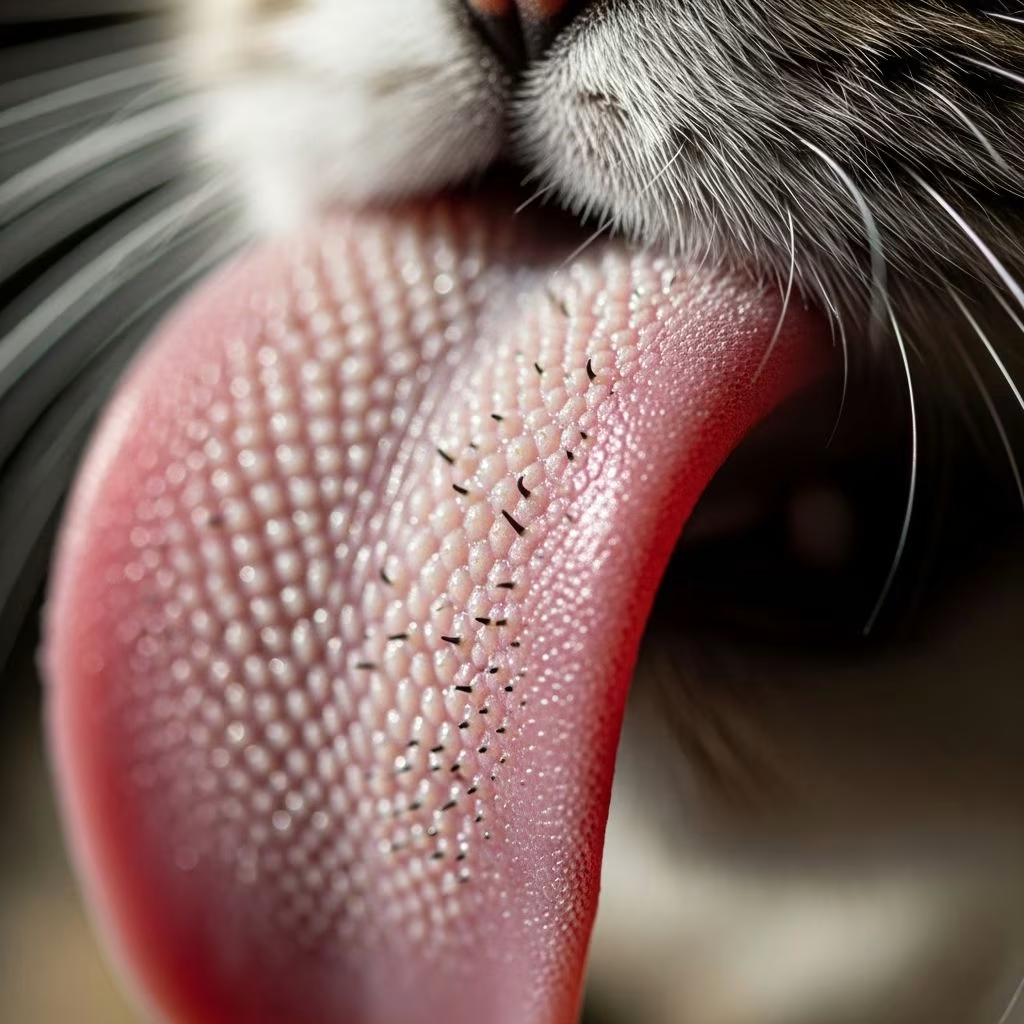
The feline tongue stands out as one of the most specialized organs in a cat’s body, equipped with a rugged surface that serves multiple vital roles. Covered in tiny, backward-facing spines known as papillae, it enables everything from meticulous self-cleaning to efficient prey consumption and precise hydration.
Anatomy of the Feline Tongue
A cat’s tongue measures roughly 2-3 inches in length, depending on the breed and size, and divides into distinct sections: the root at the back, the elongated body in the middle, and the tapered apex at the front. This structure allows for remarkable flexibility and control.
The dorsal surface features a mucous membrane studded with five primary papillae types, each contributing to the tongue’s versatility. These include filiform, fungiform, foliate, vallate, and conical varieties, all keratin-reinforced for durability.
- Filiform Papillae: Most abundant, these cylindrical spines dominate the apex and body, pointing backward to create the signature sandpaper texture. They measure up to 2mm long in cats, stiffer than in dogs.
- Fungiform Papillae: Mushroom-like and scattered along the sides and tip, these house taste buds for detecting flavors.
- Foliate Papillae: Leaf-shaped ridges on the lateral root edges, prominent in cats and aiding taste and deglutition.
- Vallate Papillae: Large, dome-like formations at the body-root junction, arranged in a V-pattern with surrounding moats; densely packed with taste receptors.
- Conical Papillae: Similar to filiform but shorter, supporting additional sensory and mechanical functions.
Beneath the surface, intrinsic muscles enable longitudinal, transverse, and vertical movements, while extrinsic muscles like the styloglossus retract and elevate it. Blood vessels ensure responsiveness, and salivary glands, including the lingual molar gland unique to cats, provide lubrication.
Grooming Mastery
Cats devote up to 50% of their waking hours to grooming, largely thanks to their tongue’s design. Filiform papillae act as natural combs, detangling fur, removing debris, and distributing natural oils for a glossy coat.
These spines penetrate deep into the fur, pulling out loose hairs and parasites with precision. The backward orientation prevents shedding from escaping back onto the skin. This self-maintenance reduces parasite loads and regulates body temperature via evaporation.
Owners often feel this raspiness during affectionate licks, which can exfoliate dead skin but may irritate if excessive. Kittens learn grooming from mothers, inheriting this instinctual behavior.
Feeding and Prey Processing
As obligate carnivores, cats rely on their tongues for rasping meat from bones. Filiform spines grip and strip flesh efficiently, mimicking a built-in fork.
Taste perception, though limited—no sweet receptors—focuses on umami, proteins, and fats via fungiform, foliate, and vallate papillae. The vomeronasal organ integrates scent-tasting, enhancing palatability assessment.
| Papillae Type | Primary Feeding Role |
|---|---|
| Filiform | Gripping and stripping meat |
| Fungiform/Foliate/Vallate | Taste detection (savory, fatty acids) |
| All Types | Swallowing aid |
The tongue senses texture and temperature, rejecting spoiled food. In the wild, it cleans kills thoroughly, maximizing nutrition.
Hydration Technique
Cats lap water with a specialized motion: the apex curls backward into a J-shape, forming a spoon-like scoop. A rapid dart pierces the water surface, drawing up a column via inertia and adhesion, which the tongue retracts to swallow.
This method minimizes splashing and maximizes intake—up to four laps per second. Papillae enhance liquid adherence, preventing drips. Domestic cats drink similarly from bowls, but fountains appeal by mimicking movement.
Sensory Capabilities
Beyond mechanics, the tongue contributes to olfaction via flehmen response: curling to transfer scents to the vomeronasal organ for pheromonal analysis.
Taste buds number around 470, fewer than humans’ 9,000, but optimized for meaty profiles. Temperature sensitivity aids in avoiding burns or detecting warm prey.
Health Indicators and Concerns
A healthy tongue appears pink, moist, with intact papillae. Changes signal issues:
- Redness/Swelling: Allergies, infections, or trauma.
- Pale Color: Anemia from fleas or kidney disease.
- Ulcers/Spots: Calicivirus, FIV, or cancer.
- Excessive Drooling: Dental pain, nausea, or foreign objects.
- Overgrowth: Feline acne or hyperplastic gingivitis.
Regular checks during grooming reveal problems early. Avoid human foods causing burns or toxicity.
Breed Variations
While uniform across most breeds, Persians and Exotics may have shorter tongues relative to brachycephalic skulls, potentially affecting grooming efficiency. Sphynx cats groom more due to exposed skin.
Care Tips for Optimal Tongue Health
Support your cat’s tongue function with:
- Dental diets and toys to reduce plaque.
- Water fountains for encouraged drinking.
- Grooming brushes mimicking papillae.
- Veterinary exams for papillae integrity.
- Balanced carnivore nutrition matching taste preferences.
Avoid ribbons or strings that tangle spines, risking ingestion.
Fun Facts and Comparisons
- Cats lick 15-20 times per water intake session.
- Papillae regrow every 2-6 weeks like claws.
- Human tongues lack spines; dogs have fewer, softer ones.
- Big cats like lions share identical structures.
Frequently Asked Questions
Why is my cat’s tongue rough?
The roughness comes from keratinized filiform papillae, evolved for grooming and feeding.
Do cat tongues grow back if damaged?
Papillae shed and regenerate periodically, but severe injury requires vet care.
Can cats taste sweet?
No, lacking Tas1r2 receptors; they prioritize proteins.
Is excessive licking normal?
Moderate is fine; obsession may indicate stress or allergies—consult a vet.
How to clean a cat’s tongue safely?
Use cat-safe dental gels or enzymatic treats; never force brushing.
References
- Part 3: Oral Cavity, Tongue, Pharynx, Larynx, and Associated Muscles — University of Minnesota Pressbooks. 2023. https://pressbooks.umn.edu/dogcatanatomylabguide/chapter/oral-cavity/
- Cat Tongues: Everything You Need to Know — Noble Vet Clinic. 2023. https://noblevetclinic.com/blog/cat-tongues-everything-you-need-to-know
- Cat Anatomy — Wikipedia (informed by primary anatomy sources). 2024. https://en.wikipedia.org/wiki/Cat_anatomy
- Cat Tongues Explained — Hill’s Pet Nutrition. 2023. https://www.hillspet.com/cat-care/behavior-appearance/cat-tongues-explained
- Cat’s Tongues — Purrform. 2023. https://www.purrform.co.uk/cats-tongues/



