

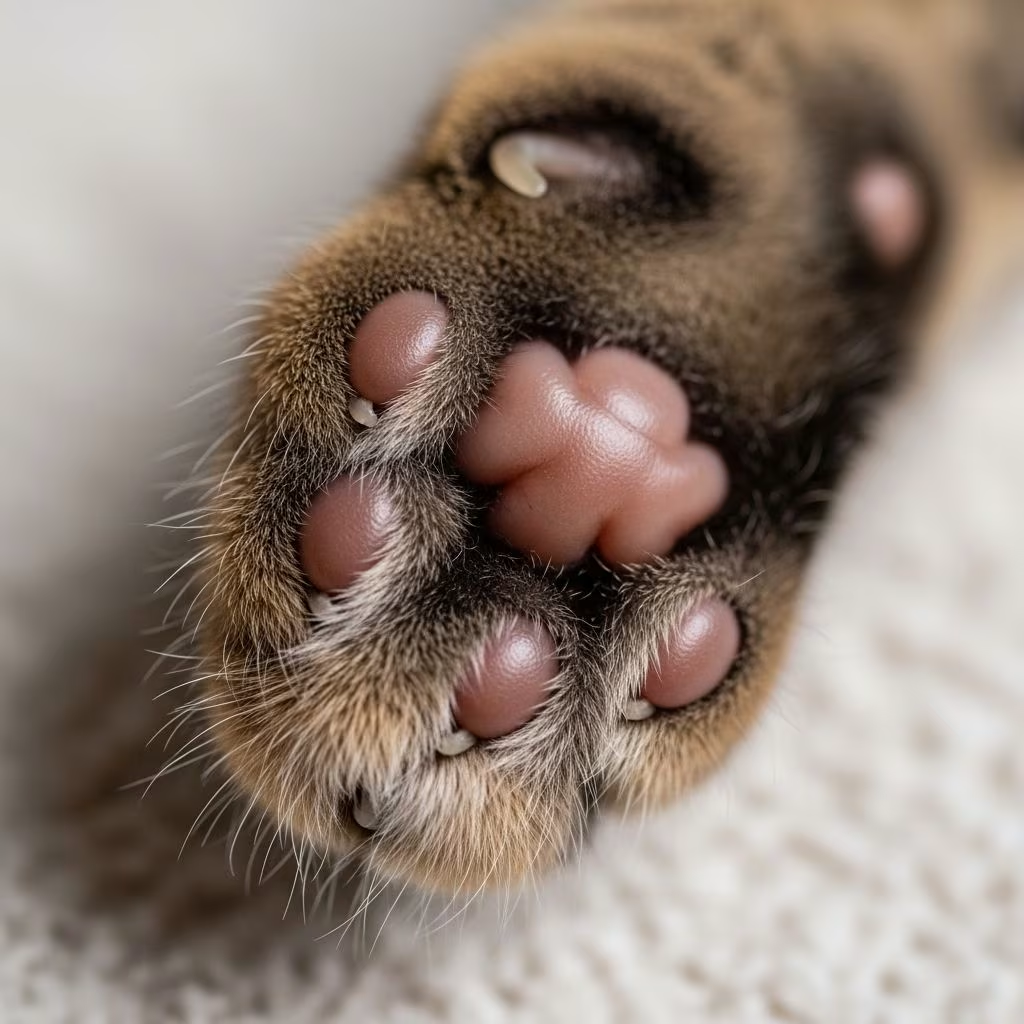
Those soft, colorful pads on your cat’s paws, affectionately known as toe beans, are far more than just Instagram-worthy features. They play crucial roles in your feline friend’s daily life, from stealthy hunting to territorial marking and sensory perception. This comprehensive guide dives deep into the anatomy, functions, variations, and maintenance of these remarkable paw pads, helping cat owners appreciate and care for them properly.
The Anatomy of Feline Paw Pads
Cat paws are engineering marvels, with toe beans forming the core of their structure. Each front paw typically features five digital pads—one at the base of each toe—plus a prominent metacarpal pad in the center, resembling the ball of a human foot. The hind paws usually have four digital pads, streamlining them for speed and power. Additionally, a carpal pad sits higher on the front legs, acting like a thumb for enhanced grip during climbs or captures.
These pads are hairless, fleshy cushions packed with specialized tissues. Beneath the soft exterior lies a network of collagen and elastin for shock absorption, allowing cats to leap from heights without injury. Sweat glands dot the surface, aiding in minimal perspiration since cats primarily cool via panting. Scent glands between the pads release pheromones during kneading, subtly claiming territory on fabrics or surfaces.
- Digital pads: Positioned at toe tips, house claws and provide traction.
- Metacarpal pad: Largest central cushion for weight distribution.
- Carpal pad: ‘Thumb-like’ pad on front legs for dexterity.
Why Toe Beans Are Hairless Wonders
The absence of fur on toe beans is no accident—it’s an evolutionary adaptation for peak performance. Hair would cause slippage on varied terrains, hindering silent stalks or high jumps. This smooth surface ensures reliable friction, whether scaling trees or pouncing on prey.
Moreover, hairlessness facilitates temperature regulation. Concentrated sweat glands in the pads release moisture to cool the body during exertion, preventing overheating. In cold weather, the pads’ vascular richness helps retain warmth, showcasing their multifunctional design.
Sensory Superpowers: Feeling the World Through Paws
Toe beans are feline sensory hubs. Embedded nerves detect minute vibrations, alerting cats to hidden prey or environmental shifts. This hypersensitivity turns paws into vibration detectors, far surpassing human capabilities.
During hunts, these pads sense subtle twitches underground or through foliage, enabling precise strikes. At home, they help navigate furniture in dim light or detect household changes. The pads’ elasticity amplifies these signals, making cats exceptionally attuned to their surroundings.
Counting the Beans: Standard vs. Polydactyl Paws
| Paw Type | Number of Digital Pads | Total Beans (per cat) | Notable Feature |
|---|---|---|---|
| Front Paws (Standard) | 5 per paw | 10 | Includes dewclaw pad |
| Hind Paws (Standard) | 4 per paw | 8 | Optimized for speed |
| Polydactyl Front Paws | 6+ per paw | 12+ | Genetic extra digits |
Most cats boast 18 toe beans total, but polydactyl breeds like Maine Coons or Hemingway cats (from Ernest Hemingway’s Key West colony) sport extras, sometimes up to 27 or more. These mutations add digits without impairing function, often enhancing grip. Check your cat’s paws gently to count—variations add unique charm.
Colors of Toe Beans: A Pigment Palette
Toe bean hues mirror fur patterns, dictated by melanin levels. Pink pads suit light-coated cats, black for dark fur, orange for gingers, and multicolored for tabbies or calicos. Nose leather often matches pad color, a genetic clue.
- Pink: Common in white or light cats; indicates low melanin.
- Black/Gray: Matches dark or tabby coats.
- Orange/Pink Mix: Ginger cats’ signature.
- Multi-hued: Tortoiseshells or particolors.
Changes in color might signal health shifts—darkening could mean bruising or allergies, lightening dryness. Vibrant pink often appears post-exercise from dilated blood vessels.
Essential Functions: From Jumping to Marking
Toe beans multitask brilliantly. As shock absorbers, they cushion landings from leaps up to six times a cat’s body length. The padded texture prevents skids, vital for agile maneuvers.
Kneading activates scent glands, depositing pheromones for comfort and ownership—think ‘making biscuits.’ Scratching extends this, combining claw sharpening with marking. Claws retract into pad folds, protected until needed; gentle toe pressure protracts them for trims.
Health Signals Hidden in Toe Beans
Paw pads reveal wellness. Cracks suggest dryness from heat, cold, or low humidity—moisturize with vet-approved balms. Limping? Inspect for thorns, stones, or swelling.
Bright pink pads post-play indicate good circulation; persistent pallor or black spots warrant vet checks for infections or pododermatitis. Hyperpigmentation in seniors might be benign aging. Regular exams catch issues early.
Caring for Your Cat’s Precious Paws
Daily grooming keeps toe beans thriving. Wipe pads weekly with damp cloths to remove litter or debris. Avoid human lotions—use pet-safe paw waxes for dry climates.
- Trim nails monthly using toe flexion technique.
- Provide scratching posts to prevent overgrowth.
- Check for foreign objects during pets.
- Moisturize cracks with vet balms like vaseline alternatives.
- Monitor for color/texture changes.
For hairless breeds, extra hydration combats cracking. Indoor cats benefit from paw-stimulating toys mimicking outdoor textures.
Fun Facts and Myths Busted
Not all cats have identical beans—polydactyls prove diversity. Myth: Toe beans are just cute. Fact: They’re survival tools. Another: Cats sweat everywhere. Truth: Primarily paws. These pads evolved for wild prowess, now delighting homes.
Frequently Asked Questions (FAQs)
How many toe beans does a cat have?
Standard cats have 18: 5 per front paw (20 total front including carpal), 4 per hind (8 total). Polydactyls have more.
Why do cats knead with their paws?
Kneading releases scent pheromones from toe bean glands, marking territory while mimicking kitten nursing.
Can I touch my cat’s toe beans?
Many cats love gentle massages, but respect boundaries—some find it ticklish or overstimulating.
What if my cat’s toe beans are dry or cracked?
Apply pet-safe balm, increase humidity, and consult a vet if persistent.
Do toe bean colors indicate breed?
Not strictly—melanin links to fur, but exceptions abound across breeds.
References
- Cat Paw Anatomy: Toe Bean Facts — Poll to Pastern. 2023. https://www.polltopastern.com/post/cats-and-their-magical-beans
- Discover Why Cat Toe Beans Are Fascinating — YouTube (Catswiz). 2023. https://www.youtube.com/watch?v=TU5yGRw1Qj4
- What’s Up with Kitty Toe Beans — Armarkat. 2023. https://www.armarkat.com/blog/whats-up-with-those-kitty-toe-beans/
- The Ultimate Guide to Cat’s Paws — Comforted Kitty. 2023. https://comfortedkitty.com/understanding-cat-paws-guide/
- Toe Beans 101: Keeping Paws Healthy — Modkat. 2023. https://modkat.com/blogs/modkat-purrr/cat-toe-beans-how-to-keep-your-kitty-s-paws-healthy



