

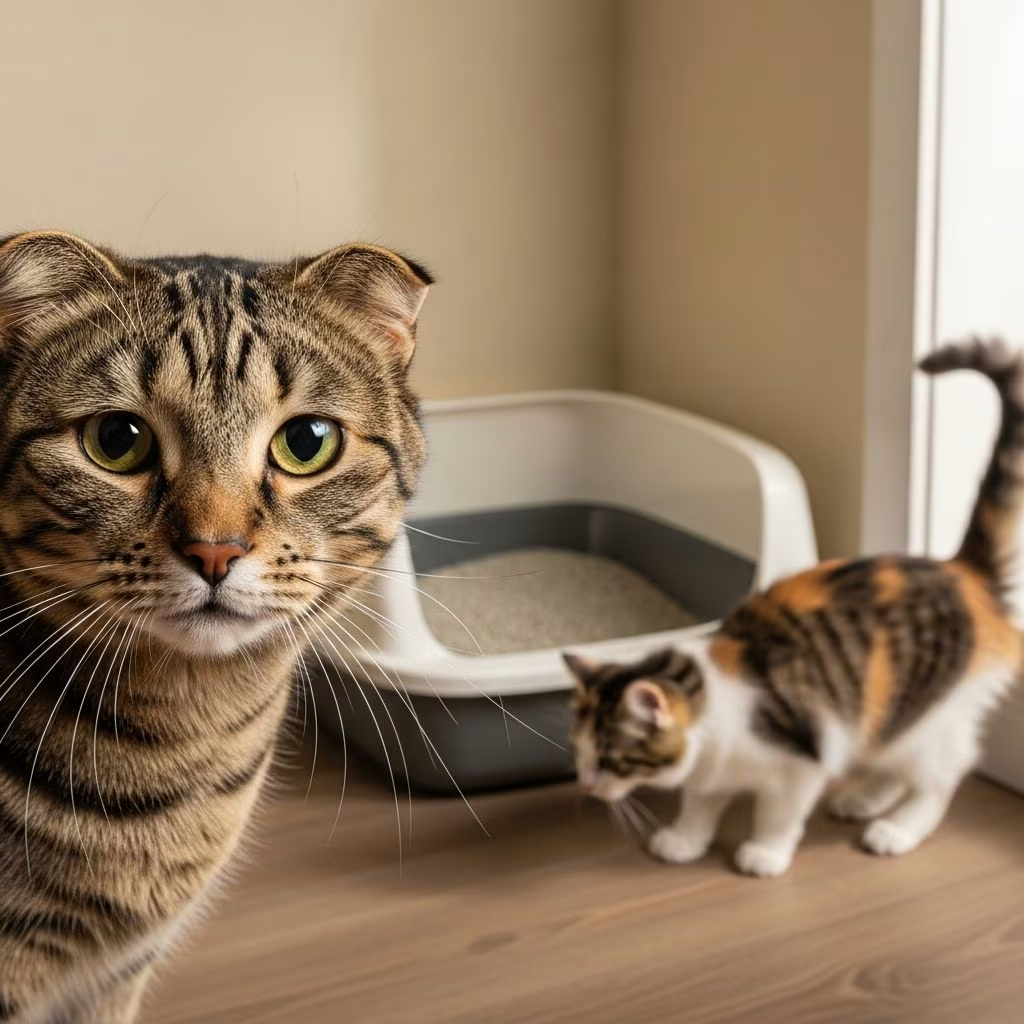
Cats are inherently territorial creatures, a trait passed down from their wild ancestors, which often manifests in behaviors around the litter box such as spraying or avoidance. Understanding this instinct helps pet owners address issues like inappropriate elimination effectively.
The Roots of Feline Territorial Instincts
Felines establish and defend personal spaces where they rest, eat, and eliminate to ensure safety and access to resources. This behavior stems from solitary wildcats that only interacted for mating or competition, marking areas with scents to signal boundaries. In modern homes, especially multi-cat environments, overlapping territories can lead to stress and litter box conflicts.
Domestic cats adapt to group living when provided ample resources, but their core drive to claim space persists. Indoor cats, lacking vast outdoor ranges, intensify marking within the home, sometimes using elevated spots for urine deposits to assert dominance. Neutered males and females exhibit this less intensely, but unneutered toms are notorious for strong odors from hormone-rich sprays.
Recognizing Signs of Territorial Stress in the Litter Box
Watch for indicators like urine spraying on vertical surfaces, feces outside the box, or sudden refusal to use the litter area. These actions communicate boundaries to perceived intruders, real or imagined. Other cues include rubbing cheeks on objects, scratching posts aggressively, or vocalizing during elimination.
- Spraying: A fine mist of urine aimed high, distinct from squatting to urinate.
- Middening: Dropping feces in open areas as a bold territorial statement.
- Avoidance: Choosing corners or rugs over the box due to felt threats.
- Aggression: Swatting or chasing near the litter zone.
In multi-cat homes, one cat may block access, prompting others to eliminate elsewhere. New pets, visitors, or rearrangements can trigger these responses.
Why Litter Boxes Become Battlegrounds
Litter boxes represent high-stakes zones for elimination and scent marking. A cat views contamination by another feline’s waste as an invasion, leading to rejection of the box. Factors exacerbating this include insufficient boxes—one per cat plus one extra is ideal—poor location near food, or uncleanliness.
| Common Trigger | Impact on Behavior | Solution Preview |
|---|---|---|
| Crowded litter areas | Avoidance and spraying | Add more boxes |
| Unclean litter | Elimination outside | Daily scooping |
| New cat introduction | Territorial aggression | Slow integration |
| Stress from changes | Marking increase | Pheromone aids |
Territorial overlaps allow tolerance in shared neutral zones, but core areas like sleeping spots and litter boxes remain exclusive. Tomcats patrol larger ranges encompassing females, amplifying marking during mating seasons.
Strategies to Resolve Territorial Litter Conflicts
Begin with veterinary checks to rule out medical causes like urinary infections, which mimic behavioral issues. Spaying or neutering reduces hormone-driven marking by up to 90% in many cases.
Optimize the environment: Place boxes in quiet, accessible spots away from food and water. Use unscented, clumping litter, scooping daily and fully changing weekly. In multi-cat setups, distribute boxes across territories to prevent guarding.
- Introduce new cats gradually via scent swapping and supervised meetings.
- Employ synthetic pheromones like Feliway diffusers to mimic calming facial scents.
- Provide vertical spaces and hiding spots for retreat.
- Enrich with toys and perches to diffuse tension.
For persistent spraying, clean marked areas with enzymatic cleaners to erase scents completely. Positive reinforcement—treating after proper use—builds good habits without punishment, which heightens stress.
Handling Aggression Tied to Territory Defense
Territorial aggression involves chasing, swatting, or blocking litter access, often toward newcomers or returning residents post-vet visits. Cats prefer non-violent deterrence via pheromones first, resorting to fights only if marking fails.
Distinguish play from conflict: Play features relaxed ears and reciprocal actions, while aggression shows stiff posture, hissing, and one-sided pursuit. Intermediate behaviors like mutual grooming signal tolerance rebuilding.
Separate feuding cats initially, reintroducing slowly. Ensure equal resources to avoid resource guarding. Professional behaviorists can assess dynamics in complex households.
Multi-Cat Dynamics and Peaceful Coexistence
Successful multi-cat homes mimic natural tolerances with resource abundance. Cats form loose hierarchies, rubbing to blend scents and affirm bonds. Indoor-only cats may seek more human interaction, rubbing owners as territory extension.
Monitor for bullying: Dominant cats may stalk or ambush, stressing subordinates into litter avoidance. Vertical territory—cat trees, shelves—allows escape and equal access.
Health and Medical Influences on Territorial Marking
Conditions like hyperthyroidism or cystitis provoke marking-like elimination. Elderly cats face mobility issues, preferring soft surfaces. Routine check-ups catch these early.
Queens in heat or post-partum exhibit heightened territoriality, defending kittens fiercely. Induced ovulators, they cycle seasonally unless bred.
FAQs on Cat Territorial Behavior and Litter Boxes
Do all cats spray to mark territory?
No, but intact males do most frequently due to potent pheromones. Neutering curbs this significantly.
Why does my cat poop outside the litter box?
Often territorial signaling or box dissatisfaction. Ensure cleanliness and privacy.
Can female cats be territorial?
Yes, though less than males; stress amplifies it in any cat.
How many litter boxes for two cats?
Three: one per cat plus one spare, in separate locations.
Does punishment stop spraying?
No, it worsens anxiety. Use positive methods and environment tweaks.
Long-Term Prevention for a Harmonious Home
Consistent routines, ample play, and monitoring changes prevent flare-ups. Track behaviors in a journal to spot patterns. Over time, cats adapt, scent-marking less as security grows.
Owners report success with patience: One study household saw spraying drop after adding boxes and pheromones. Celebrate small wins like consistent box use.
References
- Territorial Behaviour of Cats — FOUR PAWS International. 2023. https://www.four-paws.org/our-stories/publications-guides/territorial-behaviour-of-cats
- Territorial Marking and Spraying Behavior in Cats — Cats.com. 2024. https://cats.com/territorial-marking-and-spraying-behavior-in-cats
- Feline Behavior Problems: Aggression — Cornell University College of Veterinary Medicine. 2025-02-01. https://www.vet.cornell.edu/departments-centers-and-institutes/cornell-feline-health-center/health-information/feline-health-topics/feline-behavior-problems-aggression
- The Mechanics of Social Interactions Between Cats and Their Owners — PMC (NCBI). 2021-04-12. https://pmc.ncbi.nlm.nih.gov/articles/PMC8044293/
- Cat-egorising play and genuine fighting in cats — EurekAlert! (University of Lincoln study). 2023-11-15. https://www.eurekalert.org/news-releases/977498
- Social Behavior of Cats — Merck Veterinary Manual. 2025. https://www.merckvetmanual.com/behavior/behavior-of-cats/social-behavior-of-cats



