

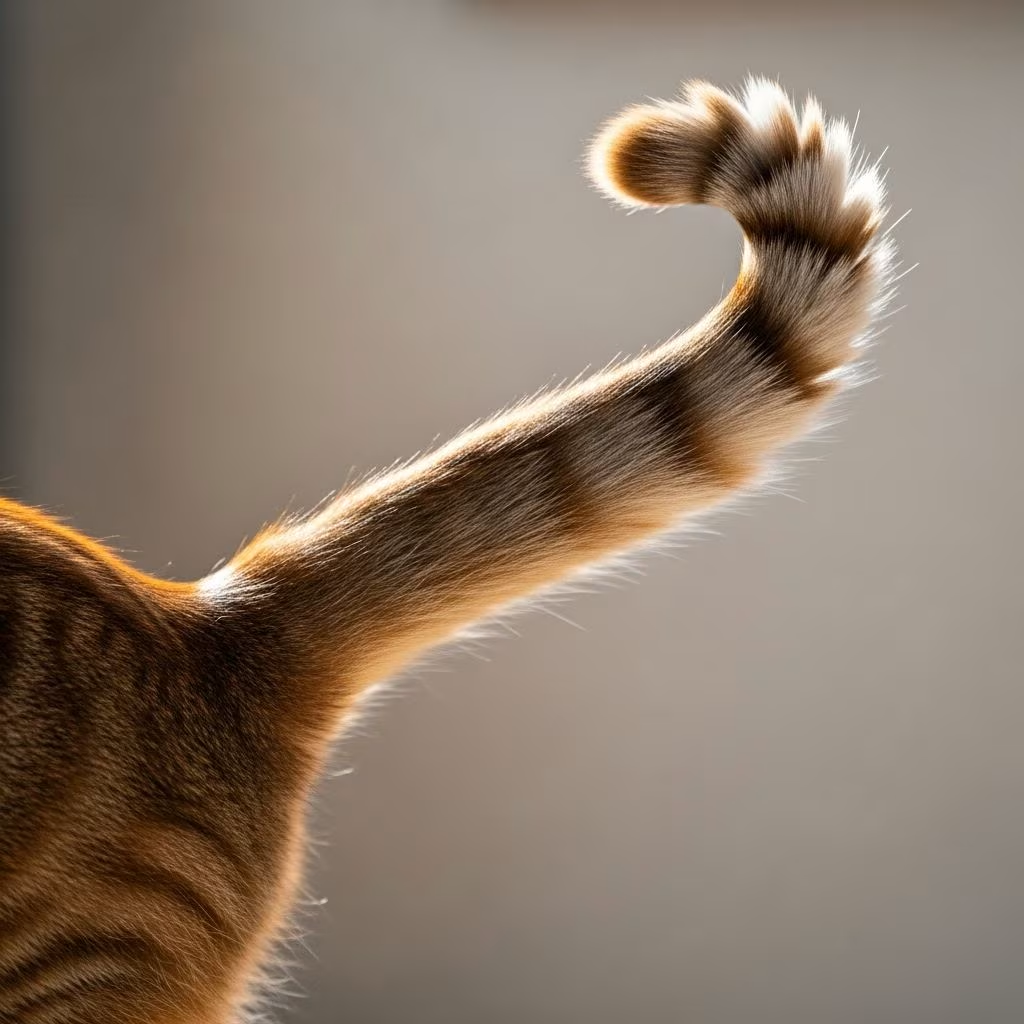
The tail of a domestic cat serves as a dynamic communication tool, conveying a spectrum of emotions from contentment to agitation. Unlike dogs, where tail wagging often signals unbridled joy, cats employ a nuanced vocabulary of tail movements that pet owners must learn to interpret correctly.
The Anatomy and Role of a Cat’s Tail in Communication
A cat’s tail, composed of approximately 20 flexible vertebrae, acts as an extension of their expressive body language. This appendage helps maintain balance during leaps and turns, but its primary function in social interactions is signaling mood and intent. Veterinary behaviorists note that tail positions and motions provide immediate insights into a cat’s internal state, allowing humans to respond appropriately and avoid misunderstandings.
Observing the tail in context with ears, whiskers, and posture yields the most accurate readings. For instance, a tail movement paired with dilated pupils might indicate heightened arousal, while relaxed ears suggest playfulness.
Common Tail Wagging Patterns and Their Meanings
Cats exhibit distinct tail wagging styles, each linked to specific emotional triggers. Recognizing these patterns enhances the human-feline bond and promotes a stress-free environment.
- Slow, Rhythmical Swishing: This gentle side-to-side motion often reflects a cat’s focused concentration, such as when watching birds outside a window or tracking a toy. It signals mild interest without distress.
- Rapid Thrashing or Lashing: A forceful back-and-forth whipping indicates rising frustration or anger. Cats display this when overstimulated during petting sessions or territorial disputes.
- Quick Twitching at the Tip: Subtle flicks at the tail’s end denote irritation or predatory focus. This can precede a pounce during play or signal annoyance if the cat feels bothered.
- Low, Tucked Wag: When held low and quivering, the tail conveys fear or submission, often seen in unfamiliar settings.
Playful vs. Agitated Tail Movements: Key Differences
Distinguishing playful enthusiasm from brewing agitation prevents accidental scratches. During play, tail wags are fluid and paired with forward ears and a crouched stalk. In contrast, agitated wags stiffen the body, flatten ears, and may include hissing.
| Tail Movement | Playful Indicators | Agitated Indicators |
|---|---|---|
| Slow Swish | Relaxed body, pouncing posture | Stiff posture, growling |
| Tip Twitch | Chasing toys, dilated pupils | Ear flattening, avoidance |
| Fast Lash | Rare in pure play | Thumping ground, swatting |
This table highlights contextual cues to differentiate moods accurately.
Why Cats Wag Tails During Interaction with Humans
When a cat wags its tail while near you, it could mean affection, overstimulation, or uncertainty. A soft swish during cuddles shows contentment, but escalating to lashing warns of impending withdrawal. Experts recommend pausing petting at the first sign of twitching to respect boundaries.
Cats may also wrap their tails around legs or arms as a greeting, mimicking social bonding with other cats. This intertwining deposits scent glands, marking you as trusted.
Tail Signals in Multi-Cat Households
In homes with multiple cats, tail wagging communicates hierarchies and tensions. A raised tail with a slight wag signals friendly approach, while parallel thrashing precedes fights over resources. Owners should monitor these to intervene early, perhaps by providing separate feeding areas.
Health-Related Tail Wagging Changes
Sudden alterations in tail habits can flag medical issues. Persistent tucking or limp dragging might indicate pain from injury or arthritis. Hyperactive wagging without clear stimuli could stem from neurological conditions. Consult a vet if patterns shift abruptly.
How to Respond to Different Tail Wags
Appropriate responses reinforce positive communication:
- Ignore slow swishes and allow observation.
- Cease interaction during lashing; offer space.
- Engage play with twitching tails using interactive toys.
- Comfort tucked tails by removing stressors gradually.
Consistency builds trust, reducing unwanted behaviors.
Evolutionary Roots of Feline Tail Language
Wild ancestors like the African wildcat used tail signals for silent hunting coordination and group dynamics. Domestic cats retain these instincts, adapting them for human companionship. This heritage explains why even solitary indoor cats ‘talk’ via tails.
Training Tips to Enhance Tail Communication Awareness
Observe daily for 5-10 minutes, noting tail with other cues. Use positive reinforcement for calm signals. Apps tracking behaviors can aid pattern recognition, though professional behaviorists offer tailored advice.
Frequently Asked Questions
What does a wagging cat tail really mean?
A wagging tail typically expresses ambivalence or focus, not happiness like in dogs. Context determines if it’s play, irritation, or uncertainty.
Why does my cat slap me with its tail?
Tail slapping signals irritation or a request for space, often preceding bites or scratches. Back off to de-escalate.
Is tail flicking a sign of happiness?
Flicking often indicates fascination or mild annoyance, not pure joy. Pair with body language for clarity.
Why do cats wag tails when petted?
Initial wags show pleasure, but rapid ones mean overstimulation. Stop at twitching to avoid discomfort.
Can tail wagging indicate illness?
Yes, unusual patterns like excessive stillness or trembling warrant veterinary checks for pain or neurological issues.
Advanced Tail Reading Techniques
Combine tail with vocalizations: purring plus swish equals bliss; growling plus thrash equals anger. Video recordings help analyze subtle shifts over time.
References
- The Ultimate Guide to Cat Tail Language and Its Meanings — Cats.com. 2023. https://cats.com/cat-tail-meanings
- Cat Tail Language: 10 Secret Messages Your Cat Is Sending You — Chewy.com. 2023. https://www.chewy.com/education/cat/training-and-behavior/cat-tail-language-what-your-cats-tail-says-about-her-mood
- What is your cat’s tail telling you? — Blue Cross. 2023. https://www.bluecross.org.uk/advice/cat/behaviour-and-training/what-is-your-cats-tail-telling-you
- How to Read Your Cat’s Tail Language and Meaning — PetMD. 2023. https://www.petmd.com/cat/behavior/cat-tail-language



