

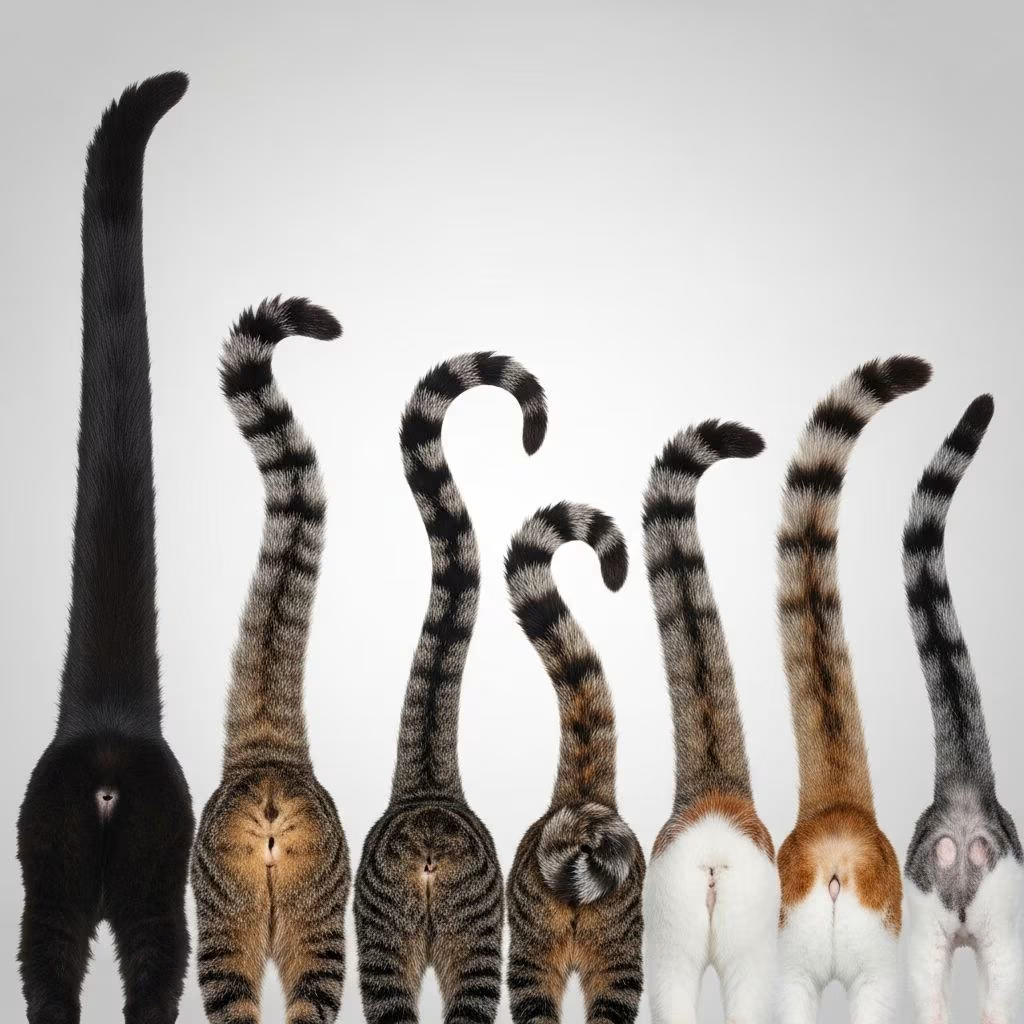
The tail of a cat serves as more than just a balance aid during leaps and bounds. It acts as a dynamic communicator, a breed identifier, and a showcase of genetic diversity. Across countless domestic cat breeds, tails exhibit remarkable variations in length, shape, texture, and movement. These differences not only distinguish one breed from another but also convey a cat’s emotional state, from contentment to agitation. Understanding these tail types enriches the bond between owners and their pets, offering insights into health, mood, and heritage.
The Anatomy Behind Every Tail
A cat’s tail consists of approximately 20 to 23 vertebrae, making it highly flexible and expressive. Covered in fur that varies from sleek to plush, the tail’s structure supports functions like counterbalancing during jumps and signaling to other cats. Muscles along the spine allow for precise movements, such as the gentle sway of relaxation or the rapid flick of irritation. In breeds, selective breeding has amplified certain traits, resulting in tails that are disproportionately long, dramatically short, or uniquely curled.
Beyond aesthetics, tail health reflects overall well-being. A limp tail might indicate nerve damage, while excessive grooming could signal allergies or parasites. Regular checks ensure these vital appendages remain functional.
Long and Elegant: Tails That Command Attention
Many breeds boast tails that extend gracefully, often exceeding body length and featuring luxurious fur. These long tails enhance a cat’s majestic appearance and aid in agile maneuvers.
- Maine Coon: Known as one of the largest domestic cats, their tails are bushy and fox-like, providing insulation in cold climates. The fur is longer at the tip, forming a natural flag.
- Norwegian Forest Cat: Adapted to rugged terrains, this breed’s flowing tail repels water, supporting their semi-wild lifestyle. It’s thick at the base, tapering to a fine point.
- Siamese and Oriental Shorthair: Slender and whip-like, these tails match their lithe bodies. The Oriental’s tail can display over 300 color patterns, adding visual flair.
These tails often swish slowly when the cat is focused, signaling curiosity or mild interest.
Fluffy and Plumed: Insulation and Showmanship
Breeds with plumed tails prioritize warmth and display. The fur is dense, creating a feather-duster effect that sways hypnotically.
| Breed | Tail Feature | Key Benefit |
|---|---|---|
| Nebelung | Thick plume longer than body fur | Enhanced insulation and elegance |
| Somali | Bushy, fox-like with ruddy coat match | Mimics wild ancestry for camouflage |
| Persian | Short but fluffy, low carriage | Protects hindquarters when resting |
Owners of plumed-tail cats must brush regularly to prevent mats, as the dense fur traps debris.
Short and Pom-Pom: Compact Powerhouses
Short tails evolved naturally or through breeding, often resembling pom-poms or stubs. These compact designs suit agile, rugged lifestyles without sacrificing expressiveness.
- Kurilian Bobtail: A natural mutation yields a short, pompom-shaped tail. Originating from Russian islands, it’s flexible despite its brevity.
- American Bobtail: Medium-short with a slight curve, this tail wags like a dog’s when happy, endearing it to families.
Short tails quiver during greetings, mimicking longer ones’ signals in a condensed form.
Curled and Ringed: Playful Twists
Curled tails add whimsy, curling over the back or forming rings. They’re genetic hallmarks of specific breeds.
- American Ringtail: Naturally curls backward, a trait from feral roots. It’s not injury-related but a breed standard.
- Kinkalow: Longer than the body, this Munchkin-Curl hybrid’s tail curls alongside its ears.
These tails often hook at the tip when the cat approaches trusted humans, signaling affection.
Striped and Patterned: Camouflage in Domesticity
Tabby patterns extend to tails, with stripes aiding ancestral hunting camouflage. Genes like Dkk4 create these markings during fetal development.
- Toyger: Tiger-mimicking stripes branch boldly on the tail, paired with necklace facial markings.
- Mackerel Tabbies: Common across breeds, narrow stripes run tail-length, enhancing stealth.
Owners appreciate these patterns for their low-maintenance visibility during outdoor ventures.
Tail Language: Decoding Feline Emotions
Tails speak volumes. Position and motion reveal inner states, universal across breeds despite shape variations.
- Upright with curled tip: Friendly greeting, like a handshake.
- Quivering vertical: Excitement or scent-marking intent.
- Slow swish: Concentration on prey or thought.
- Rapid lash: Frustration or aggression warning.
- Tucked low: Fear, submission, or discomfort.
- Puffed bottlebrush: Defensive threat display, appearing larger.
- Wrapped around: Affection or ownership over people/objects.
Observing these cues prevents mishaps, like petting an annoyed cat.
Breed-Specific Tail Care Essentials
Each tail type demands tailored maintenance. Long, fluffy tails need daily combing to avoid tangles. Short tails benefit from inspections for hidden injuries. Curled tails require gentle handling to preserve shape.
Common issues include hairballs from overgrooming, infections from wounds, and hyperesthesia syndrome causing tail-chasing. Veterinary check-ups biannually catch problems early. Nutrition with omega-3s promotes fur health.
Health Indicators Hidden in the Tail
A healthy tail is active and smooth. Warning signs include:
- Swelling or heat: Possible abscess.
- Dragging: Neurological issue.
- Bald patches: Allergies or mites.
- Lack of movement: Pain or fracture.
Prompt vet visits preserve mobility. X-rays diagnose breaks; antibiotics treat infections.
Fun Facts About Feline Tails
- The Manx breed’s taillessness stems from a genetic mutation affecting spinal development.
- Tails aid 90-degree turns mid-air via the righting reflex.
- Some breeds, like the Sphynx, have whip-thin tails accentuating hairlessness.
- Tail docking is unethical and illegal in many places for domestic cats.
Frequently Asked Questions
Why do cats chase their tails?
Often playful or itch-relief, but persistent chasing may indicate boredom, fleas, or neurological conditions. Provide toys and check for parasites.
Can a cat’s tail regenerate if injured?
No, unlike lizards. Severe injuries require surgery; tails don’t regrow due to complex bone structure.
Do all cats with short tails have the Manx gene?
No. Breeds like Bobtails have distinct genetics; Manx taillessness carries spinal risks.
How can I tell if my cat’s tail wagging means happiness?
Dog-like broad wags indicate joy in some breeds, but feline side-to-side usually means annoyance. Context matters.
Are curly tails a sign of purebred status?
Often yes, in breeds like Ringtails, but mixed cats can inherit curls unpredictably.
Evolutionary Roots of Tail Diversity
Domestic cats descend from African wildcats, whose straight tails prioritized stealth. Breeding diversified forms: long tails for cold adaptation, short for agility in dense brush. Today, tails blend utility and beauty, reflecting millennia of human-feline partnership.
In multi-cat homes, tail signals prevent conflicts. A puffed tail deters intruders; intertwined tails show alliances.
References
- Unique Cat Tails: Top 25 Breeds — Litter-Robot. 2023. https://www.litter-robot.com/blog/unique-cat-tails-25-breeds/
- Cat Tail Types (and What They Mean) — CatHome. 2022. https://www.cathome.sg/articles/Cat-Tail-Types-(and-What-They-Mean)
- Hybrid Cattails: Not All Cattails are Created Equal — Voyageurs Conservancy. 2021. https://www.voyageurs.org/news/hybridcattails



