

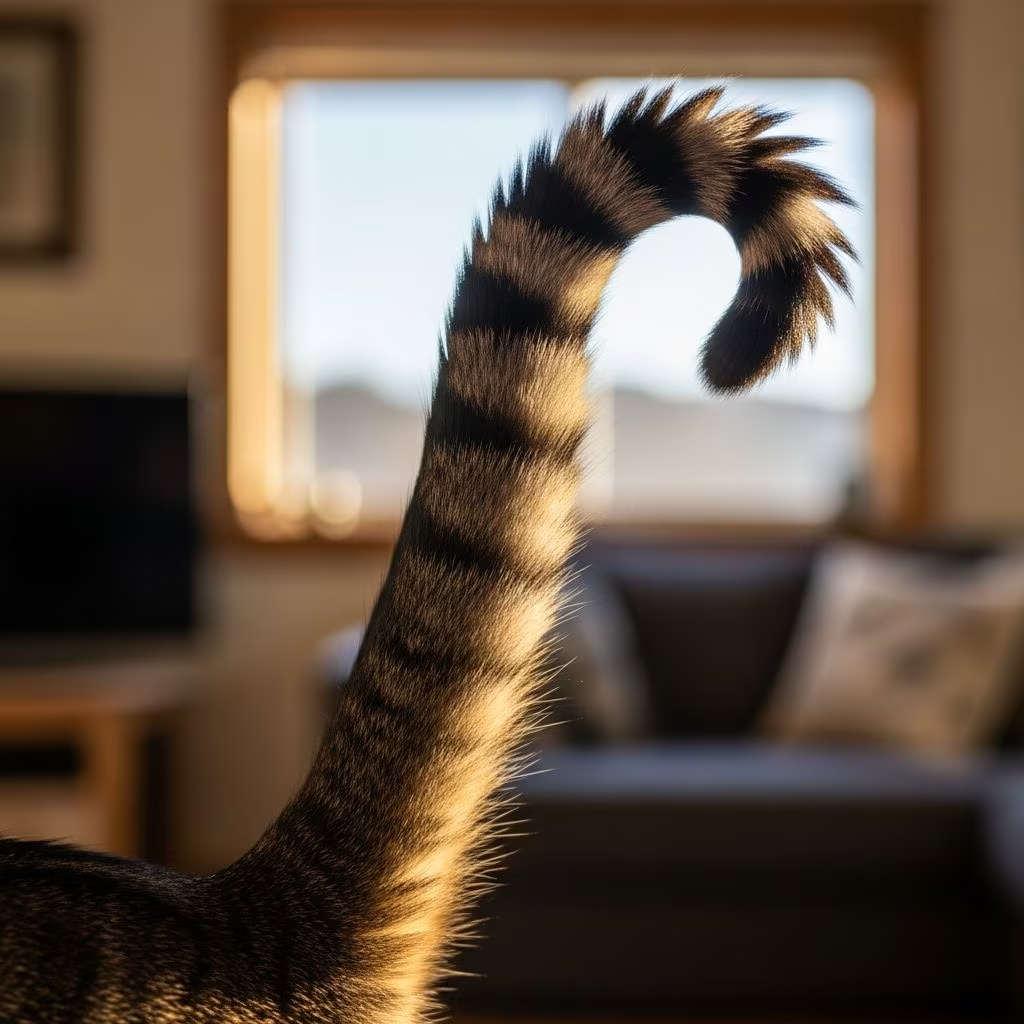
Cats communicate volumes through their tails, using subtle positions and motions to convey emotions ranging from delight to distress. Mastering these signals fosters deeper connections with your pet.
The Anatomy of Feline Tail Expression
The tail serves as a dynamic extension of a cat’s emotional state, visible from afar and rich in nuance. Unlike vocalizations, tail gestures offer silent yet potent messages during interactions with humans or fellow felines. Research highlights how these movements integrate with ear and body postures for comprehensive signaling.
Domestic cats, Felis catus, evolved these displays for social coordination in colonies, balancing affiliation and conflict avoidance. A straight-up tail often signals approachability, particularly noted in female cats during greetings.
Vertical Tail Positions: Confidence and Greeting
A tail held high straight up indicates confidence and friendliness. This posture, frequent in kitten-to-mother interactions, extends to adult cats meeting familiars. Owners often see it during homecomings, signaling ‘welcome back’.
- Straight up: Bold social invitation, ideal for petting.
- With slight curl: Question-mark shape denotes playful curiosity.
Studies confirm cats prefer silhouettes with raised tails, associating them with safety. In human-cat bonds, this display precedes rubbing, reinforcing trust.
Curled and Wrapped Tails: Signs of Affection
When a cat curls its tail around your leg or another cat’s, it mimics hugging, denoting inclusion in their social circle. This affiliative gesture spreads scent from tail glands, marking bonds.
Intertwined tails among cats strengthen group ties, much like hand-holding in humans. If directed at you, reciprocate gently to affirm the connection.
| Tail Shape | Meaning | Best Response |
|---|---|---|
| Wrapped around leg | Affectionate greeting | Pet softly, speak calmly |
| Intertwined with another cat | Social bonding | Observe without interfering |
| Question mark hook | Playful invitation | Initiate play or cheek rubs |
Low and Tucked Tails: Fear and Submission
A lowered or tucked tail reveals insecurity. Tucked fully under the body, it screams fear, often paired with arched backs or dilated pupils. This defensive stance minimizes perceived size against threats.
In multi-cat homes, subordinates may tuck tails around dominants, inhibiting aggression. Unlike dogs, cats rarely wag tails in joy; low positions universally signal caution.
- Slightly low: Mild unease or contemplation.
- Fully tucked: High anxiety; provide space.
Dynamic Movements: From Swish to Thrash
Static positions give way to motion for nuanced alerts. A gentle swish shows relaxed focus, like watching birds. Rapid thrashing, however, broadcasts irritation—back off to prevent escalation.
Puffed tails amplify during scares, making the cat appear larger. This piloerection stems from adrenaline, not anger alone.
Tail in Context: Ears and Body Matter Too
Tail signals gain clarity alongside ears and posture. Erect ears with tail-up predict positive outcomes like proximity or rubbing, while flattened ears override tail optimism, foretelling retreat.
In cat-cat dyads, symmetrical ear positions dominate interaction success over tails. Humans attuned to tail-up with non-erect ears avoid misreading infant-like appeals as pure friendliness.
Common Tail Scenarios in Daily Life
During feeding, a quivering tail-tip expresses anticipation. Sleepy slow swishes indicate contentment. Chasing laser pointers? Fluid swishes mean engaged hunting mode.
Post-vet visits, persistent low tails signal lingering stress. Monitor clusters: tail lash plus growl equals ‘leave me alone’.
Age and Gender Influences on Tail Use
Females display tail-up more, linking to reduced aggression and rubbing. Kittens use it instinctively for maternal access, adults for colony integration. Elderly cats may stiffen tails, limiting expressiveness—watch for compensatory ear twitches.
Enhancing Communication Through Observation
Practice by noting tail shifts during routines. Reward positive signals with treats, ignore negatives to extinguish. Multi-cat households benefit from tail logs to preempt squabbles.
Enrich environments reduce unwanted puffs or lashes, promoting upright greetings. Consult vets for persistent fear tails, ruling out pain.
FAQ: Cat Tail Language Essentials
What does a straight-up cat tail mean?
It signals confidence and a friendly approach, perfect for interaction.
Why is my cat’s tail thrashing?
Thrashing indicates annoyance; stop petting to de-escalate.
Is tail wrapping always affectionate?
Yes, it shows social bonding and scent-marking comfort.
How do ears affect tail interpretation?
Erect ears with tail-up predict amicable outcomes; flattened ones signal tension despite tail.
What if my cat’s tail is always low?
Check for stress sources or health issues; ensure safe spaces.
Building a Tail-Savvy Home
Transform misunderstandings into harmony by decoding tails daily. Vertical displays invite engagement, dynamics warn boundaries. Pair with play, yielding purrs and loyalty.
In feral colonies, tails facilitate peaceful coexistences; domestics retain this for human packs. Your attentiveness elevates you from provider to confidant.
References
- Heads and Tails: An Analysis of Visual Signals in Cats, Felis catus — Animals (PMC). 2021-09-25. https://pmc.ncbi.nlm.nih.gov/articles/PMC8469685/
- How to Read Your Cat’s Tail Language and Meaning — PetMD. Accessed 2026. https://www.petmd.com/cat/behavior/cat-tail-language
- Understanding Cat Tail Language: Decoding Cat Communication — Taste of the Wild Pet Food. 2017-07-27. https://www.tasteofthewildpetfood.com/articles/training-and-behavior/cats-tail-translation/
- Cat Tail Language: 10 Secret Messages Your Cat Is Sending You — Chewy. Accessed 2026. https://www.chewy.com/education/cat/training-and-behavior/cat-tail-language-what-your-cats-tail-says-about-her-mood



