

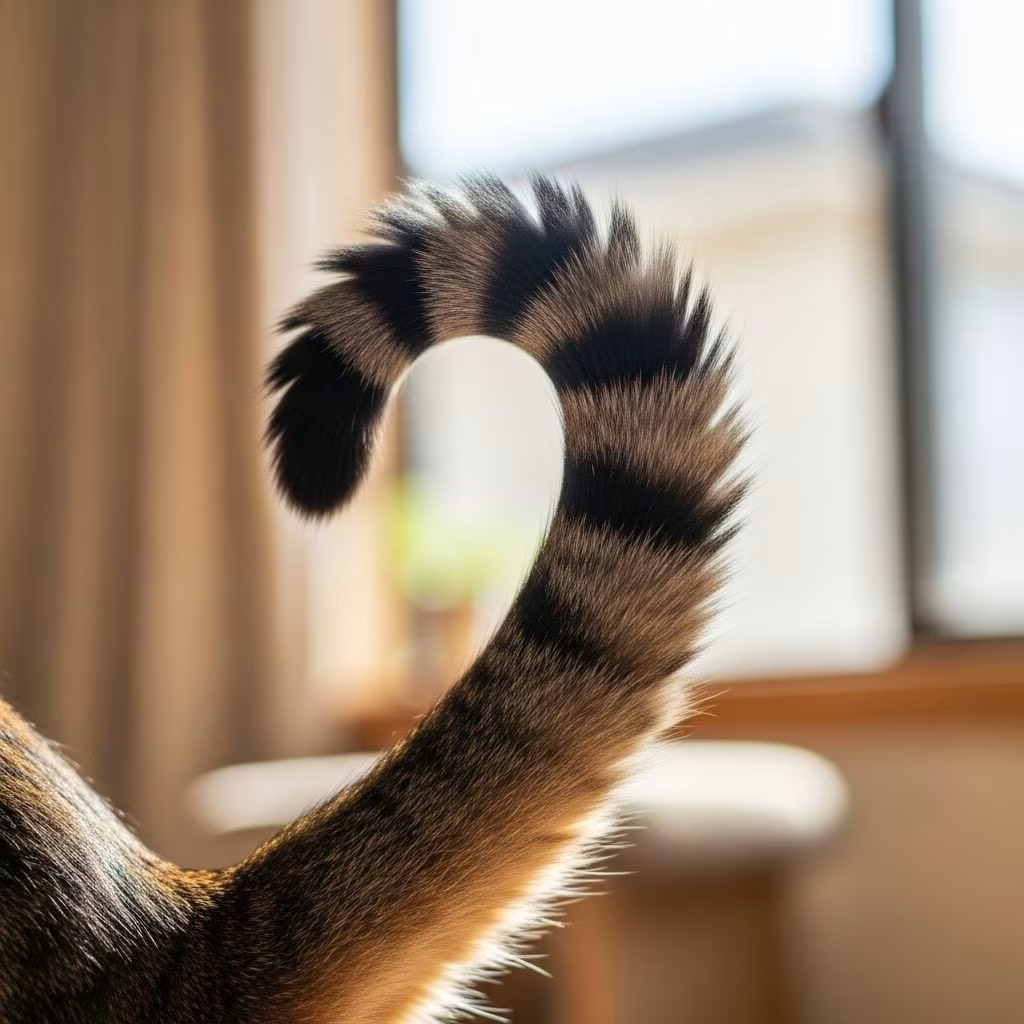
The tail of a cat serves as a dynamic communicator, conveying a spectrum of emotions and intentions through its position and motion. Unlike dogs, where tail wagging often signals happiness, cats employ more nuanced gestures that range from welcoming greetings to subtle warnings. By observing these signals alongside ear positions, eye dilation, and body posture, cat owners can gain profound insights into their pet’s state of mind, fostering mutual understanding and trust.
The Evolutionary Role of the Cat’s Tail
Cats’ tails are not merely decorative; they evolved as essential tools for survival and social interaction. In the wild, felines use their tails for balance during leaps and climbs, as counterweights that enable precise aerial adjustments. Beyond physical utility, tails facilitate non-verbal communication within colonies, helping cats coordinate hunting, establish territories, and form alliances without vocalizations that might alert prey.
Domesticated cats retain these instincts, adapting them to human households. A tail’s sensitivity, packed with nerve endings, allows cats to detect subtle air currents or touches, enhancing their environmental awareness. Understanding this biological foundation illuminates why tail movements are so expressive and reliable indicators of internal states.
Key Tail Positions and Their Interpretations
Static tail positions often provide the clearest snapshots of a cat’s mood. Here’s a breakdown of the most common configurations:
- Upright tail: A straight tail held high signals confidence and sociability. Cats approach familiar people or other animals this way, akin to a friendly handshake. This posture traces back to kitten-mother interactions, where upright tails denote safety and affiliation.
- Curled or hooked tail: Resembling a question mark or shepherd’s crook, this shape indicates amicable curiosity and playfulness. The slight curl at the tip softens the upright stance, inviting interaction without full commitment.
- Tucked tail: When pulled tightly under the body, a tucked tail betrays fear, submission, or discomfort. Often paired with crouched posture and averted gaze, it suggests the cat feels vulnerable and prefers space.
- Puffed or bottlebrush tail: Fur standing on end along a raised or arched tail amplifies the cat’s silhouette, a defensive display to intimidate threats. This piloerection response activates during sudden scares, like loud noises or unfamiliar animals.
These positions rarely occur in isolation. For instance, an upright tail with quivering indicates heightened excitement, such as upon your return home, blending affection with anticipation.
Dynamic Tail Movements: From Playful to Agitated
Movement adds layers to tail communication, transforming static signals into active narratives. Slow, deliberate motions differ sharply from rapid ones, each tuned to specific contexts.
| Movement Type | Meaning | Context | Recommended Response |
|---|---|---|---|
| Slow swish or sway | Focus and concentration | Hunting, stalking toys, or observing birds | Engage in play if playful; observe quietly |
| Fast thrash or lash | Irritation or aggression | Overstimulation during petting or unwanted attention | Back off immediately to prevent escalation |
| Twitch at the tip | Mild excitement or annoyance | Anticipating pounce or subtle frustration | Assess other body cues; proceed cautiously |
| Wrap or twine | Affection and bonding | Greeting humans or other cats | Reciprocate with gentle pets or praise |
A gentle sway from side to side, especially low to the ground, marks a cat deeply engrossed in a target, muscles tensed for a pounce. This predatory focus is harnessed in play sessions with wand toys, satisfying instincts safely. Conversely, vigorous lashing serves as a ‘back off’ cue, escalating if ignored to hisses or swats.
Tip twitching merits attention for its ambiguity. During interactive play, it’s a sign of engagement; window-gazing at wildlife, it reflects predatory intent. However, paired with flattened ears, it hints at brewing irritation.
Contextual Factors Influencing Tail Signals
No tail signal stands alone; holistic body language paints the full picture. Dilated pupils amplify fear in a tucked tail, while slow blinks accompany friendly upright ones. Environmental triggers matter too: a puffed tail near a vacuum cleaner differs from one during rough play.
Individual personalities shape expressions. Bold cats flaunt upright tails boldly, while shy ones default to tucks. Age influences this—kittens experiment with exaggerated curls for attention, seniors may hold tails lower due to arthritis. Health issues, like pain, can mimic fear postures; persistent unusual signals warrant veterinary checks.
Multi-cat homes amplify complexity. Tail twining signals alliances, while parallel lashing indicates standoffs. Introducing new pets requires monitoring these dynamics to prevent conflicts.
Enhancing Communication Through Tail Awareness
Mastering tail language bridges human-feline gaps. Respond to upright greetings with chin scratches, respecting preferred petting zones—cheeks and ears over tails, which many find overstimulating. During swishes, offer feather toys to channel focus productively.
Respect warning signs: halt petting at the first lash, preventing bites. This responsiveness builds trust, as cats learn their signals elicit appropriate reactions. Over time, your cat may initiate more interactions, strengthening the bond.
Training amplifies mutual understanding. Reward calm upright tails with treats, associating positivity. Clicker training pairs tail cues with commands, enhancing responsiveness without force.
Common Misinterpretations and Pitfalls
Owners often misread tails, projecting dog-like logic. A wagging cat tail rarely means joy; it’s tension. Ignoring context leads to errors—like petting a focused swisher, provoking scratches.
Another pitfall: overlooking changes. A once-playful twitch escalating to thrashing signals overstimulation boundaries. Track patterns via journals, noting triggers for tailored adjustments.
FAQs: Answering Top Cat Tail Questions
Why does my cat’s tail puff up suddenly?
This defensive reaction enlarges their profile against perceived threats like strangers or loud sounds. Give space until fur smooths.
Is tail wrapping always friendly?
Typically yes, denoting affection toward trusted beings. Context confirms—relaxed body affirms positivity.
What if my cat holds its tail low constantly?
May indicate pain, illness, or anxiety. Consult a vet if accompanied by lethargy or hiding.
Can I teach my cat tail signals?
Not directly, but positive reinforcement to your responses encourages clearer communication over time.
Do all cats use tails the same way?
Broadly similar, but breeds like Manx (tailless) compensate with other cues; personalities vary expression intensity.
Advanced Insights: Tails in Social and Hunting Contexts
In feral colonies, synchronized upright tails coordinate group movements, minimizing detection. Pet cats mirror this in harmonious homes, twining tails during peaceful coexistences.
Hunting sequences showcase precision: initial low swish builds tension, culminating in explosive pounces. Indoor enrichment—laser pointers, puzzle feeders—mimics this, curbing boredom-induced behaviors.
Breeding pairs use quivering upright tails for courtship, blending excitement with invitation. Neutered pets retain vestiges, directing to owners.
Health Indicators Hidden in Tail Language
Tails flag medical issues. Limping tails suggest injury; reluctance to raise may stem from spinal pain. Hyperesthesia syndrome causes frantic tail-chasing, often misread as play. Early detection via language shifts preserves welfare.
Nutritional links exist: deficiencies weaken muscles, muting expressions. Balanced diets support vibrant communication.
References
- What Does My Cat’s Tail Movement Mean? — Purina US. 2023. https://www.purina.com/articles/cat/behavior/understanding-cats/cat-tail-movement-meaning
- How to Read Your Cat’s Tail Language and Meaning — PetMD. 2024-01-15. https://www.petmd.com/cat/behavior/cat-tail-language
- Deciphering Your Cat’s Tail Body Language — Wellness Pet Food. 2023-05-10. https://www.wellnesspetfood.com/blog/deciphering-your-cats-tail-body-language/
- Cat tail meanings — Cats Protection. 2024. https://www.cats.org.uk/cats-blog/why-do-cats-have-tails
- Cat Tail Language: 10 Secret Messages Your Cat Is Sending You — Chewy. 2023-11-20. https://www.chewy.com/education/cat/training-and-behavior/cat-tail-language-what-your-cats-tail-says-about-her-mood



