

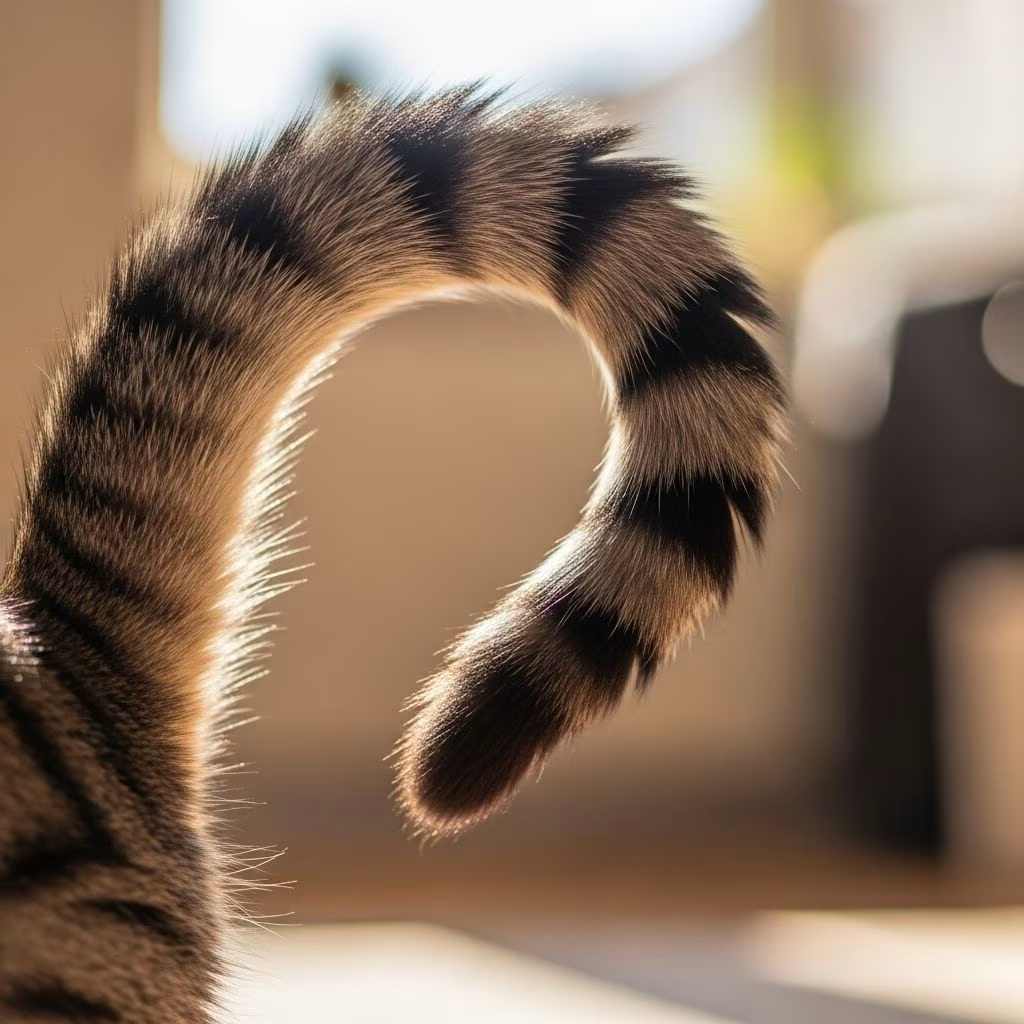
The cat’s tail stands out as one of the most expressive and functional features on a feline body. Far beyond mere decoration, it plays crucial roles in balance, communication, and even survival instincts. Comprising a series of small bones surrounded by muscles and nerves, the tail exemplifies nature’s engineering for agility and social interaction.
The Anatomical Blueprint of a Feline Tail
A cat’s tail emerges as an extension of the spine, featuring a sophisticated build that supports its dynamic lifestyle. At its foundation, the tail houses multiple caudal vertebrae, typically numbering between 19 and 23 in breeds with full-length tails. These vertebrae diminish in size from base to tip, enabling the fluid motions cats are famous for. Intervertebral discs provide cushioning, allowing bends and twists without damage.
Encasing these bones are layers of musculature originating from the lumbar region and sacrum, extending tendons that control precise movements. Key muscle groups include the sacrocaudalis dorsalis medialis and lateralis for upward and sideways flexes, alongside ventral muscles for downward pulls. Nerves from four to seven paired branches innervate these muscles, ensuring coordinated action.
Blood vessels weave throughout, supplying vital nutrients, while the skin covering offers sensory feedback. This integrated system turns the tail into a versatile tool, responsive to the cat’s every need.
How Muscles Drive Tail Movements
Muscle contractions dictate the tail’s repertoire of motions, each serving distinct purposes. Dorsal muscles like the sacrocaudalis dorsalis lift the tail skyward, signaling confidence or spraying territory. Lateral and ventral groups curve it side to side or downward, aiding in navigation or protection.
| Muscle Group | Primary Action | Example Function |
|---|---|---|
| Sacrocaudalis dorsalis medialis (SDM) | Dorsal bend | Vertical lift for greeting |
| Sacrocaudalis dorsalis lateralis (SDL) | Lateral curve | Side-to-side sway for balance |
| Sacrocaudalis ventralis (SVL/SVM) | Ventral bend | Tucking for fear response |
| Coccygeus muscles (CL/CM) | Rotation | Fine adjustments during jumps |
Electrical stimulation studies confirm these roles, showing rapid twitches from tendons in SDL and SVL for quick responses. Such precision underscores the tail’s role in high-speed pursuits or leaps.
Balance and Agility: The Tail as a Stabilizer
In motion, the tail acts as a counterweight, preventing topples during sprints or aerial maneuvers. Cats possess extra vertebrae compared to humans—19 to 21 caudal bones versus our fused three to five—granting superior flexibility. Elastic discs between them absorb landing shocks, protecting the spine.
Observe a cat leaping across narrow ledges; the tail sways oppositely to shifts in body weight, maintaining equilibrium. This adaptation proves essential for arboreal hunters, where a misstep spells danger.
Communication Through Tail Language
- Straight up: Friendly greeting or confidence, often with a slight tip curl for affection.
- Low swish: Relaxed curiosity or hunting focus.
- Rapid thrash: Irritation or aggression warning.
- Puffed and arched: Fear or threat display to appear larger.
- Tucked under: Submission, anxiety, or discomfort.
These signals convey emotions without vocalization, vital in multi-cat homes or wild colonies. Kittens learn them early, using upright tails to solicit parental care.
Variations Across Breeds and Individuals
Not all cats sport identical tails. Long-haired breeds like Persians may have fluffier appendages for visual emphasis, while Manx cats lack them entirely due to genetic mutations, affecting balance slightly but not deterring agility. Bobtails feature shortened versions with fewer vertebrae, adapting through enhanced hindquarter strength.
Breed standards from organizations like the Cat Fanciers’ Association note tail length as a conformational trait, yet functionality remains consistent across variations.
Common Tail Injuries and Risks
Tails vulnerability stems from their exposure. “Tail pull” injuries occur when slammed in doors, fracturing vertebrae or severing nerves. Symptoms include dragging, swelling, or incontinence if spinal nerves damage.
Infections from bites or scratches demand prompt care, as do frostbite in outdoor cats during cold snaps. Parasites like fleas target the tail base, causing dermatitis.
First Aid Essentials
- Immobilize with a gentle splint if broken.
- Clean wounds thoroughly to prevent abscesses.
- Monitor for paralysis or urinary issues—vet visit mandatory.
- Avoid home amputations; professionals assess nerve viability.
Early intervention preserves function, as the tail links to core spinal health.
Daily Care for a Healthy Tail
Prevent issues through routine grooming. Brush to remove mats, check for lumps or hair loss signaling allergies. Ensure flea preventatives cover the tail base.
Indoor environments reduce trauma risks, while interactive toys mimic hunting to exercise tail muscles safely. Nutrition with omega-3s supports skin and coat integrity around the tail.
Evolutionary Insights into Tail Development
Evolution honed the cat tail for predatory life. Ancestral felids used it for signaling in prides and balancing in trees. Domestic breeds retain this heritage, though selective breeding tweaked lengths.
Comparative anatomy shows similarities with other mammals, but cats’ elongated, flexible version excels in vertical leaps—up to six times body height.
Fun Tail Trivia
- Tails house scent glands at the base, marking territory via rubs.
- Some cats “wag” tails when excited, mimicking dogs but with subtler meanings.
- Tail docking, once common, is now discouraged except for medical necessity.
Frequently Asked Questions (FAQs)
Do all cats have the same number of tail bones?
No, long-tailed cats average 19-23 caudal vertebrae, while tailless breeds like Manx have far fewer or none.
Why does my cat chase its tail?
Often playful or itch-relief from fleas; persistent cases may indicate compulsions or neurological issues—consult a vet.
Can a cat survive without a tail?
Yes, tailless breeds thrive, compensating with body adjustments, though balance slightly suffers initially.
What if my cat’s tail is limp?
This signals injury like fracture or nerve damage; seek veterinary care immediately to avoid complications.
Is tail twitching always a sign of anger?
Not necessarily—slow twitches show focus, rapid ones irritation; context like ear position clarifies mood.
Conclusion
The cat tail embodies evolutionary brilliance, blending anatomy with behavior for seamless survival. Understanding its structure—from vertebrae to muscles—and signals fosters stronger bonds and better health oversight. Cherish this whiskered wonder as a window into your pet’s world.
References
- Structure and Function of the Tail in Cats — PetPlace.com. Accessed 2026. https://www.petplace.com/article/cats/pet-health/structure-and-function-of-the-tail-in-cats
- Anatomical structure and action of the tail muscles in the cat — PubMed (PMID: 7696400). 1995. https://pubmed.ncbi.nlm.nih.gov/7696400/
- Do Cats Have Bones in Their Tails? Feline Anatomy Explained — Catster. Accessed 2026. https://www.catster.com/cat-health-care/do-cats-have-bones-in-their-tails/
- Cat anatomy — Wikipedia. Accessed 2026. https://en.wikipedia.org/wiki/Cat_anatomy
- First Aid for Tail Injuries in Cats — VCA Animal Hospitals. Accessed 2026. https://vcahospitals.com/know-your-pet/first-aid-for-injured-tails-in-cats
- The “Tail All” — Cat Fanciers’ Association. Accessed 2026. https://cfa.org/cat-talk/the-tail-all/



