

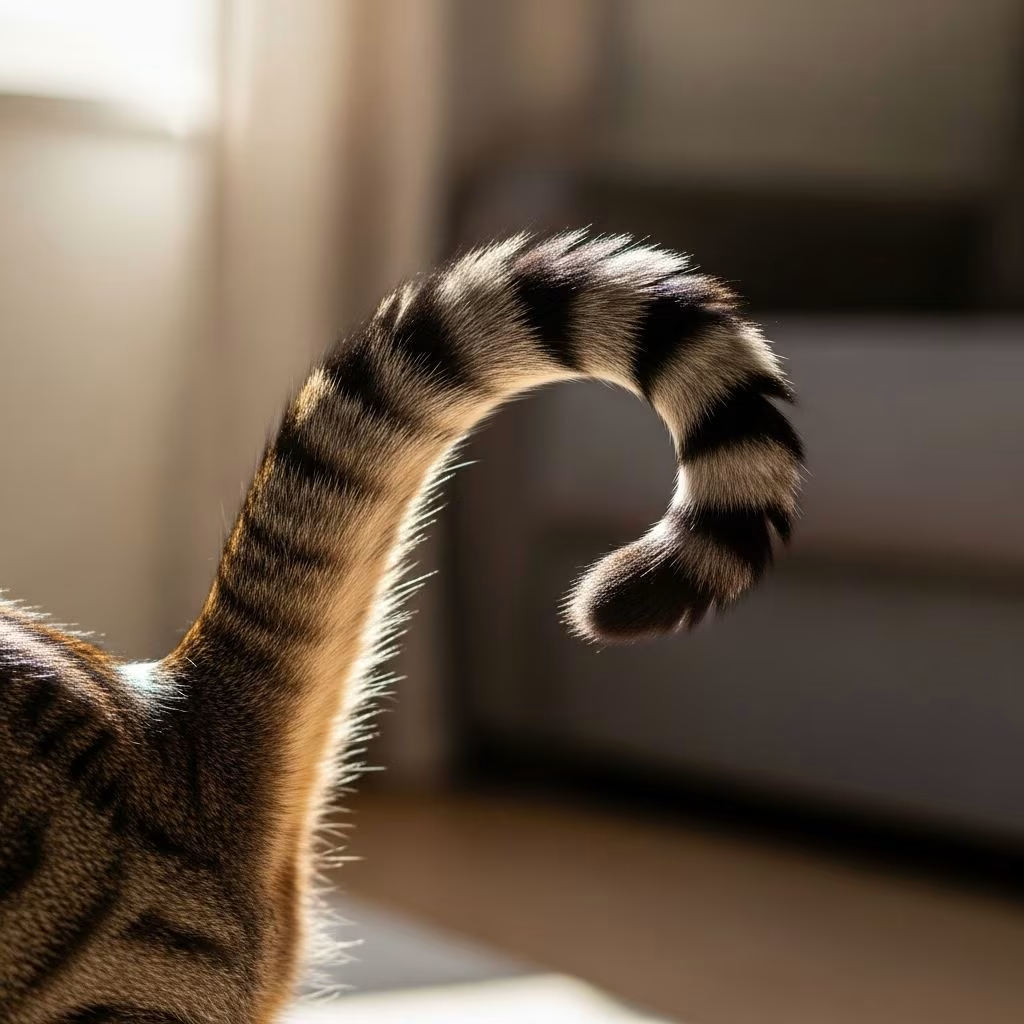
Cats communicate volumes through their tails, using subtle movements and positions to express emotions ranging from joy to irritation. Understanding **cat tail language** helps strengthen the bond with your feline companion by revealing their mood instantly. This guide decodes 35 common tail signals, drawing from veterinary and behavioral experts.
Why Do Cats Use Their Tails to Communicate?
The tail serves as a primary tool in **feline body language**, signaling intentions to humans and other animals. Unlike dogs, whose tail wags often mean happiness, cat tails convey nuanced emotions through position, speed, and quiver. Paired with ears, eyes, and posture, tail movements provide context for accurate interpretation.
Cat Tail Positions: The Basics
Static tail positions offer quick mood snapshots. Here’s a breakdown:
- Tail held high: Confidence and friendliness; tip may crook or quiver for extra happiness.
- Question mark shape: Playful invitation, often with tip twitching.
- Straight up with quiver: Excitement upon greeting you or another cat.
- Tucked under body: Fear, submission, or pain; check for flattened ears.
- Low to ground: Anxiety or caution.
- Wrapped around you or another cat: Affection and greeting.
Understanding Cat Tail Movements
Movement adds layers to the message. Speed and direction differentiate play from aggression.
Happy and Friendly Tail Movements
- Slow, gentle swish: Contentment while relaxing.
- High quiver: Overjoyed greeting, like seeing you after absence.
- Tail curl around leg: Scent-marking affection, claiming you.
- Slight tip twitch (high tail): Mild happiness.
Playful Tail Movements
Play signals prepare for pouncing or chasing.
- Question mark with tip flick: Ready to play; grab a toy.
- Side-to-side swish (focused): Stalking prey or toy, pre-pounce.
- Fast tip twitch: Intense play mode.
- Circled tail: Playful circling before engagement.
Irritated or Annoyed Tail Movements
Early warning signs to back off.
- Low twitch or flick: Mild annoyance; petting overload.
- Thump on ground: Growing frustration.
- Quick flicks: Irritation building.
- End twitch while stared at: Not in playful mood.
Aggressive Tail Movements
Clear ‘stay away’ signals, often with arched back.
- Fast lashing side-to-side: Anger or threat.
- Thrashing violently: High aggression; risk of attack.
- Puffed up and lashing: Defensive fury.
- Low lash with pinned ears: Imminent strike.
Fearful or Pain-Related Tail Movements
- Tightly tucked: Extreme fear or injury.
- Low and still: Hiding vulnerability.
- Trembling low: Pain or severe anxiety.
- Pulled close while prone: Submission.
Advanced Cat Tail Signals (21-35)
Beyond basics, these combine with context for precision.
- Wag while sleeping: Dreaming, likely of hunts.
- Slap with tail: Affectionate ‘butt present’ trust sign.
- Rapid vertical quiver: Urinary marking excitement.
- Slow sway + ear twitch: Deep focus on distant object.
- Tail flick + hiss: Warning shot.
- Wrapped + rub: Strong bonding.
- Puffed + arched: Halloween cat scare pose.
- Twitch + dilated pupils: Mild irritation escalating.
- High stiff: Territorial confidence.
- Low stiff: Uncertainty in new environment.
- Swish + crouch: Predatory stalk.
- Quiver + meow: Urgent greeting.
- Tuck + wide eyes: Submission to dominant cat.
- Lash + growl: Full aggression.
- Gentle wrap around paw: Self-soothing calm.
Cat Tail Language Chart
| Tail Position/Movement | Meaning | Body Language Context |
|---|---|---|
| High with crook | Friendly/happy | Relaxed ears, slow blink |
| Question mark | Playful | Twitching whiskers, crouched |
| Fast lash | Aggressive | Pinned ears, arched back |
| Tucked | Fearful | Flattened ears, dilated pupils |
| Gentle swish | Focused play | Staring intently |
| Low twitch | Annoyed | Slight ear flick |
Why Do Cats Wag Their Tails?
‘Wagging’ varies: fast means anger, gentle signals play, quivering excitement. Context clarifies—observe full body.
Why Does My Cat Slap Me with Its Tail?
Often affectionate, part of scent-marking or trust display by presenting rear.
Tail Language in Multi-Cat Homes
Tail intertwining shows alliance; lashing indicates territory disputes.
Frequently Asked Questions
What does a straight-up cat tail mean?
A straight-up tail signals confidence and friendliness, especially with a quiver for extra joy.
Why do cats flick their tails?
Flicking indicates mild irritation or playful hunting focus.
Is a puffed-up tail always aggressive?
No, it signals fear or startle first; aggression adds lashing.
What if my cat’s tail twitches while purring?
Contentment mixed with light annoyance—ease petting.
Can kittens use tail language?
Yes, but less refined; learn alongside mother.
Improving Communication with Your Cat
Respond to tail cues: play on question marks, retreat from lashes. This builds trust. Monitor changes, as persistent tucking may signal health issues—consult a vet.
References
- Cat Tail Meanings | Litter-Robot — Litter-Robot. 2023-05-15. https://www.litter-robot.com/blog/cat-tail-language/
- What Does My Cat’s Tail Movement Mean? | Purina US — Purina. 2024-02-20. https://www.purina.com/articles/cat/behavior/understanding-cats/cat-tail-movement-meaning
- How to Read Your Cat’s Tail Language and Meaning | PetMD — PetMD. 2024-08-10. https://www.petmd.com/cat/behavior/cat-tail-language
- How to Read Your Cat’s Tail Language | Everett Vets — Broadway4Pets. 2022-03-16. https://www.broadway4pets.com/site/blog/2022/03/16/read-cats-tail-language



