

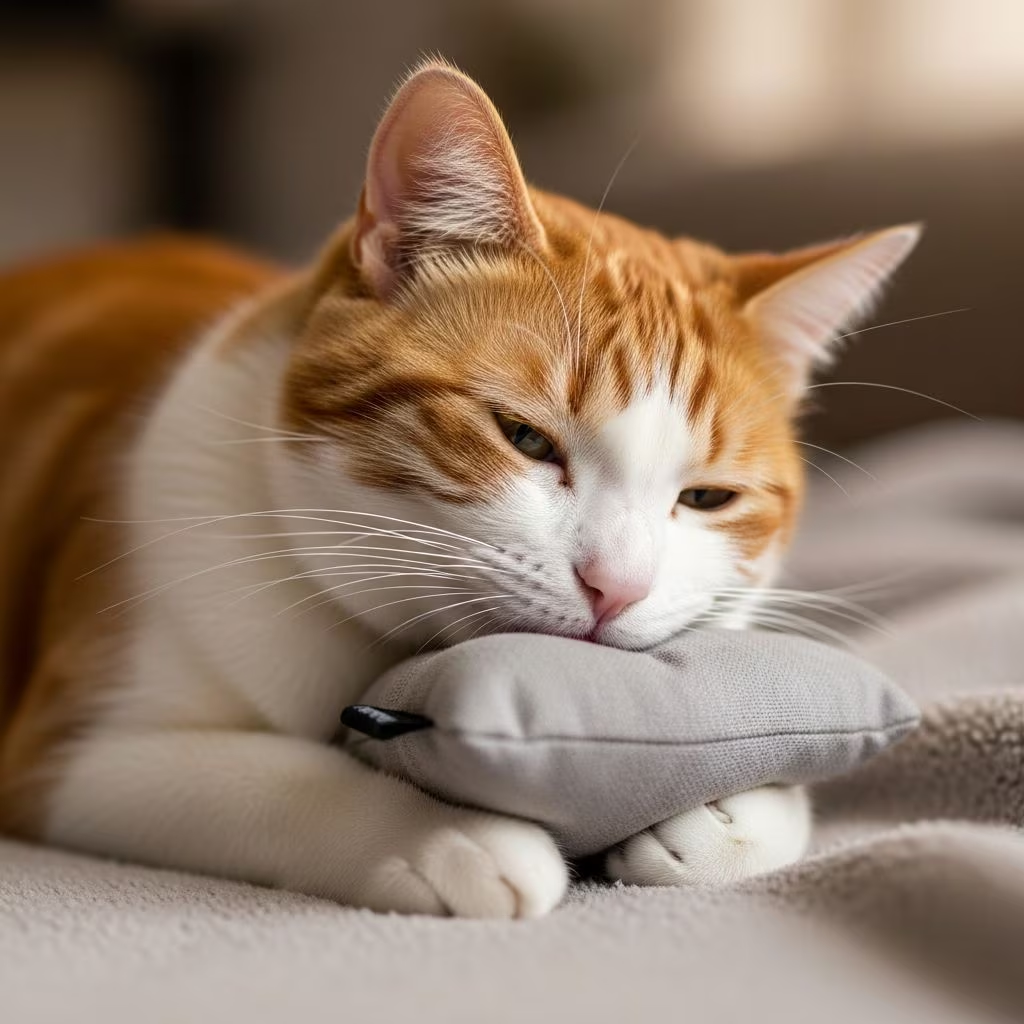
Cat suckling pillows, equipped with soft, nipple-like attachments, offer a safe outlet for cats’ innate nursing behaviors. These innovative toys replicate the sensation of nursing from their mother, providing emotional comfort especially for pets weaned too early or experiencing stress.
The Instinct Behind Feline Suckling
Cats exhibit suckling from kittenhood as a fundamental survival mechanism. Newborn kittens nurse within hours of birth, guided by their mother’s warmth and scent. This behavior evolves through stages: initial maternal-initiated sessions, followed by kitten-led interactions around weeks two to three, and eventual weaning by five weeks.
In natural settings, mothers lie on their side, allowing kittens to latch on while she licks them into position. This not only delivers milk but fosters bonding through non-nutritive sucking—suckling without milk for reassurance. Adult cats may retain this habit if separated prematurely, seeking similar comfort from owners, blankets, or specialized pillows.
Why Adult Cats Continue Nursing Behaviors
Early weaning before eight to twelve weeks heightens suckling tendencies into adulthood. Kittens deprived of full maternal contact miss oral satisfaction, leading to persistent nursing on soft fabrics or skin. Stressors like household changes, new pets, or anxiety trigger regression to this soothing ritual.
Comfort-seeking drives much of it; cats knead and suckle during naps or petting sessions, associating the action with security. Research shows orphaned litters are nearly six times more likely to engage in cross-suckling on siblings, targeting stomachs or genitals, which can cause injuries. Such behaviors underscore the need for alternatives like suckling pillows.
- Early separation: Increases risk of lifelong nursing habits.
- Stress response: Prompts suckling as a coping mechanism.
- Attachment bonding: Owners’ scents mimic maternal familiarity.
Potential Risks of Unchecked Suckling
While often harmless, excessive suckling poses issues. Ingesting wool or synthetic fibers may cause gastrointestinal distress. Compulsive patterns signal nutritional gaps or neurological concerns, warranting veterinary checks.
Orphaned kittens cross-suckling siblings risk skin irritation or severe wounds, sometimes necessitating euthanasia in extreme cases. Maternal neglect affects about 8% of litters, often from hypothermia or poor nursing, emphasizing stable environments.
| Behavior | Risks | Solutions |
|---|---|---|
| Blanket suckling | Fiber ingestion, GI upset | Safe fabric toys |
| Sibling nursing | Skin damage, infections | Surrogate pillows |
| Owner-directed | Clawing, overstimulation | Redirect to objects |
How Suckling Pillows Meet Feline Needs
These plush pillows feature realistic nipples filled with soft material, allowing cats to knead and suckle safely. Designed for both kittens and adults, they reduce destructive habits by channeling instincts appropriately. Users report calmer pets, less fabric chewing, and improved sleep.
Unlike blankets, pillows withstand vigorous nursing without fraying. Some include heat packs to mimic body warmth, enhancing appeal. For fosters, they support nursing mothers by supplementing care during weaning transitions.
Choosing the Right Suckling Pillow
Select based on size, material, and nipple count. Larger pillows suit multi-cat homes; hypoallergenic fabrics prevent allergies. Machine-washable options ease maintenance amid shedding.
- Assess cat size: Small for kittens, oversized for adults.
- Check durability: Reinforced seams endure kneading.
- Verify safety: Non-toxic, no small parts.
- Read reviews: Focus on long-term satisfaction.
Incorporate scents by rubbing with catnip or owner-worn cloth for instant attraction.
Integrating Pillows into Daily Routines
Introduce gradually during relaxed moments. Place near bedding; observe patterns like post-meal suckling. Redirect gently from skin or furniture: “Offer the pillow when noticing the behavior start.”
Enrich environments with puzzle feeders and play to curb excess. For stressed cats, combine with pheromone diffusers. Monitor for acceptance; persistence pays off as habits shift.
Expert Insights on Managing Nursing Instincts
Veterinary studies highlight non-nutritive sucking’s role in welfare. Surrogate mothers with artificial nipples show promise in reducing cross-suckling among orphans. Foster guidelines stress minimal interference for nursing queens, allowing natural progression.
Distraction works for mild cases: Toys or pacifiers interrupt cycles without punishment. Avoid scolding, as it heightens anxiety, worsening behaviors.
Caring for Nursing Mothers and Litters
Queens exhibit fierce protection, hissing at intruders to safeguard nests. Provide quiet spaces; intervene only for neglect signs like ignored cries or chilling kittens. Supplements like pillows aid weaning, easing maternal evasion.
FAQs on Cat Suckling and Comfort Toys
Is suckling normal in adult cats?
Yes, especially if weaned early. It’s a self-soothing remnant of kittenhood, harmless unless excessive.
Can suckling pillows replace real nursing?
No, but they provide comfort outlets, preventing harmful alternatives.
What if my cat ignores the pillow?
Scent it with your aroma or catnip; give time for habit formation.
Does suckling indicate health issues?
Rarely, but watch for vomiting, lethargy, or obsession—consult a vet.
Are these pillows safe for all ages?
Choose age-appropriate sizes; supervise kittens initially.
Long-Term Benefits for Cat Well-Being
Redirecting suckling fosters security, reducing anxiety-related issues like overgrooming. Combined with enrichment, pillows enhance life quality, mimicking maternal bonds sustainably.
References
- Nursing Mothers and Their Kittens — Austin Animal Services. Accessed 2026. https://www.austintexas.gov/sites/default/files/files/Animal_Services/Foster_Care_Manual/NURSING_MOTHER_CATS_AND_KITTENS.pdf
- Understanding Your Kitten’s Nursing Behavior: A Sign of Affection — Orea Teai. 2023. https://www.oreateai.com/blog/understanding-your-kittens-nursing-behavior-a-sign-of-affection/79f0bd3bac7c479fd464bacbc94b5fd6
- Lacking a Mother, Orphaned Kittens Turn to Nursing on Each Other — UC Davis School of Veterinary Medicine. Recent publication in Applied Animal Behaviour Science. https://www.vetmed.ucdavis.edu/news/lacking-mother-orphaned-kittens-turn-nursing-each-other-new-uc-davis-study-explores-cross
- Harmful, Non-Productive Suckling in Orphaned Neonatal Kittens — Maddie’s Fund. Accessed 2026. https://www.maddiesfund.org/Harmful-Non-productive-Suckling-in-Orphaned-Neonatal-Kittens/presentation_content/external_files/Educational%20Handout-%20Harmful,%20Non-Productive%20Suckling%20in%20Orphaned%20Neonatal%20Kittens.pdf
- Kitten Suckling and Nursing Behavior Explained — Lollimeow Pet. Recent. https://lollimeowpet.com/blogs/news/kitten-suckling-and-nursing-behavior-explained



