

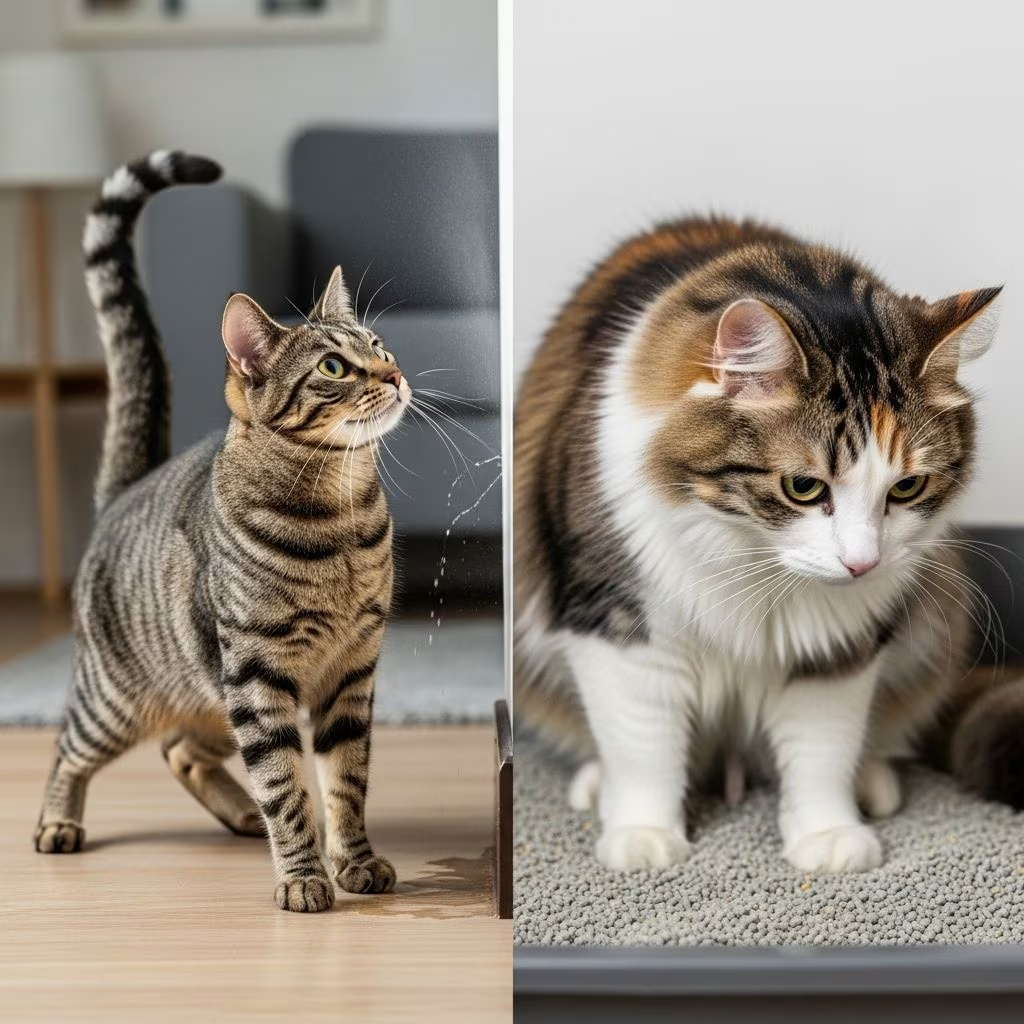
Cat owners frequently encounter urine outside the litter box, but distinguishing between **spraying** and regular **urination** is essential for proper resolution. Spraying serves as a communicative act involving small urine volumes on vertical surfaces, while urination eliminates waste in larger amounts on horizontal areas.
Understanding Feline Urinary Behaviors
Cats employ urine in distinct ways beyond mere elimination. Spraying acts as a territorial signal laden with pheromones, differing fundamentally from the waste expulsion of standard peeing. This behavior persists across genders and neuter statuses, though intact males exhibit it most prominently. Recognizing these patterns enables targeted interventions, preventing escalation into household nuisances or health oversights.
Regular urination maintains hydration balance and waste removal, typically confined to litter boxes under ideal conditions. Deviations signal potential medical issues like infections or behavioral stressors. Spraying, conversely, conveys messages about dominance, reproduction, or unease, often independent of litter box functionality.
Visual and Postural Indicators
Observing your cat’s posture provides the clearest differentiation. During spraying, felines approach a surface, back into it upright, elevate and quiver their tail, and sometimes tread hind legs before dispersing a mist-like urine stream. This vertical targeting—walls, doors, furniture—distinguishes it sharply.
- Upright stance: No squatting; cat remains standing.
- Tail action: Raised high with quivering motion.
- Leg movement: Back paws may knead or tread rhythmically.
- Surface choice: Predominantly vertical objects near entry points.
Normal urination involves squatting low over horizontal spots like floors or bedding, producing puddles. Volume differs markedly: sprays release mere squirts, whereas peeing yields substantial pools. Catching the act live clarifies intent; post-event inspection reveals streaks or spots versus soaked patches.
Sensory Clues: Odor and Texture
Spray’s aroma intensifies beyond typical urine, blending ammonia sharpness with musky or fishy notes from concentrated pheromones and anal gland secretions. This potency lingers, embedding into fabrics and porous materials, resisting standard cleaners. Pee odor dissipates faster, lacking such chemical complexity.
| Aspect | Spraying | Urination |
|---|---|---|
| Odor Intensity | Strong, musky, ammonia-dominant | Milder, fades quickly |
| Texture/Appearance | Fine mist, gritty particles possible | Liquid puddle, clear consistency |
| Persistence | Long-lasting without enzymes | Short-lived |
| Color | Often off-shade due to pheromones | Standard yellow tones |
These traits aid retrospective identification when behaviors evade direct view. Persistent smells demand enzymatic treatments to neutralize pheromones fully, deterring re-marking.
Primary Triggers Behind Spraying
Spraying stems from instinctual drives amplified by circumstances. Territorial claims dominate, especially in multi-pet homes where space competition arises. New animals, visitors, or rearrangements provoke defensive marking to reassert boundaries.
Mating impulses drive intact cats: males advertise virility, females signal receptivity during estrus. Neutering curtails this dramatically, slashing incidence by up to 90% in many cases. Stressors—relocations, routine shifts, or conflicts—further incite episodes, as urine reinforces familiarity amid chaos.
Environmental Contributors
- New household members or pets introducing rivalry.
- Visible outdoor cats challenging indoor domains.
- Altered layouts obscuring safe zones.
Health-Related Mimics and Distinctions
Not all vertical wetting constitutes spraying; medical conditions imitate it. Urinary tract infections (UTIs), cystitis, or bladder stones cause painful, frequent voiding, sometimes standing. Blood-tinged urine, straining, or vocalizing during attempts signal vet visits over behavioral fixes.
Differentiate via holistic assessment: pure sprayers exhibit normal litter habits alongside markings; medically afflicted cats avoid boxes entirely, yielding larger, frequent deposits. Senior cats or diabetics may drip urine unintentionally, blurring lines further.
Rule out pathology first: comprehensive exams including urinalysis pinpoint infections absent in behavioral cases. Early detection averts kidney damage or chronic pain.
Effective Cleanup Strategies
Eradicating spray odors prevents recurrence, as residual scents beckon repeats. Avoid ammonia or bleach, mimicking urine and exacerbating issues. Enzymatic cleaners dismantle proteins molecularly, succeeding where perfumes fail.
- Blot excess liquid promptly without rubbing.
- Saturate with enzyme solution, allowing full penetration.
- Air dry completely; repeat for embedded residues.
- Ventilate to dissipate volatiles.
For fabrics, steam cleaning aids; professionals handle severe infestations. Blacklight detection reveals hidden spots, ensuring thoroughness.
Preventive Measures and Home Adjustments
Addressing roots yields lasting control. Neutering/spaying tops efficacy lists, curbing hormonal prompts. Multi-cat harmony demands resources: multiple litter boxes (n+1 rule, n equaling cats), separate feeding stations, and ample play zones reduce tensions.
Enrichment combats stress: towering cat trees, interactive toys, and perch proliferation grant oversight, diminishing insecurity. Pheromone diffusers (Feliway) emulate calming scents, soothing anxieties chemically.
- Confine access to spray hotspots during retraining.
- Positive litter reinforcement via treats post-use.
- Vertical expansions like shelves foster security.
Long-Term Management Techniques
Behavioral therapy refines responses. Identify stressors via logs tracking incidents against events. Gradual desensitization—controlled introductions of triggers—rebuilds tolerance. Consult certified trainers for persistent cases blending anxiety with marking.
Monitor progress: diminishing frequency validates strategies. Relapses post-changes necessitate reevaluation, potentially uncovering latent health shifts.
FAQs on Cat Spraying and Urination
Will neutering stop spraying entirely?
Neutering reduces spraying by 85-95% in most cats, though stress-induced cases may linger. Combine with environmental tweaks for optimal results.
Can female cats spray?
Yes, females spray, particularly unspayed ones in heat, but at lower rates than males. Stress triggers affect both genders equally.
How do I know if it’s a medical issue?
Watch for straining, blood, excessive frequency, or box avoidance. Veterinary urinalysis confirms infections versus behavioral spraying.
What’s the best cleaner for cat spray?
Enzymatic formulas like Nature’s Miracle break down pheromones. Test inconspicuous areas first on delicate surfaces.
Does spraying indicate aggression?
Not necessarily; it’s communication, often from fear or anxiety rather than hostility. Address underlying causes to restore peace.
This comprehensive approach empowers owners to reclaim harmony, blending observation, intervention, and patience for healthier feline companions.
References
- Cat Behavior Problems – Marking and Spraying Behavior — VCA Animal Hospitals. 2023. https://vcahospitals.com/know-your-pet/cat-behavior-problems-marking-and-spraying-behavior
- Cat Spraying: Why Cats Do It and How to Stop It — PetMD. 2024-01-15. https://www.petmd.com/cat/general-health/cat-spraying-why-cats-do-it-and-how-to-stop-it
- Stop your Cat Spraying or Soiling in the House — Blue Cross. 2023-05-10. https://www.bluecross.org.uk/advice/cat/behaviour-and-training/stop-your-cat-spraying-and-soiling-in-the-house
- What is Cat Spraying – How to Deal With It — Hill’s Pet Nutrition. 2024. https://www.hillspet.com/cat-care/behavior-appearance/cat-spraying-and-urinating-indoors
- Urine Marking vs. Problems — Texas A&M University College of Veterinary Medicine & Biomedical Sciences. 2022-11-01. https://vetmed.tamu.edu/news/pet-talk/urine-marking-vs-problems/



