

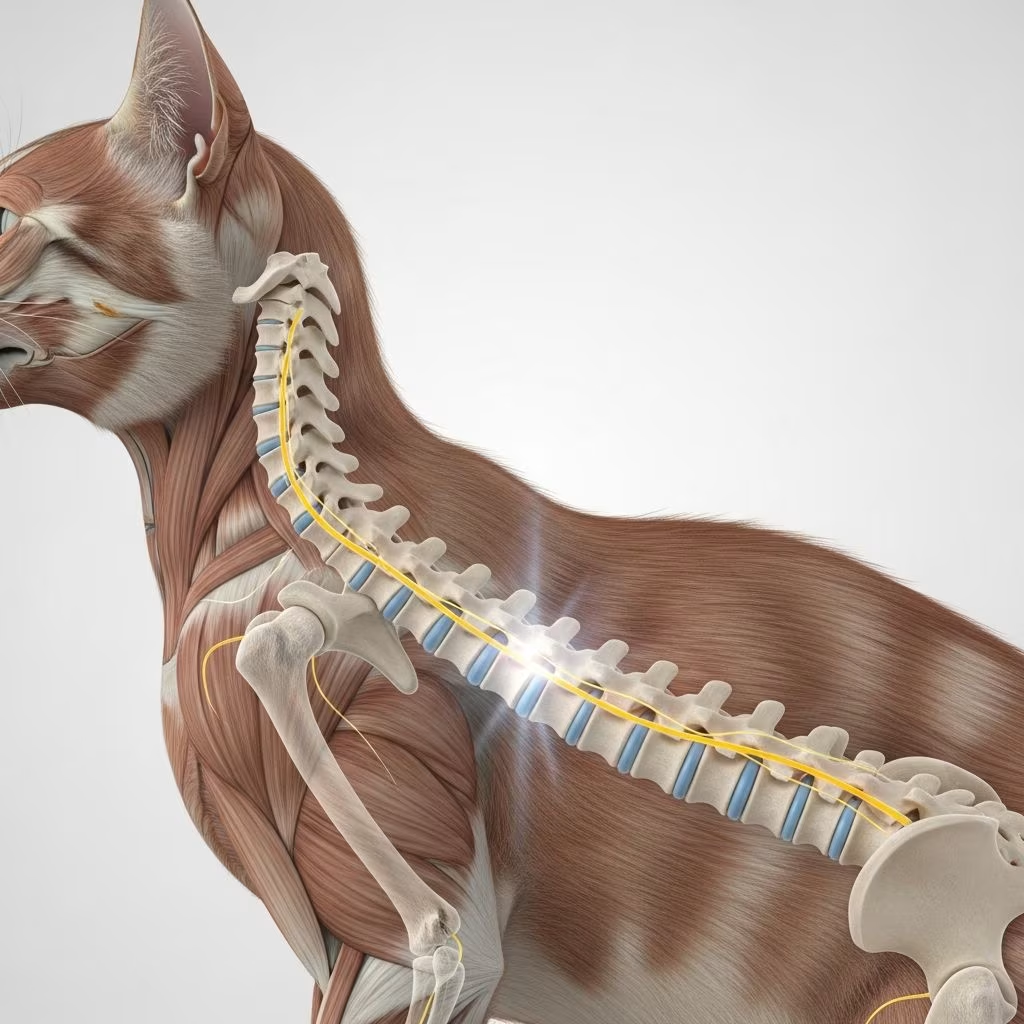
Spinal injuries in cats represent a serious medical concern that can drastically affect mobility and quality of life. These conditions often stem from trauma, leading to potential paralysis or chronic discomfort if not addressed promptly. This guide delves into the mechanisms, identification, management, and long-term care for affected felines, drawing from veterinary expertise to equip owners with actionable knowledge.
Common Origins of Feline Spinal Damage
Traumatic events dominate as the primary culprits behind spinal cord disruptions in cats. High falls from windows or balconies, commonplace in urban environments, frequently result in vertebral fractures or dislocations. Car accidents propel cats into forceful impacts, compressing or shearing the delicate spinal column. Domestic mishaps, such as being stepped on or struck by closing doors, contribute to less severe but still impactful injuries.
- Falls from heights: Prevalent in multi-story homes, causing thoracolumbar fractures.
- Vehicle collisions: Often lead to severe cord contusions.
- Household accidents: Include entrapment or blunt force.
Beyond acute trauma, degenerative issues like intervertebral disc extrusion (IVDE) or fibrocartilaginous embolism (FCE) can mimic injury symptoms. These involve disc material or emboli impinging on the cord, particularly in the cervical or lumbar regions. Congenital malformations or tumors may also precipitate spinal compromise over time.
Recognizing the Warning Signs
Early detection hinges on observing behavioral and physical alterations. Cats instinctively mask pain, complicating diagnosis, but telltale indicators emerge. Hindlimb weakness or dragging, progressing to full paralysis, signals lower spinal involvement. Owners might note a hunched posture, reluctance to leap, or vocalizations upon spinal palpation.
| Symptom | Description | Spinal Region Affected |
|---|---|---|
| Hindlimb Paralysis | Inability to stand or walk on rear legs | Thoracolumbar |
| Loss of Bladder Control | Incontinence or retention requiring manual expression | Lumbar/Sacral |
| Spinal Pain | Crying, arching back, or aggression when touched | Cervical or any |
| Abnormal Reflexes | Hyperreflexia or areflexia in limbs | Varies by lesion site |
| Schiff-Sherrington Posture | Extended forelimbs with paralyzed hindquarters | Acute thoracolumbar |
Deep pain sensation assessment proves critical; its absence portends grave prognosis. Respiratory distress may accompany high cervical lesions, necessitating urgent intervention.
Diagnostic Approaches for Accurate Assessment
Veterinarians employ a systematic evaluation starting with a thorough history and neurological exam. Radiographs reveal fractures or luxations, though advanced imaging like MRI or CT excels at visualizing cord compression, hemorrhage, or edema. Myelography, less common now, contrasts spinal fluid to pinpoint blockages. Bloodwork rules out concurrent issues like infection or coagulopathies.
- Neurological grading: Scales from 0 (normal) to 5 (no deep pain) guide urgency.
- Imaging priority: MRI for soft tissue detail in IVDE cases.
- Urgent stabilization: Secure on a board pre-transport to avert exacerbation.
Immediate Response and Stabilization
Upon suspicion, immobilize the cat on a flat surface to prevent further cord shifting. Administer oxygen if breathing labors, and withhold food to prepare for potential surgery. Transport swiftly to a facility equipped for emergency neurosurgery.
Pain control initiates with opioids like buprenorphine or fentanyl for severe cases, alongside anti-inflammatories. Corticosteroids such as methylprednisolone target secondary swelling, though protocols vary.
Treatment Modalities: From Conservative to Surgical
Management stratifies by injury severity. Mild cases respond to strict crate rest, analgesia, and supportive nursing for 4-6 weeks. Muscle relaxants like methocarbamol alleviate spasms without excessive sedation.
Surgical candidates include those with instability, persistent pain, or progressive deficits. Procedures encompass fracture stabilization via pins or plates, or hemilaminectomy for disc herniations. Post-op, antibiotics prevent infection, and meticulous wound care is paramount.
- Conservative: Rest, meds, physiotherapy for stable patients.
- Surgical: Decompression and fixation for fractures/luxations.
- Rehab integration: Essential regardless of approach.
Rehabilitation Strategies for Optimal Recovery
Physical therapy accelerates healing by preserving muscle tone and proprioception. Passive range-of-motion exercises, performed gently twice daily, maintain joint flexibility. Hydrotherapy in warm water supports weightless movement, reducing strain.
Cold laser therapy modulates inflammation and promotes nerve regeneration, while acupuncture offers adjunct pain relief in select cases. Nutritional support with high-protein diets fuels tissue repair; assisted feeding prevents malnutrition in anorexic patients.
Handling Bladder and Bowel Dysfunction
Spinal injuries often disrupt autonomic functions. Monitor for overflow incontinence; manual expression every 6-8 hours averts urinary tract infections. Catheterization or medications like bethanechol stimulate voiding in hypotonic bladders.
Bowel management involves stool softeners and digital stimulation. Hygienic bedding changes mitigate skin sores from soiling.
Prognostic Factors and Realistic Expectations
Outcomes correlate with initial deep pain presence, lesion chronicity, and treatment timeliness. Cats with intact nociception and ambulatory function pre-treatment boast 80-90% recovery rates. Severe paraplegia with absent pain carries poorer odds, sometimes warranting humane euthanasia.
Chronic sequelae like urinary incontinence or mild ataxia may persist, demanding lifelong adaptations. Regular vet check-ups track progress via serial exams and imaging.
Home Care Essentials During Convalescence
Create a low-stress, confined recovery zone with padded flooring and easy-access litter. Assist mobility using slings or carts for non-ambulatory cats. Monitor appetite, weight, and demeanor daily, reporting deteriorations promptly.
- Environmental mods: Ramps, low-entry boxes.
- Daily physio: 10-15 min sessions.
- Medication adherence: Follow dosing precisely.
Preventive Measures for Spinal Health
Mitigate risks by securing windows with screens, supervising play near hazards, and maintaining ideal weight to lessen spinal stress. Routine wellness exams detect early degenerative changes amenable to intervention.
Frequently Asked Questions
Can cats recover fully from spinal injuries?
Many do, especially with prompt care and preserved sensation. Recovery timelines span weeks to months.
What are the first steps if I suspect a spinal injury?
Immobilize, avoid manipulation, and seek emergency vet care immediately.
Is surgery always necessary?
No, conservative management suffices for stable, non-progressive cases.
How do I manage incontinence at home?
Scheduled expressions, clean bedding, and vet-prescribed meds.
What role does physiotherapy play?
It enhances strength, coordination, and pain relief, boosting overall prognosis.
References
- How Is Spinal Trauma in Cats Treated? — PetCareRx. 2023. https://www.petcarerx.com/article/how-is-spinal-trauma-in-cats-treated/6449
- Spinal Injuries in Cats — 1st Pet Veterinary Centers. 2023. https://1stpetvet.com/pet-health-information/spinal-injuries-in-cats-1st-pet-veterinary-centers/
- Spinal Cord Injuries in Cats: 7 Essential Medications for Recovery — The Pet Vet. 2024. https://thepetvet.com/spinal-cord-injuries-in-cats/
- Acute Spinal Cord Injury in the Cat: Causes, Treatment and Prognosis — PMC (Peer-reviewed). 2024-03-15. https://pmc.ncbi.nlm.nih.gov/articles/PMC10911291/
- Spinal Trauma in Cats — WagWalking. 2023. https://wagwalking.com/cat/condition/spinal-trauma



