

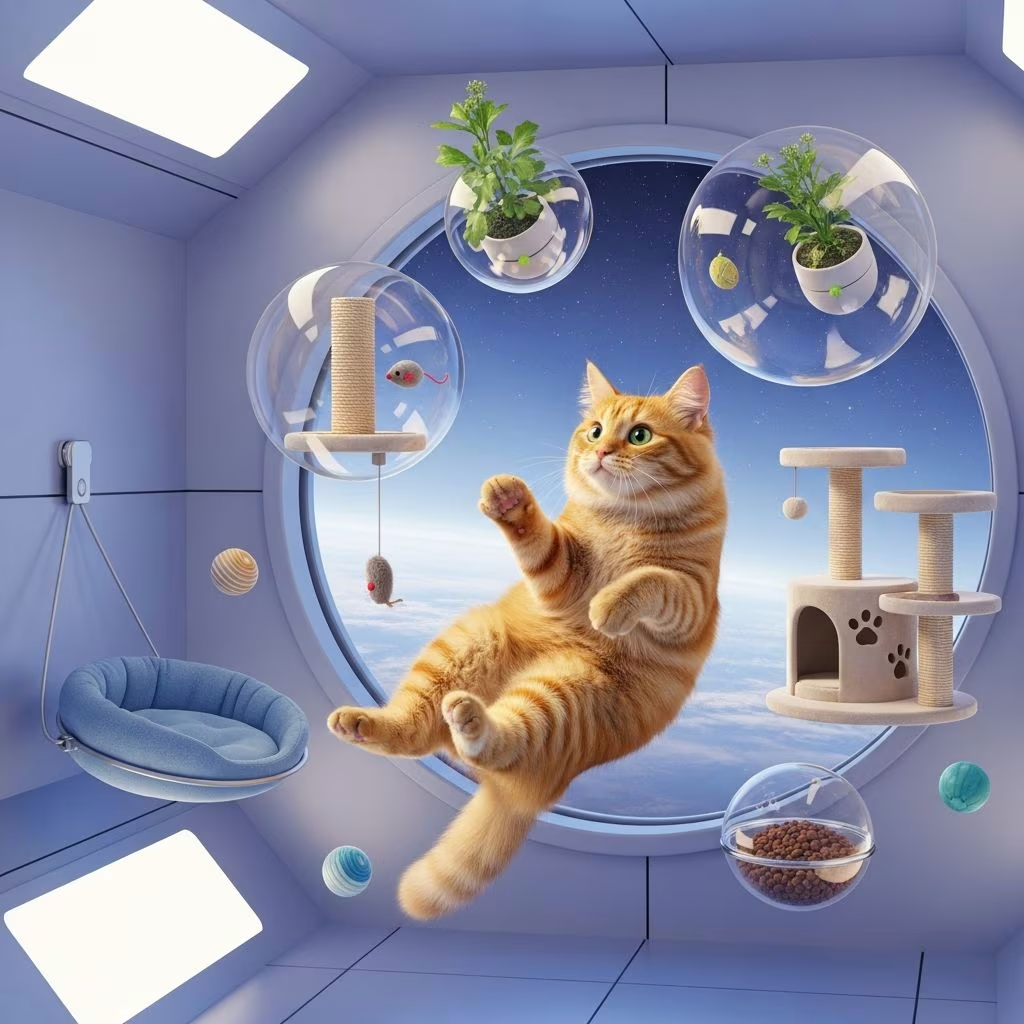
Cats thrive in environments that balance horizontal floor area with ample vertical dimensions, typically requiring at least 18-20 square feet of usable space per cat, enriched with climbing structures and hiding spots.
Understanding Feline Territorial Instincts
Cats are inherently territorial animals, evolved from solitary hunters who patrol defined ranges. In domestic settings, this translates to a need for personal zones where they can retreat, observe, and exert control. Insufficient space leads to stress, manifesting as urine marking or aggression. Vertical elements like shelves mimic natural perches, expanding usable territory without demanding extra floor space.
Research on feral cat ranges shows neutered males using 4-5 rooms and females 3-3.6 rooms in multi-room homes, underscoring the importance of accessible, interconnected areas.
Minimum Floor Space Recommendations
Experts recommend a baseline of 18 square feet for a single cat, though 20 square feet distributed across rooms proves more practical for daily activities. Shelters advocate 11 square feet minimum, preferably multi-level, with group housing needing 18 square feet per cat to curb resource competition.
| Setting | Minimum Space per Cat | Notes |
|---|---|---|
| Single Indoor Cat | 18-20 sq ft | Includes vertical additions |
| Shelter/Group | 18 sq ft | Plus extra resources |
| Apartment | Flexible with heights | Even 300 sq ft home suffices if enriched |
These figures represent totals, not contiguous areas; cats navigate homes via pathways and elevations.
The Critical Role of Vertical Space
Unlike dogs, cats prioritize height over breadth. Floor space alone falls short; integrate cat trees, wall shelves, and window perches to create a three-dimensional habitat. A large open room without climbs feels confining, while a compact area with towers feels expansive.
- Cat towers for jumping and pouncing
- Floating shelves for observation posts
- Hammocks or raised beds under platforms
- Window seats for environmental stimulation
Indoor cats depend on these for exercise, fulfilling instincts like stalking and leaping.
Factors Influencing Individual Space Needs
Breed and Size Variations
Larger breeds like Maine Coons demand more room for movement than compact ones like Devon Rex. Scale enclosures accordingly, prioritizing agility over sheer size.
Age and Activity Levels
Kittens and young adults require expansive territories for play, while seniors favor proximity to essentials like food and litter. Energetic cats need dynamic zones; sedentary ones benefit from cozy nooks.
Indoor vs. Outdoor Access
Exclusively indoor cats necessitate enhanced home setups with vertical gyms. Outdoor cats supplement with yards but still claim indoor verticals and shelters.
Neutered Status and Gender
Neutered cats adapt indoors well, with females potentially tolerating less range than males, per feral studies. Provide equivalent quality across genders.
Designing Multi-Cat Environments
Each additional cat requires its full space allocation—do not divide. Install multiple resources: one litter box, bed, and bowl per cat, plus extras to prevent conflicts.
- Separate feeding stations
- Dispersed scratching posts
- Individual high perches
- Multiple hiding boxes
Shelter guidelines specify one perch/bed and food bowl per cat plus one extra, with litter boxes in varied spots to deter guarding.
Essential Resources and Their Placement
Space must accommodate core items without crowding:
- Litter Box: 1.5 times cat’s length, deep litter, distant from food.
- Food/Water Bowls: Elevated options reduce whisker fatigue, away from eliminations.
- Scratching Posts: Varied textures and heights.
- Bedding: Enclosed or raised for security.
- Toys/Crate: Stored accessibly.
Maintain 2 feet between food, sleep, and litter zones.
Signs Your Cat Lacks Sufficient Space
Monitor for distress indicators:
- Excessive hiding or box-seeking
- Aggression toward housemates
- Inappropriate elimination
- Lethargy or over-grooming
- Vocalizing or pacing
These signal territorial overload; rearrange furniture or add verticals promptly.
Adapting Small Homes for Feline Happiness
Apartments under 300 square feet work with ingenuity:
- DIY beds in closets or shelves
- Wall-mounted tracks
- Under-bed tunnels
- Room dividers for zones
Prioritize quality: a ‘catio’ enclosure extends outdoors safely.
Special Considerations for Shelters and Catteries
Boarding facilities need 2.55 m² (27 sq ft) for two cats, scaling up. Quarantine pens should match, avoiding substandard sizes like 0.42 m² cages. European standards suggest 1.5 m² for 1-2 cats, plus 0.75 m² each additional.
Enrichment Beyond Space
Complement area with stimuli: rotating toys, puzzle feeders, and human interaction. These amplify perceived territory.
Frequently Asked Questions
How much square footage for one cat?
Minimum 18-20 sq ft total, emphasizing verticals.
Can cats share space?
Yes, but each needs full allocation plus extras.
What if I live in a tiny apartment?
Use heights and enclosures; 300 sq ft suffices enriched.
Do kittens need more space?
Yes, for exploration; adjust as they age.
Outdoor cats need less indoor space?
Somewhat, but verticals remain key.
References
- How Much Space Does a Cat Need? — FELIWAY. 2023. https://www.feliway.co.uk/blogs/news/how-much-space-does-a-cat-need
- How Much Space Do Cats Need Revealed — Purina. 2024. https://www.purina.co.za/find-a-pet/cat/how-much-space-do-cats-need
- Housing Cats in Shelters — IAABC Foundation Journal. 2022. https://journal.iaabcfoundation.org/housing-cats-shelters/
- Recommendations for the Housing of Cats in the Home, in Catteries… — PMC (NCBI). 2024-01-15. https://pmc.ncbi.nlm.nih.gov/articles/PMC10832797/
- How Much Space Does a Cat Need? — Hill’s Pet Nutrition. 2023. https://www.hillspet.com/cat-care/new-pet-parent/how-much-space-does-a-cat-need
- What Your Cat Needs to Feel Secure — Cat Friendly Homes. 2023. https://catfriendly.com/cat-friendly-homes/what-your-cat-needs-to-feel-secure/
- Feline Housing Considerations… — Shelter Medicine. 2024. https://www.sheltermedicine.com/library/resources/feline-housing-considerations-in-a-shelter-rescue-veterinary-hospital-or-boarding-facility



