
Cat Social Dynamics: 5 Practical Tips For Harmonious Homes
Unlock the secrets of feline social interactions, from family bonds to multi-cat households, and enhance your cat's well-being.
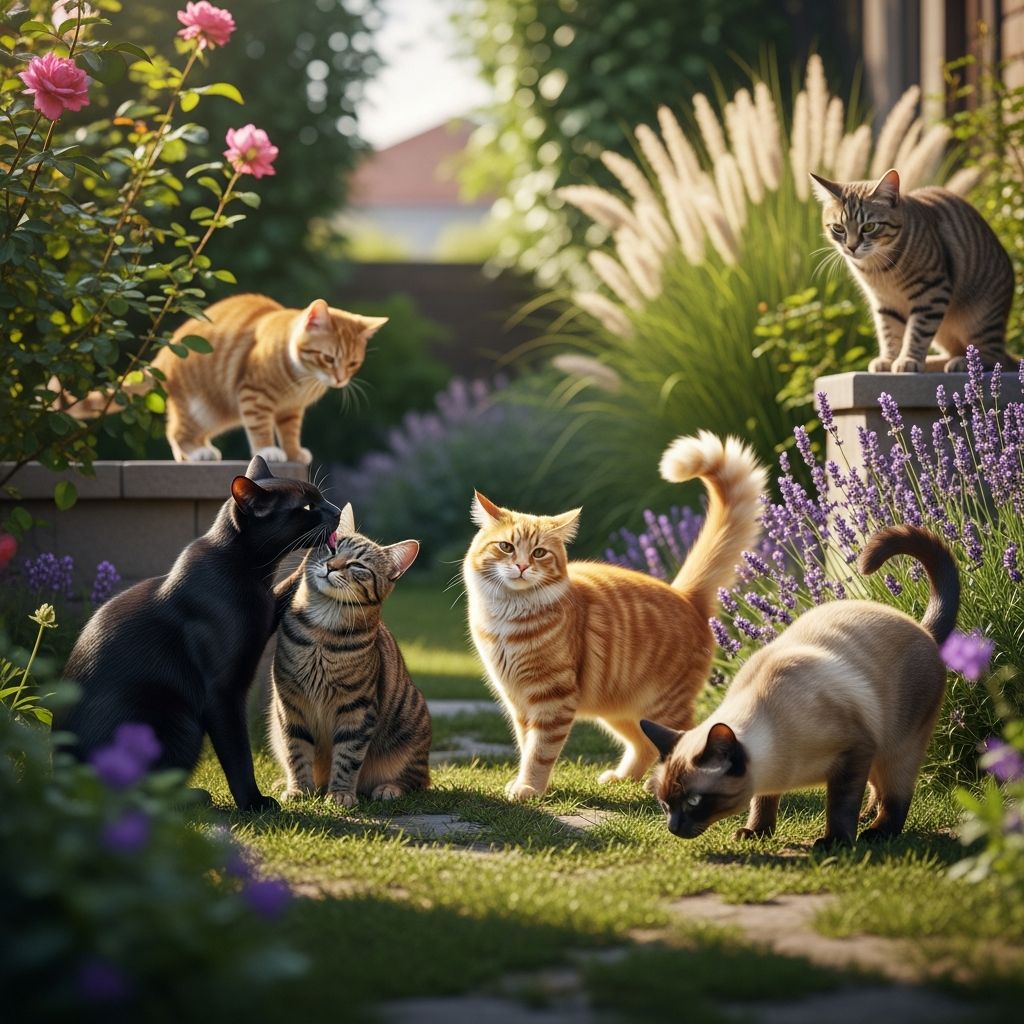
Cats exhibit remarkable flexibility in their social structures, ranging from solitary lifestyles to complex group living with kin, other cats, and humans. This adaptability stems from their facultative social nature, allowing them to adjust based on resource availability and early experiences.
Early Foundations of Feline Sociability
The journey of a cat’s social life starts at birth, where interactions center on the mother and littermates. Newborn kittens rely on tactile cues and their sense of smell to identify family members, quickly distinguishing familiar scents from unfamiliar ones. Exposure to strange odors prompts distress calls and avoidance, highlighting olfaction’s role in early bonding.
During the critical 2-7 week period, human handling significantly boosts friendliness and exploration. Kittens gently touched by people develop outgoing traits and reduced aggression, countering any hereditary shyness often passed from sires. Weaning timing influences play styles; early separation accelerates the shift from social tussling to predatory stalking around 12-14 weeks.
Recognizing Social Comfort Levels
Cats fall along a socialization spectrum, from fully domesticated pets craving human contact to wary ferals avoiding it. Those inside the ‘touch barrier’ welcome petting, while outsiders stiffen or flee. Comfort zones vary: indoor cats coexist closely with owners, semi-feral ones tolerate proximity but shun touch, and true ferals maintain distance.
- Socialized indicators: Meowing, approaching, tail raising, purring, rubbing, kneading, belly exposure, daytime visibility.
- Unsocialized signs: Hiding, flat ears, swiping, pupil dilation, tense posture, tail wrapping.
These cues help assess a cat’s human affinity, guiding interactions to build trust without force.
Affiliative Bonds in Cat Groups
Domestic cats form stable colonies around clumped resources like food sources, preferring specific companions over random groupings. Familiarity fosters allogrooming, proximity resting, and reduced fights. Within groups, cats distinguish insiders from outsiders, greeting allies with rubs and chases while repelling strangers aggressively.
Bonding manifests in subtle ways: one cat using another as a pillow, even in heat, signals deep affiliation beyond thermoregulation. Scent plays a persistent role; cats memorize colony odors to affirm membership.
| Behavior | Social Meaning | Context |
|---|---|---|
| Allorubbing | Affection and scent-sharing | With preferred associates |
| Mutual grooming | Strengthened bonds | Familiar colony members |
| Shared resting | Trust and alliance | Indoor or colony settings |
| Aggression to outsiders | Territory protection | Non-members approaching |
Interactions with Humans and Other Species
Pet cats often prioritize human company over food or toys in experiments, debunking aloof stereotypes. They detect owner moods, offering more rubs to the depressed and approaching upbeat individuals. Positive reinforcements like gentle petting, feeding, and play during socialization windows cement these ties.
Negative encounters, especially in youth, instill lasting fear, amplifying wariness. Cats also bond cross-species, cohabiting amicably with dogs if introductions are gradual.
Thriving in Multi-Cat Homes
Many indoor cats harmonize in groups, mirroring colony dynamics, provided resources abound. Heredity influences temperament, but environment trumps: shy sires produce bolder offspring with early handling. Introducing newcomers mimics wild integration—slow exposure prevents rejection akin to forcing strangers into a human family.
Preferred pairs groom and rest together, minimizing conflicts. Monitor for tension: resource scarcity sparks rivalry.
Communication Through Body Language
Cats convey sociability via postures and signals. Relaxed ears forward, upright tail, and slow blinks invite engagement. Arched backs or hisses signal discomfort. Play transitions reveal maturity: youthful biting evolves to hunting mimics.
- Chirping/meowing: Greeting or attention-seeking.
- Rubbing: Scent marking for inclusion.
- Purring/kneading: Contentment from bonds.
- Hiding/swiping: Fear or boundary enforcement.
Environmental Influences on Group Living
Solitary cats roam dispersed territories; colonies cluster where sustenance concentrates. Indoor mimics require ample stations: multiple litter boxes, perches, and feeders prevent disputes. Outdoor groups stabilize with steady provisions.
Playful hunts indoors satisfy instincts, enhancing human-cat play bonds. Respect feline ‘rules’ like avoiding stares and allowing approaches preserves harmony.
Challenges and Misconceptions
The ‘independent cat’ myth overlooks their relational depth. Human misreads provoke issues like blocking doors for dominance. Grass eating or knocking aids digestion or curiosity, not rebellion.
Unsocialized ferals need patient, positive rehab; forcing contact backfires. Multi-pet aggression often ties to poor intros or competition.
Practical Tips for Fostering Social Bonds
- Handle kittens daily from 2-7 weeks for sociability.
- Provide clumped resources in homes to encourage grouping.
- Use toys/wands to test and build comfort.
- Introduce new cats gradually, scent-swapping first.
- Observe moods: match interaction energy.
Frequently Asked Questions
Can all cats live in groups?
Most adapt well with resources and familiarity, but some prefer solitude due to genetics or history.
How do cats choose friends?
Via scent, grooming, and proximity; familiarity breeds affinity over random tolerance.
Why do some cats avoid people?
Negative early experiences or low socialization push them toward the unsocialized end.
Do cats understand human emotions?
Evidence shows they adjust behaviors to moods like depression or agitation.
What’s the best way to introduce cats?
Slow integration with separate spaces, progressing to supervised meets.
References
- The Cat Socialization Continuum: A Guide to Interactions Between Cats and Humans — Alley Cat Allies. 2023. https://www.alleycat.org/resources/cat-socialization-continuum-guide/
- Cat Social Lives: Current Knowledge and Future Directions — IAABC Foundation Journal. 2022-10-01. https://journal.iaabcfoundation.org/cat-social-lives/
- Social organization in the cat: A modern understanding — PMC (NCBI). 2024-01-15. https://pmc.ncbi.nlm.nih.gov/articles/PMC10822437/
- Normal Social Behavior in Cats — MSD Veterinary Manual. 2025. https://www.msdvetmanual.com/cat-owners/behavior-of-cats/normal-social-behavior-in-cats
- 11 ‘unspoken rules’ cats expect their humans to know and follow — Upworthy. 2023. https://www.upworthy.com/unspoken-rules-cats-expect-humans-to-follow-ex1
Similar Articles








Read full bio of Sneha Tete




