

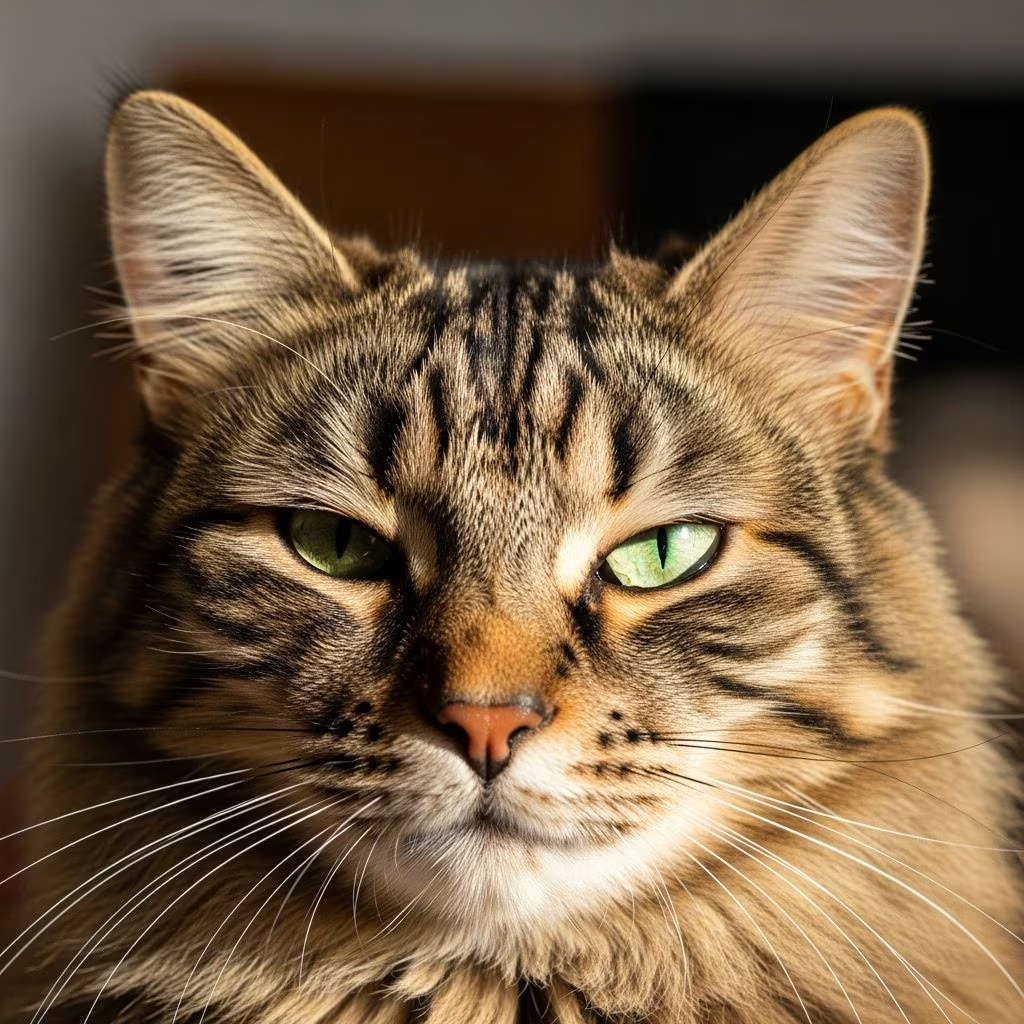
Cat slow blinks represent one of the most endearing and meaningful gestures in feline communication, signaling deep trust and relaxation toward their human companions. This subtle eye movement, where a cat leisurely closes and opens its eyes, serves as a non-verbal “I love you” that pet owners can reciprocate to foster stronger relationships.
The Anatomy Behind a Cat’s Gaze
To appreciate the slow blink, understanding cat eye structure is essential. Feline eyes mirror human anatomy with components like the cornea, lens, iris, pupil, retina, and optic nerve, but include adaptations for superior night vision and hunting prowess. A unique feature is the nictitating membrane, or third eyelid, which sweeps diagonally across the eye during blinks to protect and lubricate it.
Cats blink less frequently than humans, sometimes going hours without it, a trait evolved for constant vigilance in the wild. This conservation of blinks underscores why deliberate ones, like slow blinks, carry significant weight in social interactions.
What Slow Blinking Reveals About Your Cat’s Emotions
A slow blink occurs when a cat partially or fully closes its eyes for over half a second, often while maintaining eye contact. This behavior indicates your cat feels secure enough to “lower its guard,” viewing you as non-threatening. It’s akin to a feline smile, conveying contentment and affection, much like how human eyes narrow when smiling.
Research confirms this: in controlled studies, cats responded positively to human slow blinks by reciprocating and approaching more readily, even with strangers. This suggests slow blinking transcends familiarity, acting as a universal trust signal.
- Trust indicator: Cats reserve slow blinks for those they deem safe.
- Relaxation cue: Accompanies other calm body language, like relaxed whiskers and ears.
- Social bonding: Used between cats to diffuse tension and affirm friendship.
Responding to Your Cat’s Slow Blink: Build Instant Rapport
Reciprocating a slow blink is straightforward and powerful. When your cat directs this gesture at you, mirror it by narrowing your eyes slowly and holding for 1-2 seconds. Studies show cats are far more likely to blink back or approach an extended hand after such interactions, enhancing mutual comfort.
Practice in low-stress settings: Sit calmly about a meter away, wait for eye contact, then slow blink. Avoid sudden movements or direct stares beforehand, as prolonged staring without blinking can signal threat to cats.
| Human Action | Cat Response | Study Outcome |
|---|---|---|
| Slow blink from owner | Cat slow blinks back | Increased in 21 cats vs. no interaction |
| Slow blink + extended hand from stranger | Cat approaches hand | Higher approach rate in 24 cats |
| No blink/stare | Cat avoids or tenses | Control condition showed less engagement |
Decoding Broader Feline Eye Language
While slow blinks signal positivity, other eye patterns reveal different states. Context with ears, whiskers, and tail is crucial for full interpretation.
- Wide-open eyes: Alertness or worry; pupils dilate for threat assessment.
- Stare without blinking: Territorial warning or challenge to intruders.
- Squinted/slitted eyes: Could mean aggression (with flattened ears/tail swish) or contentment (relaxed posture).
- Rapid blinking: Stress, fear, or eye irritation.
Whisker positions complement eyes: forward for curiosity/play, backward for worry, fanned out for happiness.
When Eye Behaviors Signal Health Issues
Not all blinks are benign. Watch for abnormalities that warrant veterinary attention:
- Frequent squinting or inability to open eyes fully.
- Excessive tearing, colored discharge (green/yellow/bloody), or cloudiness.
- Pawing at eyes, redness, or inflammation.
These may indicate infections, injuries, or conditions like conjunctivitis. Prompt vet visits prevent complications, as cats mask pain well.
Origins and Evolution of Slow Blinking
The exact genesis of slow blinking remains speculative. It likely evolved as a stare-breaker in cat-to-cat communication, where direct gazes pose threats. Domestication may have reinforced it, as humans reward relaxed behaviors with attention or treats.
Scientific inquiry, including landmark experiments, validates its communicative role experimentally for the first time, bridging anecdotal owner experiences with empirical data.
Enhancing Your Bond Through Daily Rituals
Incorporate slow blinking into routines for lasting impact. Combine with gentle petting, play, or pheromone diffusers for amplified effects. Consistency builds predictability, reducing anxiety in multi-cat homes or rescues.
For shy cats, start from afar; persistence yields trust. Owners report quicker socialization and purrs after regular exchanges.
Frequently Asked Questions (FAQs)
Why does my cat slow blink at me but not others?
It selects you as a trusted ally, feeling safe to relax in your presence.
Should I slow blink at kittens or feral cats?
Yes, cautiously; it promotes approachability without owners present.
What if my cat never slow blinks?
Some are less expressive; observe other signs like kneading or purring. Patience and positive reinforcement help.
Is winking different from slow blinking?
Single-eye closure often mimics slow blinks, signaling similar affection or playfulness.
Can slow blinking reduce aggression?
It de-escalates tension by signaling non-threat, useful in social dynamics.
Expert Tips for Mastering Cat Communication
Beyond eyes, holistic reading includes:
- Tail signals: Upright with tip curl for greeting; rapid flicks for irritation.
- Ear angles: Forward for interest; flat for fear/aggression.
- Vocal cues: Slow blinks pair with chirps or trills for joy.
Table of common combos:
| Eye Action | Other Signs | Meaning |
|---|---|---|
| Slow blink | Whiskers fanned, ears neutral | Happy & trusting |
| Wide eyes | Ears back, tail low | Fearful |
| Slit stare | Tail swish, ears flat | Agitated/defensive |
Mastering these elevates companionship, turning subtle cues into profound dialogues.
References
- Slow Blinking in Cats: Sign of Affection or Cause for Concern? — Jolly Pets. 2023. https://jollypets.com/blogs/blog/slow-blinking-in-cats-sign-of-affection-or-cause-for-concern
- A Kitty’s Point of View: Why Do Cats Slow Blink and Wink? — FELIWAY. 2023. https://www.feliway.co.uk/blogs/news/a-kittys-point-of-view-why-does-my-cat-slow-blink-and-wink
- Study Confirms ‘Slow Blinks’ Really Do Work to Communicate With Cats — ScienceAlert. 2023. https://www.sciencealert.com/you-can-build-a-rapport-with-your-cat-by-blinking-real-slow
- What Do Cat Slow Blinks Mean? — Best Friends Animal Society. 2023. https://bestfriends.org/pet-care-resources/what-do-cat-slow-blinks-mean
- From Slow Blinks to Tail Flicks: Decoding Cat Behavior — Chez Mieux Cat Kennel. 2023. https://chezmieuxcatkennel.com/articles/slow-blinks-tail-flicks-decoding-cat-behavior



