

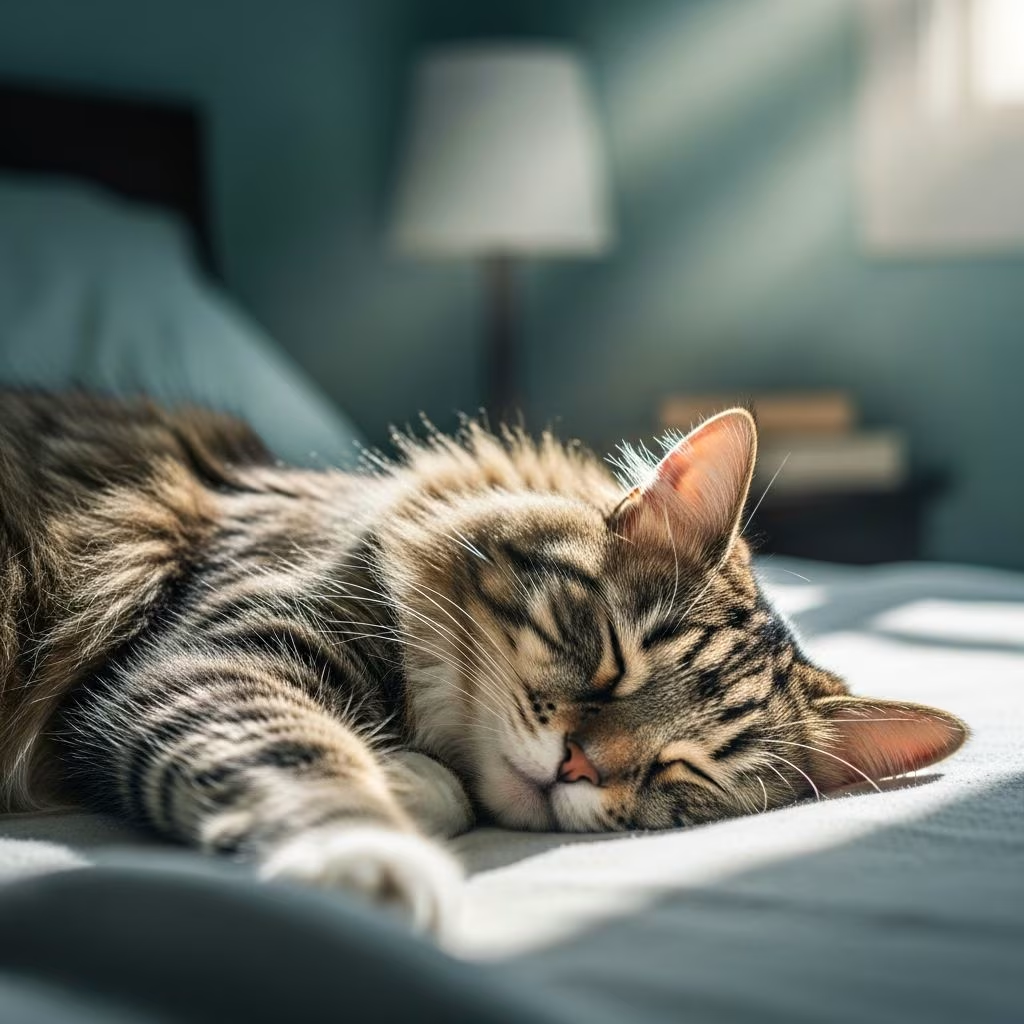
Cats typically sleep between 12 and 18 hours per day, often in short bursts known as polyphasic sleep, allowing them to remain vigilant for hunting opportunities. This extensive rest is a hallmark of feline biology, shaped by evolution and daily rhythms.
The Science of Feline Sleep Cycles
Feline sleep follows a polyphasic pattern, with naps averaging 50 to 113 minutes each, totaling significant daily hours. Unlike humans’ consolidated nighttime sleep, cats divide rest into multiple sessions, aligning with their crepuscular nature—most active at dawn and dusk.
Research using electroencephalograms (EEG) reveals cats experience non-rapid eye movement (NREM) and rapid eye movement (REM) sleep, similar to humans but in shorter cycles. A classic study observed cats spending 35% of time awake, 50% in light sleep, and 15% in paradoxical (REM) sleep over 24 hours. Light sleep predominates, enabling quick arousal to threats or prey.
How Age Shapes Cat Sleeping Habits
Sleep needs vary by life stage. Kittens and seniors often exceed average durations, while adults settle at 12-18 hours.
- Kittens: Up to 20 hours daily to fuel rapid growth and development.
- Adults: 12-18 hours, balancing energy conservation with activity peaks.
- Seniors: 18+ hours, compensating for reduced mobility and metabolism.
These shifts reflect physiological demands; for instance, young cats prioritize REM for brain maturation.
Crepuscular Rhythms: Why Cats Nap All Day
Cats’ internal clocks follow a crepuscular cycle, priming activity around twilight for hunting birds (diurnal) and rodents (nocturnal). This evolutionary trait persists in domestics, leading to daytime naps and nocturnal zoomies.
Environmental light influences this; short light-dark cycles increase alertness, reducing deep sleep even in dark periods. Domestic routines, like scheduled feeding, can sync sleep to human patterns.
Stages of Cat Sleep Explained
Cats cycle through alertness, drowsiness, NREM (light and deep), and REM.
| Stage | Description | Duration/Characteristics |
|---|---|---|
| Alertness/Drowsy | Transition to rest | Brief; prepares for NREM |
| NREM (Light) | Shallow sleep | 50% of sleep time; easy arousal |
| NREM (Deep) | Restorative slow-wave | Energy recharge |
| REM | Dreaming phase | 15%; twitching, eye movements |
REM features horizontal/vertical eye shifts and muscle atonia, potentially linked to dream enactment like ‘hunting’ twitches.
Health Benefits of Ample Cat Sleep
Sleep sustains felines like humans: NREM conserves energy and bolsters immunity, REM aids emotional regulation and memory. Deprivation mimics rat studies—weight loss, temperature dysregulation, immune failure.
Cats seek warmth during rest for thermoregulation, often sunbathing or curling in cozy spots. Polyphasic rest matches predatory lifestyles, ensuring readiness.
Factors Altering Sleep Duration
Several elements tweak sleep:
- Activity Levels: Playful cats sleep more to recover.
- Diet/Routine: Consistent meals align patterns.
- Environment: Stress or noise fragments sleep.
- Health Issues: Illness boosts sleep as recovery.
Indoor cats may sleep more sans hunting exertion.
Signs Your Cat Sleeps Too Much or Too Little
Normal: 12-18 hours with activity bursts. Excessive (20+ hours): Check for lethargy, pain, depression. Insufficient: Restlessness, aggression signal stress or illness.
Monitor via logs: Track nap frequency, duration, positions. Consult vets for anomalies.
Optimizing Your Cat’s Sleep Environment
Enhance rest with:
- Quiet, dark bedtime zones post-play.
- Warm beds, elevated perches.
- Consistent schedules mimicking crepuscular peaks.
- Toys for evening energy burn.
Avoid disruptions; pheromone diffusers calm anxious sleepers.
FAQs on Feline Sleep
How many hours should an adult cat sleep?
12-18 hours daily in naps.
Do cats dream during sleep?
Yes, REM shows twitching indicative of dreams.
Why is my cat active at night?
Crepuscular instincts; adjust play/feed times.
Is 20 hours of sleep normal for cats?
Possible for kittens/seniors; vet check for adults.
Can light affect cat sleep?
Yes, short cycles boost alertness.
Comparing Sleep Across Cat Life Stages
| Life Stage | Avg. Sleep (Hours/Day) | Key Influences |
|---|---|---|
| Kitten (0-6 months) | 16-20 | Growth, learning |
| Adult (1-7 years) | 12-18 | Energy balance |
| Senior (11+ years) | 18-20+ | Metabolism slowdown |
Evolutionary Roots of Cat Slumber
Wild felines conserved energy via long sleeps between hunts, a trait domestics retain despite kibble. Peak activity targets prey schedules, optimizing survival.
Modern homes challenge this; enrich environments preserve instincts.
References
- Effects of a short light-dark cycle on the sleep-wake patterns of the cat — PubMed (National Library of Medicine). 1978. https://pubmed.ncbi.nlm.nih.gov/228374/
- Sleep in Domestic Cats — Gina Mason (Academic PDF). 2022 (inferred from cite). https://ginamason.net/psych391/pdf/TaylorW.pdf
- Why do cats sleep so much? | Helpful Insights | Cat Behaviorist — The Cat Behavior Clinic. Recent (post-2020). https://www.thecatbehaviorclinic.com/my-cats-are-up-all-night/
- Why do cats sleep so much — Union Lake Veterinary Hospital. Recent. https://unionlakeveterinaryhospital.com/blog/why-do-cats-sleep-so-much
- Catnap Connoisseurs: How Cats Sleep — Fear Free Happy Homes. Recent. https://www.fearfreehappyhomes.com/catnap-connoisseurs-how-cats-sleep/
- How Many Hours Do Cats Sleep? — Sleep Foundation. Recent (health site). https://www.sleepfoundation.org/animals-and-sleep/how-much-do-cats-sleep



