

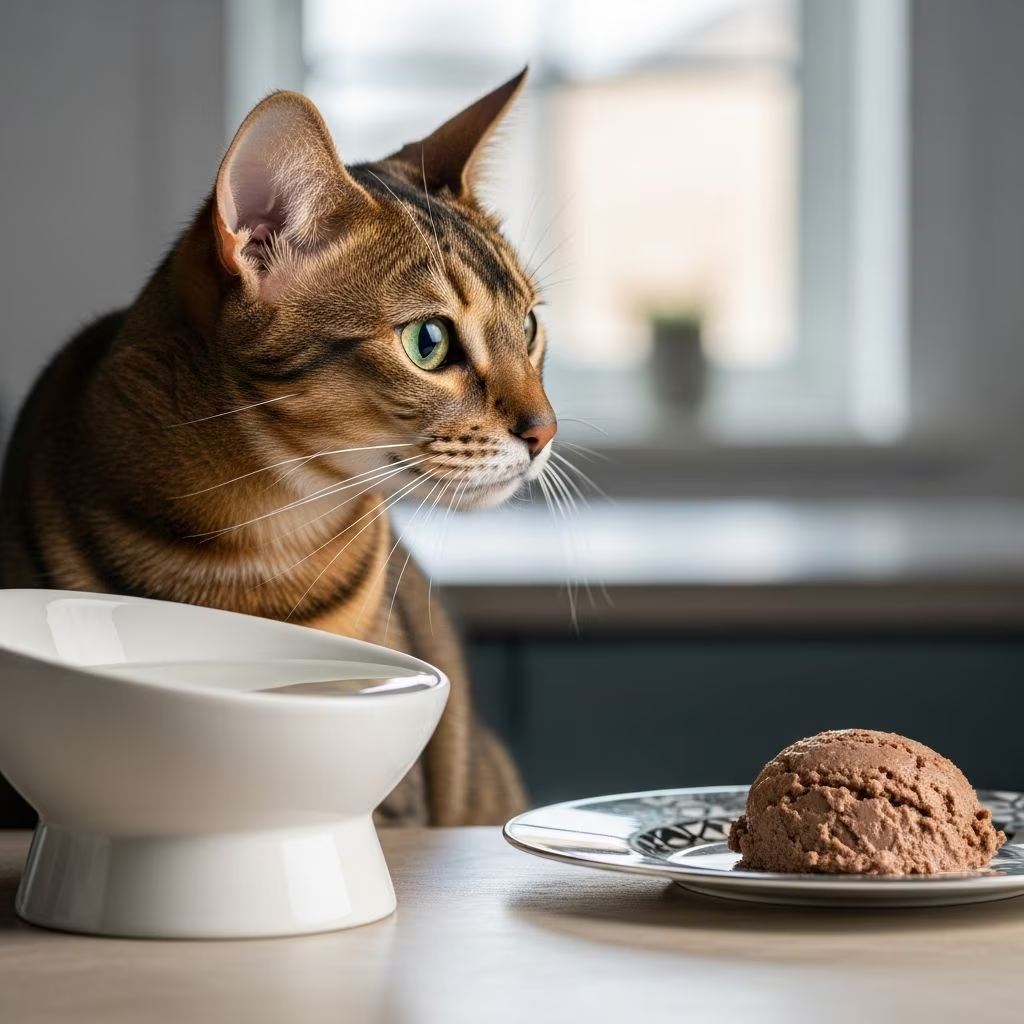
Cats fed exclusively on wet food frequently show reduced interest in their water bowls, as the high moisture content in canned meals satisfies much of their daily fluid requirements. This shift is normal and reflects their evolutionary adaptations, but vigilant monitoring ensures they remain properly hydrated for vital organ function.
Understanding Feline Hydration Essentials
Cats require consistent hydration to support critical physiological processes including circulation, thermoregulation, nutrient absorption, renal filtration, and dermal integrity. A typical adult cat weighing around 10 pounds demands approximately 1 cup—or 8 ounces—of total water daily, encompassing both direct consumption and dietary sources.
This baseline varies based on body mass, ambient conditions, activity levels, and dietary composition. For instance, felines with a lean body weight of 5 pounds need about 4 ounces per day, scaling proportionally for larger individuals. Environmental stressors like high temperatures or low humidity can elevate needs, while certain pharmaceuticals or ailments may further modulate requirements.
Deviations from optimal intake pose risks: insufficient fluids contribute to concentrated urine, fostering crystal formation and tract obstructions, particularly in males. Conversely, excess can signal diabetes or renal impairment, underscoring the importance of balance.
Why Wet Food Alters Drinking Patterns
Domestic cats descend from arid-adapted ancestors with minimal thirst drives, prioritizing prey-derived moisture over free water sources. Modern wet foods, comprising 70-80% water by weight, replicate this by delivering substantial fluids via meals. In contrast, dry kibble offers merely 6-10%, compelling greater bowl reliance.
An 8-ounce daily wet food serving supplies roughly 5.6-6.4 ounces of moisture—over half the average requirement—prompting cerebral thirst signals to diminish. Studies confirm cats on high-moisture diets exhibit the lowest voluntary drinking, with dietary intake compensating effectively. Mixed feeding similarly boosts totals, yielding dilute urine and reduced specific gravity.
- Water content comparison: Wet: 70-80%; Dry: 6-10%.
- Daily example: 6 oz wet food = ~4.5 oz water boost.
- Physiological response: Brain receptors detect sufficiency, curbing extra intake.
Assessing If Wet Food Suffices Alone
While wet food markedly enhances overall hydration versus dry-only regimens, it does not universally eliminate bowl needs. Most cats still sip occasionally, and total intake often exceeds dry-fed counterparts. Calculations for a 4kg cat illustrate: wet diets yield 254ml total (mostly dietary), dry around 220ml (more from drinking), both meeting needs but with nuanced balances.
Claims of superior hydration from wet food hold merit for urinary dilution, mitigating stone risks via increased volume and lowered concentration. However, evolutionary efficiency means excess dietary water prompts rapid urinary excretion, maintaining equilibrium rather than surplus retention. Net balances remain positive across diets when properly formulated.
| Diet Type | Dietary Water (4kg cat) | Drinking Water | Total Intake | Net Balance |
|---|---|---|---|---|
| Wet (80% moisture) | 204ml | 50ml | 254ml | +85ml |
| Dry (10% moisture) | 8ml | 212ml | 220ml | +104ml |
Note: Adapted from hydration models; individual variations apply.
Practical Monitoring Through Litter Habits
The litter box serves as a non-invasive hydration gauge. Healthy wet-fed cats produce larger, more frequent clumps due to heightened output—often doubling from dry transitions. Smaller or fewer indicate potential deficits; track by weighing pre/post-use litter or noting clump counts daily.
Normal output: 2-4 sizable urinates for indoor singles. Drastic reductions warrant veterinary evaluation for dehydration; surges may flag endocrine issues. Combine with physical checks: supple skin, alert demeanor, and pink gums signal adequacy.
- Observe daily clumps: Increase expected on wet switch.
- Weigh litter: ~2-3x body weight in urine output ideal.
- Check color: Pale yellow optimal; dark signals concentration.
Health Advantages of Moisture-Rich Diets
Beyond hydration, wet foods promote urinary wellness by diluting minerals prone to crystallization, vital for history of FLUTD or struvite/oxalate issues. Enhanced protein digestibility minimizes fecal losses, channeling fluids to kidneys.
Additional perks include satiety for obesity control—lower caloric density per volume aids portioning—and palatability for seniors or dentally compromised cats. Mixed approaches balance convenience with moisture gains.
Strategies to Enhance Fluid Uptake
Even on wet diets, provide unlimited fresh water. Elevate bowls, use fountains for oxygenation, or flavor with tuna juice to entice. Dilute wet food to soupy consistency at room temperature, boosting intake without rejection.
- Fountain appeal: Mimics running prey water.
- Multiple stations: Reduces competition in multi-cat homes.
- Broth toppers: Low-sodium for picky drinkers.
- Room-temp liquids: Preserves aroma.
Red Flags and Veterinary Guidance
Consult professionals if litter output plummets, urine darkens, or symptoms like lethargy, vomiting, or straining emerge. Vets assess via specific gravity tests, bloodwork, or urinalysis to rule out CKD, infections, or diabetes. Tailor diets for therapeutic needs, like prescription moisture-enhanced formulas.
Frequently Asked Questions
Is it okay if my cat never drinks from the bowl on wet food?
Generally yes, if litter output is robust and health stable; totals suffice via diet.
How much wet food ensures hydration?
At least 4-6 oz daily for average adults, adjusted for weight.
Does wet food prevent kidney disease?
It reduces risks via dilution, not prevents; genetics and monitoring key.
Can I mix dry and wet for balance?
Yes, enhances overall moisture without excess.
What if my cat has constipation?
Increased fluids from wet aid motility; vet may suggest more.
Proactive hydration vigilance fosters thriving felines, blending diet, observation, and professional input for peak vitality.
References
- Your Cat Doesn’t Drink Water but Eats Wet Food — Hills Pet Nutrition. 2023. https://www.hillspet.com/cat-care/nutrition-feeding/cat-doesnt-drink-water-but-eats-wet-food
- Mixed feeding for cats: health benefits may drive wet pet food consumption — Petfood Industry. 2022-10-01. https://www.petfoodindustry.com/nutrition/dog-and-cat-food-nutrition/article/15815353/mixed-feeding-for-cats-health-benefits-may-drive-wet-pet-food-consumption
- Wet food, kibble and hydration status in pets — Nutrition RVM. 2025-04-23. https://nutritionrvn.com/2025/04/23/wet-food-hydration/
- Wet Cat Food: More Than a Meal, a Key Ingredient for Feline Wellbeing — AAHA Newstat. 2024. https://www.aaha.org/newstat/publications/wet-cat-food-more-than-a-meal-a-key-ingredient-for-feline-wellbeing/
- Do Cats Need Wet Food? A Vet Explains Pros & Cons — Whisker. 2024. https://www.whisker.com/blog/do-cats-need-wet-food
- Tips for encouraging your cat to take in more fluids — Vet Professionals. 2023. https://www.vetprofessionals.com/site/downloads/free/Tips%20for%20encouraging%20your%20cat%20to%20drink.pdf
- The effect of changing the moisture levels of dry extruded and wet foods on urine composition in cats — PMC (Peer-reviewed). 2017-06-19. https://pmc.ncbi.nlm.nih.gov/articles/PMC5465855/



