

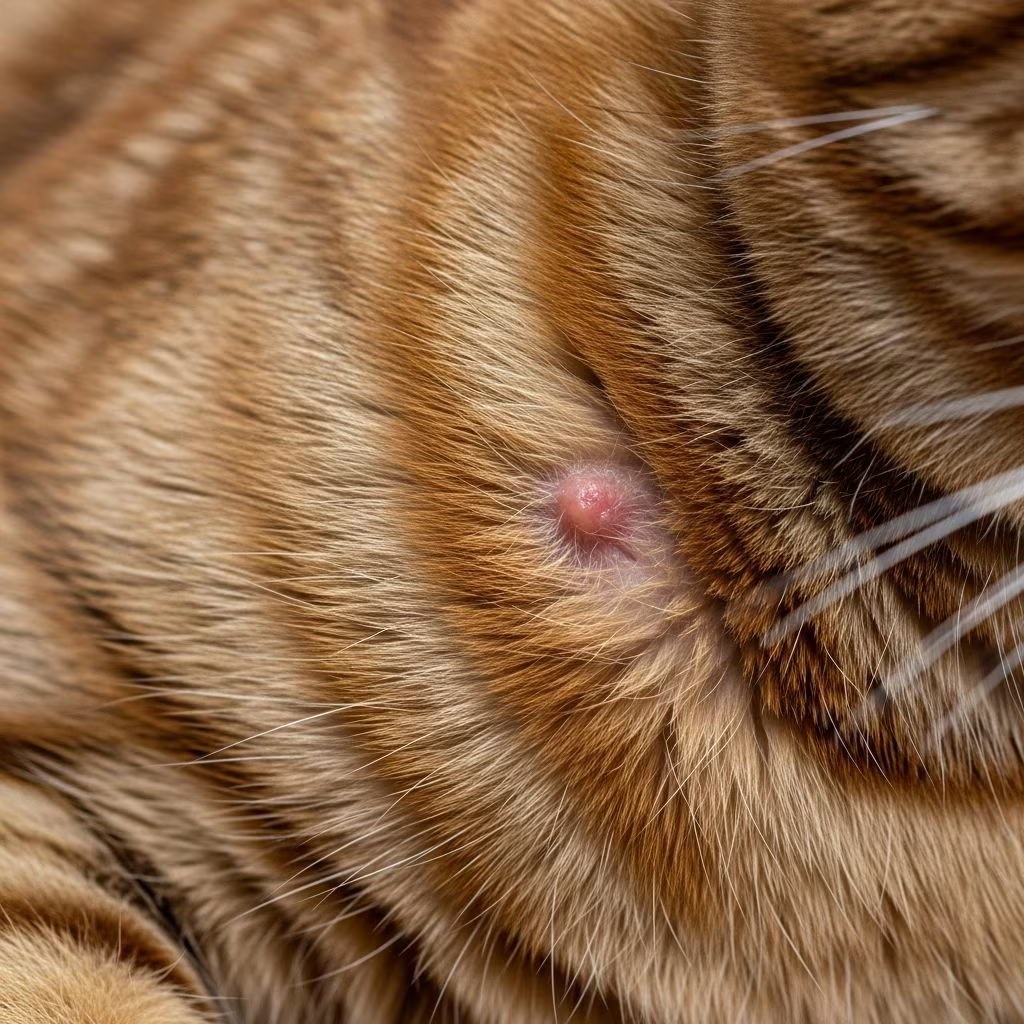
Discovering a lump on your cat’s skin can spark immediate concern, but many such growths are treatable or harmless with proper attention. This guide breaks down the various types of feline skin lumps, their origins, diagnostic approaches, and management strategies to help you support your pet’s well-being.
Recognizing Abnormal Growths on Your Cat
Cats often develop noticeable raised areas on their skin, which might appear suddenly or grow over time. These can range from small, firm nodules to larger, soft swellings. Regular grooming and petting sessions provide ideal opportunities to inspect your cat’s body, including hard-to-reach spots like the belly, armpits, and base of the tail. Early detection is crucial because some lumps resolve naturally, while others signal underlying health problems requiring intervention.
Typical characteristics include variations in size, texture, color, and mobility. A movable lump under the skin differs from one fixed to underlying tissues. Pay attention to any changes in shape, rapid enlargement, or associated signs like hair loss, redness, or discharge. Cats may hide discomfort, so behavioral shifts such as reduced activity or appetite loss can accompany skin issues.
Primary Categories of Feline Skin Lumps
Skin abnormalities in cats generally fall into benign, infectious, inflammatory, and neoplastic groups. Understanding these helps in initial assessment before professional evaluation.
- Benign growths: These include sebaceous cysts from blocked glands and skin tags, which are harmless overgrowths of skin cells.
- Infectious lumps: Often abscesses from bites during territorial disputes.
- Inflammatory responses: Triggered by allergies or immune reactions, leading to welts or granulomas.
- Neoplastic masses: Tumors that may be benign or malignant, necessitating biopsy for confirmation.
Common Benign and Traumatic Causes
Many lumps stem from everyday incidents or natural skin processes. Cysts form when hair follicles or sebaceous glands clog, creating fluid-filled sacs that feel firm yet fluctuant. They rarely cause pain unless infected, and owners might mistake them for tumors.
Post-injection swellings are frequent in kittens after vaccinations, typically resolving within weeks. If persistent beyond a month or exceeding 2 cm, veterinary review is advised. Traumatic injuries, like punctures from fights or accidents, lead to hematomas (blood-filled pockets) or seromas (fluid collections), which can harden if organizing scar tissue forms.
Hernias, such as umbilical ones in young kittens, present as soft abdominal protrusions where fat pushes through muscle gaps. Most close spontaneously, but larger ones demand surgical correction to prevent complications.
Infectious Lumps: Abscesses and Beyond
Abscesses top the list of infectious lumps, arising from bacterial entry via bite wounds—common in outdoor or multi-cat households. Bacteria thrive in the anaerobic environment under skin, forming pus pockets that feel hot, painful, and fluctuant. Cats often develop a thick crust over the site, masking severity until rupture.
Symptoms include fever, pawing at the area, lethargy, and refusal to eat. Untreated, abscesses can spread systemically, causing sepsis. Fungal infections, though rarer, create nodular swellings, especially in humid climates or immunocompromised cats.
Allergic and Inflammatory Reactions
Allergens from food, fleas, pollen, or insect stings provoke hives or raised, itchy plaques. Eosinophilic granuloma complex manifests as red, ulcerated lesions on lips, paws, or thighs, linked to hypersensitivity. These respond well to steroids but recur if triggers persist.
Foreign bodies like grass awns embed under skin, fostering chronic inflammation and secondary infections. Affected areas ooze or form draining tracts, mimicking abscesses.
Oncologic Concerns: Tumors and Cancers
Approximately half of feline skin masses are malignant, including fibrosarcomas (aggressive connective tissue tumors post-vaccination or injection), squamous cell carcinomas (sun-exposed areas in light-coated cats), and mast cell tumors (itchy, ulcerated nodules). Benign options like basal cell tumors appear as raised, hairless domes.
Malignant lumps grow quickly, adhere to tissues, and ulcerate. Lymph node enlargement signals metastasis. Early surgical excision improves prognosis dramatically.
Diagnostic Approaches for Lumps
| Method | Purpose | Details |
|---|---|---|
| Fine Needle Aspirate (FNA) | Initial cytology | Extracts cells for microscopic exam; quick, minimally invasive |
| Biopsy | Definitive histology | Full or incisional sample; identifies tumor type |
| Imaging (Ultrasound/X-ray) | Assess spread | Checks for internal involvement or metastasis |
| Culture/Sensitivity | Infection ID | Guides antibiotic choice for abscesses |
Vets start with history and physical exam, noting lump location, growth rate, and cat’s lifestyle (indoor/outdoor). Bloodwork rules out systemic disease.
Treatment Strategies by Cause
Tailored plans address root issues effectively.
- Abscesses: Lancing, flushing, antibiotics (e.g., amoxicillin-clavulanate), pain relief.
- Cysts: Surgical removal if recurrent; drainage for simple cases.
- Allergies: Steroids (prednisone), antihistamines, flea control, hypoallergenic diets.
- Tumors: Wide-margin surgery; chemo/radiation for malignancies; palliative care for advanced cases.
Nutrition supports recovery—omega-3 fatty acids reduce inflammation, and prescription diets manage allergies. Always consult vets before diet changes.
Prevention Tips for Skin Lumps
Minimize risks through proactive care:
- Keep cats indoors to avoid fights and parasites.
- Maintain flea prevention year-round.
- Regular vet check-ups for early detection.
- Sun protection for white/eared cats (hats, limited exposure).
- Groom frequently to spot issues early.
When to Rush to the Vet
Seek immediate care if the lump:
- Grows rapidly or exceeds 2 cm.
- Is painful, ulcerated, or bleeding.
- Accompanies fever, breathing issues, or swelling of face/paws.
Even “harmless-looking” lumps warrant professional eyes, as self-resolution isn’t guaranteed.
FAQs on Cat Lumps
Can cat lumps disappear on their own?
Yes, some like minor insect bites or small hematomas resolve, but persistent ones need evaluation.
Are all lumps cancerous?
No, only about 50% are malignant; cytology differentiates.
How much does lump removal cost?
Varies by complexity—FNA ~$50-100, surgery $500-2000+; insurance helps.
Should I squeeze an abscess?
No, risks rupture and worsening infection; vet drainage is safer.
Do vaccines cause lumps?
Temporary ones yes; rare sarcomas prompt vaccine-site monitoring.
(Word count: 1678)
References
- Skin Lumps on a Cat: Types, Causes & Treatment — Hill’s Pet Nutrition. 2023. https://www.hillspet.com/cat-care/healthcare/lumps-on-cats
- Lumps and bumps in cats: What causes them and what should you do — RSPCA Pet Insurance. 2024. https://www.rspcapetinsurance.org.au/pet-care/cat-care/cat-lumps-bumps
- Lumps in cats | Health A-Z — Joii Pet Care. 2025. https://www.joiipetcare.com/blogs/health-symptoms/lumps-in-cats
- Cat Skin Lumps, Bumps, and Cysts — PetMD. 2024-02-15. https://www.petmd.com/cat/symptoms/cat-skin-lumps-bumps-and-cysts
- Skin lumps in cats — PDSA. 2025. https://www.pdsa.org.uk/pet-help-and-advice/pet-health-hub/symptoms/found-a-lump-on-your-cat



