
Cat Skin Anatomy: A Comprehensive Guide For Pet Owners
Explore the intricate layers and functions of feline skin, from protective barriers to hair growth, essential for understanding health and common disorders.
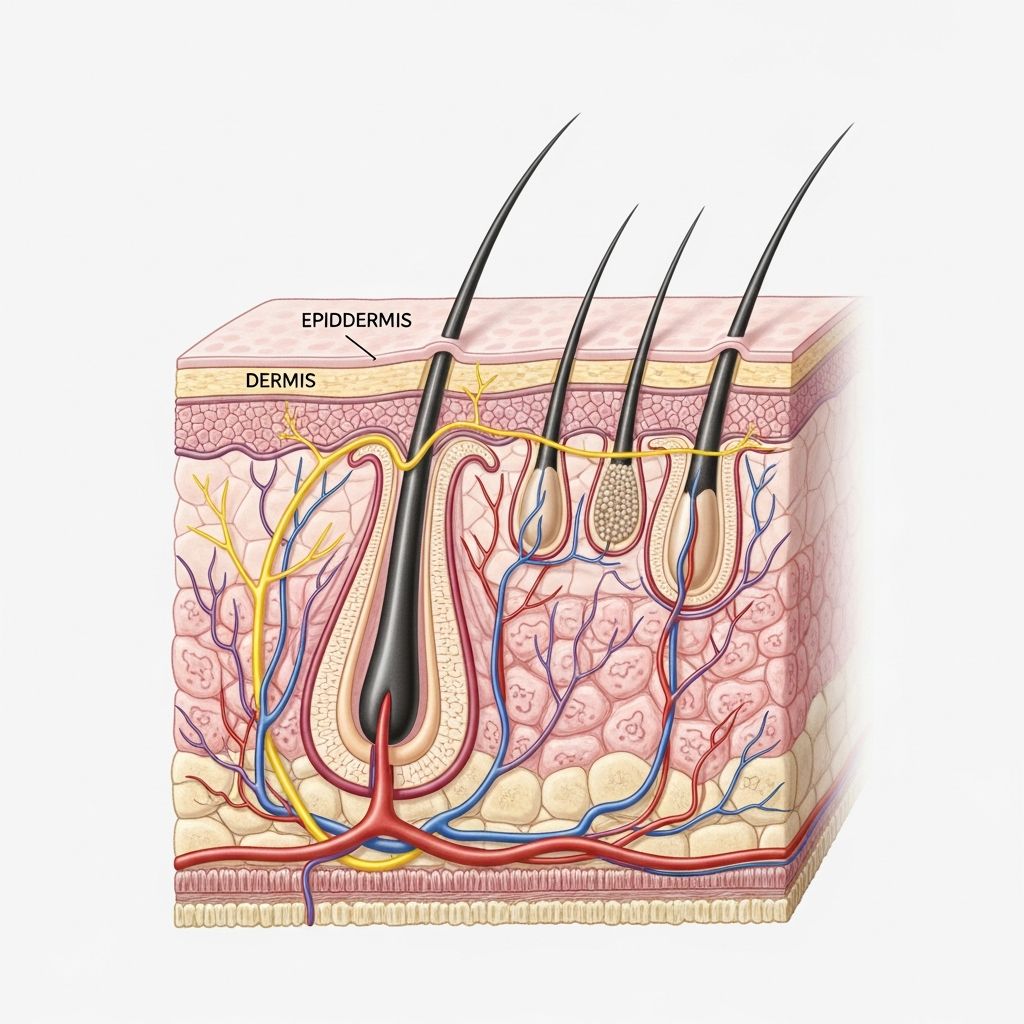
The skin serves as the primary interface between a cat and its environment, acting as a dynamic shield that safeguards internal organs while enabling sensory perception and temperature control. Comprising multiple specialized layers and structures, feline skin is remarkably adapted to a cat’s agile lifestyle, with variations in thickness across body regions to support flexibility and protection.
Overview of Feline Skin Layers
Cat skin consists of three main layers: the outermost epidermis, the supportive dermis beneath it, and the underlying hypodermis. Each layer contributes uniquely to overall skin integrity, with the epidermis forming a renewable barrier and the dermis providing strength and nourishment. Thickness varies significantly; for instance, skin on the forehead, back, and tail base measures thicker compared to the belly or inner limbs, enhancing durability in high-impact areas.
This layered design allows cats to withstand scratches, bites, and environmental stressors common in their predatory and territorial behaviors. Loose skin, particularly around the neck and flanks, aids in evasion during fights by permitting greater maneuverability.
The Epidermis: First Line of Defense
The epidermis is a thin, avascular sheet of stratified squamous epithelium primarily made of keratinocytes, which undergo progressive differentiation from deep to superficial layers. Lacking blood vessels, it relies on diffusion from the dermis for nutrients. Key cell types include melanocytes for pigmentation, Langerhans cells for immune surveillance, and Merkel cells for tactile sensation.
Feline epidermis typically features four to five layers, thinner than in dogs but efficient for rapid renewal:
- Stratum Basale (Basal Layer): Single layer of cuboidal keratinocytes attached to the basement membrane. This proliferative zone generates new cells via mitosis, including melanocytes that produce melanin for UV protection and coloration.
- Stratum Spinosum (Spinous/Prickle Layer): Several layers of polyhedral cells connected by desmosomes, providing tensile strength. Here, lamellar bodies form, releasing lipids crucial for barrier function.
- Stratum Granulosum (Granular Layer): Flattened cells containing keratohyalin granules and lamellar granules. These initiate cornification, transforming live cells into dead, keratin-filled corneocytes.
- Stratum Corneum (Horny Layer): Outermost multilayer of anucleate corneocytes embedded in a lipid matrix, forming the ‘brick-and-mortar’ barrier. It resists water loss, microbial invasion, and mechanical abrasion, with constant desquamation maintaining renewal.
In paw pads, an additional clear layer of dead cells enhances cushioning. Epidermal turnover occurs every 15-30 days in healthy cats, accelerating during injury or inflammation.
The Dermis: Structural Backbone
Accounting for most skin thickness, the dermis is a vascularized connective tissue rich in collagen (type I primary), elastin fibers, and ground substance like hyaluronic acid. Fibroblasts synthesize these extracellular matrix components, while blood vessels, lymphatics, and nerves permeate the tissue.
Organized into papillary (superficial, loose) and reticular (deep, dense) zones, the dermis anchors the epidermis via a basement membrane and houses appendages. It imparts elasticity, enabling skin to stretch during movement, and supports immune functions through resident mast cells, macrophages, and lymphocytes. Sensory nerve endings detect pain, pressure, and temperature, vital for a cat’s hunting prowess.
| Dermal Zone | Composition | Key Functions |
|---|---|---|
| Papillary | Thin collagen fibers, capillaries | Nutrient exchange, immune cell migration |
| Reticular | Thick collagen/elastin bundles | Strength, elasticity, appendage support |
Hypodermis: Cushioning Layer
Beneath the dermis lies the hypodermis (subcutis), a loose layer of adipose tissue, collagen, and elastin that attaches skin to muscle or bone. It acts as a shock absorber, insulates against cold, and stores energy. In cats, this layer is thinner than in dogs, reflecting their lean build, but thicker in areas like the abdomen for organ protection.
Skin Appendages and Their Roles
Hair Follicles and Coat
Hair follicles dominate feline skin, producing the double coat: a dense undercoat for insulation and longer guard hairs for waterproofing. Each follicle cycles through growth (anagen), regression (catagen), and rest (telogen) phases, influenced by hormones and seasons.
A follicle comprises:
- Infundibulum: Upper funnel-shaped opening.
- Isthmus: Narrow middle segment.
- Bulb: Base with dermal papilla nourishing matrix cells.
Hair shaft structure includes medulla (air-filled core), cortex (keratin bulk with pigments), and cuticle (overlapping scales for sheen). Cats shed seasonally, with about 15-20% of hairs in telogen at any time.
Sebaceous Glands
Holocrine glands associated with follicles secrete sebum, a mix of lipids moisturizing skin and hair while imparting waterproofing and antimicrobial properties. Distributed widely, they are most active on the head and tail.
Sweat Glands
Unlike humans, cats possess eccrine sweat glands limited to paw pads, aiding thermoregulation via evaporation during stress or heat. They produce a watery secretion, insufficient for full cooling, supplemented by grooming and panting.
Claw and Digital Structures
Claws grow from modified epidermal pockets, with a germinal epithelium producing keratinized sheaths. Retractor muscles in the dermis enable extension/retraction, essential for climbing and predation.
The Skin Barrier: Multifaceted Protection
The stratum corneum exemplifies the skin barrier, with corneocytes (bricks) interlocked by lipid lamellae (mortar) forming hydrophobic sheets. This selectively permeable seal prevents transepidermal water loss (TEWL) while blocking pathogens and allergens.
Additional defenses include:
- Acidic Mantle: pH 5.5-7.0 from sebum and lactic acid inhibits bacterial growth.
- Antimicrobial Peptides: Defensins from keratinocytes combat microbes.
- Tight Junctions: In viable epidermis, seal intercellular spaces.
Disruptions lead to dryness, infections, or allergies, common in feline dermatoses.
Regional Variations in Cat Skin
Skin adapts regionally: thicker on dorsal surfaces (up to 2-3mm) for protection, thinner ventrally (<1mm) for flexibility. Paw pads feature specialized epidermis with increased keratin for grip. Mucocutaneous junctions transition smoothly to internal linings.
Functions Beyond Protection
Besides barrier roles, skin regulates heat via vasodilation, piloerection, and sweating; synthesizes vitamin D upon UV exposure; and communicates via pheromones from glands. Immune cells mount responses to threats, while sensory feedback guides behavior.
Common Skin Issues and Anatomy Links
Understanding structure aids issue recognition: epidermal hyperproliferation causes scaling in seborrhea; dermal inflammation underlies allergies; follicular infections like folliculitis stem from bacterial ingress.
FAQs
Why is my cat’s skin loose around the scruff?
This adaptation allows escape from predators by slipping free during grabs, with elastic dermis facilitating stretch.
How often does cat skin renew?
Epidermis turns over every 15-30 days, faster in kittens or during healing.
What maintains healthy cat skin barrier?
Balanced diet with omega-3s, hydration, and grooming support lipid production and desquamation.
Do cats sweat like dogs?
No, limited to paws; they rely on grooming and behavior for cooling.
Why do cats overgroom certain areas?
It may signal allergies irritating the barrier or fleas targeting follicles.
References
- The Skin of Dogs and Cats — DermaVet. 2023. https://www.dermavet.eu/en/skin-dogs-cats/
- Skin and subcutis anatomy — Veterian Key. 2022-01-15. https://veteriankey.com/skin-and-subcutis-anatomy/
- Dog & Cat Skin Anatomy, Layers, Diagrams, Cells And Its Functions — Safari Veterinary Care Centers. 2024. https://www.safarivet.com/care-topics/dogs-and-cats/dermatology/
- 3D skin models in domestic animals — PMC (NCBI). 2021-02-10. https://pmc.ncbi.nlm.nih.gov/articles/PMC7885517/
- Cat Anatomy & Physiology 101 — Purina. 2023. https://www.purina.com/articles/cat/behavior/understanding-cats/cat-anatomy
- Cutaneous Anatomy & Physiology — Zoetis Canada. 2024. https://www2.zoetis.ca/dermatology/cutaneous-anatomy-physiology/
Similar Articles








Read full bio of medha deb




