

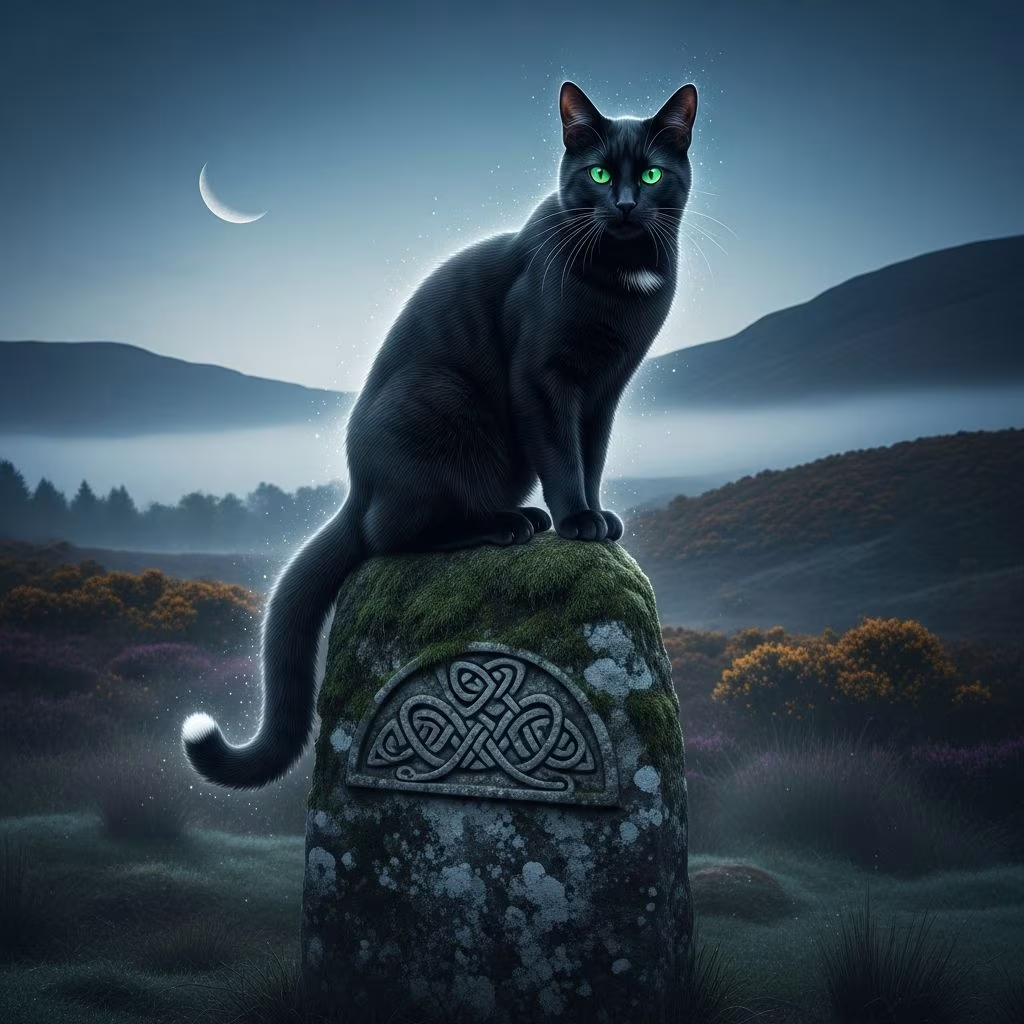
The Cat Sìth stands as one of the most captivating figures in Celtic mythology, embodying the blurred lines between the natural world and the supernatural. This legendary creature, often depicted as a large black cat with a distinctive white patch on its chest, roams the misty landscapes of Scotland and Ireland, serving as both a harbinger of doom and a mystical guardian. Rooted in ancient Gaelic traditions, tales of the Cat Sìth reveal deep-seated beliefs about death, the fairy realm, and the uncanny abilities of felines.
Origins in the Misty Highlands
In the rugged Scottish Highlands and the emerald hills of Ireland, folklore paints the Cat Sìth as a fairy being originating from the Otherworld—a parallel realm inhabited by ethereal fae creatures. Known in Gaelic as cat-sìth or cat sí, it is described as an enormous feline, sometimes as big as a dog, with sleek black fur interrupted only by that telltale white spot. These stories likely drew inspiration from real-world sightings of the Kellas cat, a rare hybrid between domestic cats and Scotland’s native wildcats, which could explain the creature’s imposing size and elusive nature.
Celtic peoples, who lived in close harmony with nature, viewed cats not merely as pets but as intermediaries between human domains and hidden spirit worlds. The Cat Sìth’s presence in lore underscores this reverence mixed with fear, positioning it as a symbol of the unknown forces lurking beyond the veil of everyday life.
Guardian or Soul Thief?
The dual nature of the Cat Sìth defines its lore: protector of sacred spaces on one hand, and a thief of souls on the other. In Scottish tales, it haunts graveyards and homes of the newly deceased, leaping over fresh graves to capture departing souls before they can reach the afterlife. This malevolent act doomed the spirit to eternal wandering, prompting communities to enact desperate countermeasures.
- Silence was enforced during wakes; no cat cries or sounds could pierce the quiet, lest they summon the beast.
- Fires were extinguished at night, as the warmth-loving Cat Sìth was drawn to hearths.
- Special guards, known as faire chrodh, watched over corpses to prevent soul-snatching.
Conversely, in Irish traditions, certain cats like the Bog Cat of Lough Neagh brought fortune, speed, and blessings to those encountering them, highlighting regional variations where felines heralded good luck rather than peril. This ambiguity reflects broader Celtic views of cats as shape-shifters capable of traversing realms, aiding witches or repelling evil fae.
Superstitions and Protective Rites
Celtic superstitions surrounding cats extended far beyond the Cat Sìth, weaving felines into daily life and rituals. A cat washing its face signaled impending rain, while one jumping over a corpse foretold blindness for the witness. Crossing paths with a cat on New Year’s Day or a bride’s wedding day spelled misfortune, yet sailors welcomed it as an omen of safe voyages.
To ward off the Cat Sìth’s influence, Highlanders smothered fires and avoided speaking of cats during funerals. These practices reveal a profound respect for feline intuition, believed to pierce glamours—the fae illusions hiding their true forms. Black cats, in particular, were omens: lucky in Ireland, devilish in Christianized Scotland.
| Superstition | Meaning | Region |
|---|---|---|
| Cat crosses bride’s path | Bad luck for marriage | Scotland/Ireland |
| Cat meows for flesh | Imminent animal death | Celtic-wide |
| Cat dies in house | Human death soon follows | Ireland |
| Sailor sees cat | Good fortune at sea | Wales/Scotland |
Links to Witchcraft and the Fae
Cats in Celtic lore often intertwined with witchcraft, evolving from pre-Christian allies to symbols of heresy under Church influence. Witches’ familiars, like Shakespeare’s Graymalkin from Macbeth, echoed the Cat Sìth—gray fairy cats from the Highlands endowed with reason and vengeance. Rituals such as the gruesome Taghairm involved roasting cats to summon demonic entities like Big Ears, underscoring the perilous magic attributed to felines.
The fae connection runs deep: cats guarded fairy mounds, repelled malicious sprites, and shape-shifted into human form. In some tales, they were vengeful spirits or the King of Cats, protector of all felines. This fae affinity positioned cats as spies for otherworldly beings, blurring lines between ally and adversary.
Mythical Cats in Heroic Epics
Beyond fairy realms, epic Celtic sagas feature formidable feline foes and companions. The warrior Cuchulain battled cat-headed invaders alongside the Fianna, while the Tuatha Dé Danann god Nuada replaced an eye with his pet cat’s. In Welsh lore, the monstrous Palug Cat ravaged the Isle of Mona, falling only to King Arthur (or his knight Cai), its power marking it as one of Albion’s great plagues.
These narratives elevate cats from mere beasts to embodiments of primal ferocity and mystical potency, influencing Arthurian legends where felines symbolize untamed wilderness.
From Ancient Reverence to Persecution
Pre-Christian Celts cherished cats for pest control and prophecy, but the Church recast them as demonic. Pope Innocent’s decrees linked nocturnal creatures to Satan, fueling witch hunts where cat-owning women faced trials. Despite this, folklore persisted, with sayings like “God save all here except the Cat” capturing lingering caution.
Today, the Cat Sìth inspires Halloween imagery—black cats as magic harbingers, the notion of nine lives—and modern hybrids like the Kellas cat keep the legend alive.
Modern Echoes and Cultural Legacy
The Cat Sìth’s legacy endures in literature, art, and pop culture. From Shakespeare’s witches to fantasy novels, it symbolizes enigma and power. Scottish wildcat conservation efforts highlight real felines mirroring mythical ones, bridging ancient lore with biodiversity.
In a world rediscovering pagan roots, the Cat Sìth reminds us of humanity’s awe for nature’s mysteries, urging respect for the unseen.
Frequently Asked Questions (FAQs)
What is a Cat Sìth?
A fairy creature resembling a large black cat with a white chest spot, known for soul-stealing in Scottish/Irish folklore.
Why were fires put out to avoid the Cat Sìth?
The creature sought warmth, so extinguishing fires deterred it from homes during wakes.
Are Cat Sìth real animals?
Likely inspired by Kellas cats, hybrids of domestic and wild Scottish cats.
How did Christianity affect cat lore?
It demonized cats, associating them with witches and the devil, leading to persecutions.
What good luck do cats bring in Celtic tales?
In Ireland, black cats and figures like the Bog Cat symbolized wealth and blessings.
References
- The Folklore Files: Cats & the Fae — Hedge Witch Botanicals. 2025-03-10. https://hedgewitchbotanicals.com/2025/03/10/cats-and-the-fae/
- Celtic Cat Myths and Legends — Khaliela Wright. N/A. https://khalielawright.com/celtic-cat-myths-and-legends/
- The Cat in Celtic Lore: Demon, Witch, or Lover? — Living Library Blog. N/A. https://livinglibraryblog.com/the-cat-in-celtic-lore-demon-witch-or-lover/
- Cat-Sìth — Folklore Scotland. N/A. https://folklorescotland.com/cat-sith/
- Celtic Cats – Magical Mystery Purr — True Thomas the Storyteller. N/A. http://truethomas.com/weblog/celtic-cats-magical-mystery-purr/
- Cat-sìth — Wikipedia. N/A. https://en.wikipedia.org/wiki/Cat-s%C3%ACth



