

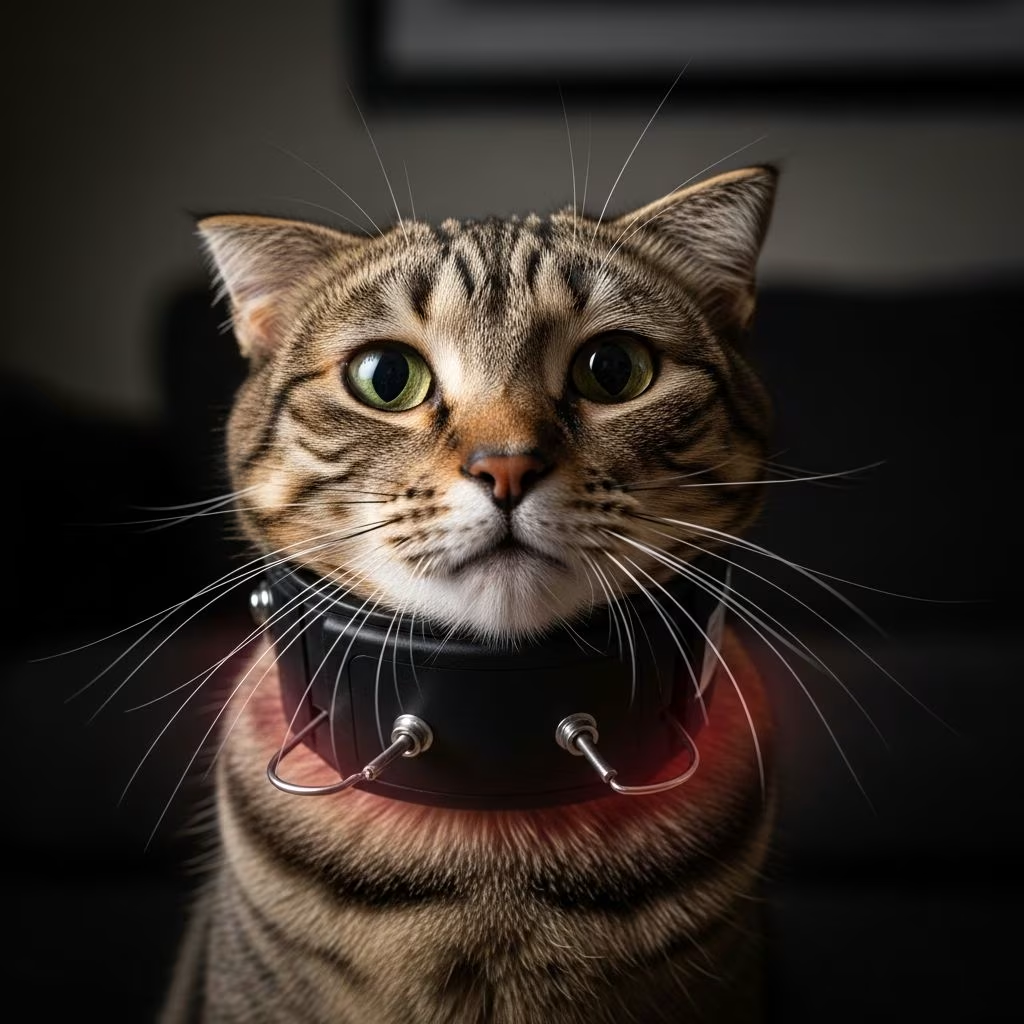
Shock collars for cats deliver electrical impulses intended to modify behavior, but they carry significant risks to feline health and well-being. Veterinary experts and animal welfare groups widely condemn their use due to potential for pain, injury, and psychological harm.
Understanding the Mechanics of Shock Collars
These devices fit around a cat’s neck with prongs that contact the skin. Activation occurs via remote control or automatic triggers like boundary crossing or noise levels. Remote versions often start with vibrations or tones before escalating to shocks, while automatic ones respond to predefined stimuli such as entering restricted zones or excessive vocalization.
Shocks range from 100 to 6,000 volts, with durations up to 11 seconds. For a cat’s delicate physiology, even lower voltages can feel like a severe burn, far exceeding safe human tolerance levels around 300 volts.
Physical Health Dangers to Cats
Cats exposed to shock collars face immediate and long-term physical threats. Skin burns, necrosis, and infections arise from repeated prong contact and electrical discharge. Prolonged wear exacerbates these issues, leading to tissue damage.
- Burns and Lesions: High-voltage shocks cause thermal injuries at contact points.
- Neck Injuries: Improper fit can lead to tracheal damage or muscle strains during reflexive pulls.
- Cardiac Risks: Electrical currents may disrupt heart rhythms in sensitive felines.
Emergency scenarios compound dangers; a distressed cat vocalizing for help might receive a shock instead, hindering escape from predators or hazards.
Psychological and Behavioral Impacts
Beyond physical harm, shocks induce fear, anxiety, and aggression. Cats learn to associate the discomfort with their environment or owner rather than the undesired action, worsening behaviors like scratching or escaping.
Studies show punishment-based tools suppress symptoms temporarily but fail to instill positive habits, often escalating stress-related issues such as hiding, appetite loss, or redirected aggression.
| Impact Type | Short-Term Effects | Long-Term Consequences |
|---|---|---|
| Emotional | Fear, panic | Chronic anxiety, depression-like symptoms |
| Behavioral | Immediate cessation | Increased aggression, avoidance |
| Social | Owner distrust | Strained human-cat bond |
Legal Status and Bans Worldwide
Many regions prohibit shock collars due to welfare concerns. The UK banned them in England in 2018, following Wales and Scotland, with the RSPCA advocating against their cruelty. Similar restrictions exist in Germany, Austria, Switzerland, parts of Australia, and Scotland.
In the US, they remain legal federally, but retailers like Petco have discontinued sales. Veterinary associations urge avoidance, prioritizing ethical training.
Why Shock Collars Fail for Cat Training
Cats respond poorly to aversive methods, unlike some dogs. Their independent nature means punishment creates confusion, not comprehension. Positive reinforcement—rewards for good behavior—proves more effective and enduring.
Behaviorists note shocks address symptoms, not root causes like boredom or stress, leading to relapse or new issues.
Humane Alternatives for Cat Containment and Training
Safer options prioritize comfort and efficacy. Physical barriers and enrichment outperform electronics.
- Cat-Proof Fencing: Netting or rollers prevent escapes without pain.
- Enclosures and Catio: Outdoor-safe spaces allow exploration.
- Positive Reinforcement Tools: Clickers, treats, and toys build desired habits.
- Vibration or Spray Collars: Non-painful deterrents (use cautiously).
- Nylon or Breakaway Collars: For ID without restriction.
For indoor boundaries, motion-activated deterrents or sticky mats redirect without harm. Consult vets for tailored plans.
Comparing Collar Types: Pros and Cons
| Collar Type | Mechanism | Pros | Cons | Recommended? |
|---|---|---|---|---|
| Shock | Electric pulse | Quick deterrence | Pain, injury, bans | No |
| Choke/Prong | Tightening/pinch | Immediate stop | Strangulation risk | No |
| Breakaway Nylon | Quick-release | Safe ID wear | No training function | Yes |
| Vibration | Buzz alert | Mild cue | Variable efficacy | Conditional |
Expert Recommendations from Vets and Behaviorists
Veterinary bodies like the BC SPCA list five reasons against shocks: inefficacy, health risks, fear induction, ethical issues, and better alternatives. Peer-reviewed literature refutes life-saving claims, emphasizing positive methods.
Start training early with patience: ignore bad behaviors, reward good ones. Professional behaviorists can address aggression or roaming humanely.
Case Studies: Real-World Outcomes
Anecdotal reports from forums highlight failures; one owner noted increased feline aggression post-shock use. Conversely, fencing installations reduced escapes by 100% without distress.
Transitioning to enrichment—like puzzle feeders and vertical spaces—curbed unwanted actions in stressed cats, restoring harmony.
Frequently Asked Questions (FAQs)
Are shock collars ever safe for cats?
No, due to voltage levels causing pain and injury. Welfare groups deem them cruel.
What voltage do cat shock collars use?
Typically 100-6,000 volts, intolerable for cats.
Can shock collars train cats effectively?
They suppress but don’t teach, often worsening issues.
What are the best alternatives to shock collars?
Fencing, enclosures, and positive reinforcement.
Are shock collars legal everywhere?
No, banned in several countries; US sales vary by retailer.
Steps to Safely Train Your Cat Without Aversion
- Identify triggers: Observe patterns in behavior.
- Enrich environment: Add scratching posts, toys.
- Use rewards: Treats for compliance.
- Employ barriers: Physical or scented deterrents.
- Seek pros: Vets for health checks, behaviorists for plans.
Consistency yields results in weeks, fostering trust.
References
- Are Shock Collars Safe for Cats? — Hunter Pet Shop. 2023. https://www.hunterpetshop.ca/blogs/news/are-shock-collars-safe-for-cats
- Cat Shock Collars: How They Work, Safety Advice & Alternatives — Catster. 2024-01-15. https://www.catster.com/cat-health-care/cat-shock-collars-are-they-safe/
- Are Shock Collars Safe for Cats? — ProtectaPet. 2023. https://protectapet.com/en-us/blogs/blog/are-shock-collars-safe-for-cats
- Do cat collars deliver a shock? — Hidden Fence. 2024. https://hiddenfence.com.au/do-cat-collars-deliver-a-shock/
- 5 Reasons not to use a shock collar — BC SPCA. 2023-06-01. https://spca.bc.ca/ways-to-help/take-action/animals-in-the-home/the-shocking-truth-about-electronic-collars/5-reasons-not-to-use-a-shock-collar/
- The Shocking Truth About Shock Collars — Three Oaks Animal Behavior. 2022-11-10. https://animalbehaviorok.com/shocking-truth-about-shock-collars/



