

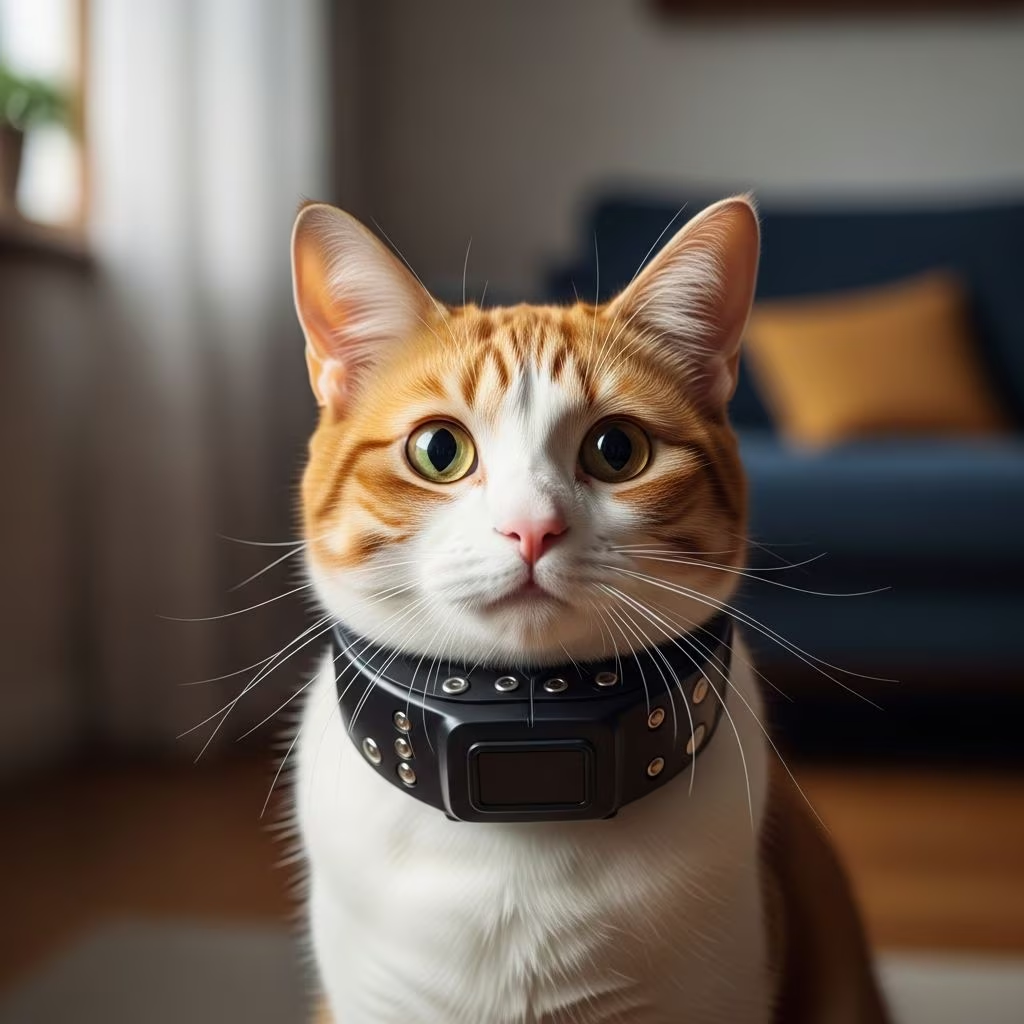
Shock collars for cats deliver electric pulses intended to deter unwanted behaviors, but their safety remains highly debated among veterinarians, animal welfare experts, and pet owners. While proponents claim they provide quick corrections, overwhelming evidence from veterinary associations and studies highlights significant physical and psychological risks, leading to bans in several countries and strong recommendations for humane alternatives.
What Is a Shock Collar?
A **shock collar**, also known as an e-collar or electric collar, is a training device worn around a cat’s neck that delivers an electric shock, vibration, spray, or tone in response to specific behaviors triggered by a remote control. These collars aim to interrupt actions like excessive meowing, scratching furniture, or escaping the yard by associating them with discomfort.
For cats, shock collars typically operate at voltages up to 6,000 volts with shocks lasting up to 11 seconds. Unlike dog models, cat versions are smaller but still rely on aversive stimuli, which can include static shocks, citronella sprays, or ultrasonic sounds. The goal is behavior modification through punishment rather than reward.
How Do Shock Collars Work on Cats?
Shock collars function via a receiver on the collar linked to a handheld transmitter. The owner presses a button to send a signal, prompting the collar to administer the correction. Levels range from mild tingles to intense shocks, with some models offering progressive intensity.
- Static Shock: Mimics a static electricity jolt, escalating based on settings.
- Vibration or Tone: Milder options for attention-grabbing without pain.
- Spray Collars: Release unpleasant scents like citronella to deter behavior.
In cats, these are often used for issues like indoor spraying, aggression, or boundary training. However, cats’ sensitive necks and thinner skin make them particularly vulnerable to injury from improper fit or overuse.
Are Shock Collars Safe for Cats?
No, shock collars are not considered safe for cats by major veterinary and welfare organizations. The British Veterinary Association (BVA) and British Small Animal Veterinary Association (BSAVA) advocate for a complete ban on electric pulse collars due to risks of pain, distress, and long-term behavioral harm.
The BC SPCA lists five key reasons against their use: they cause psychological distress, phobias, stress-induced heart rate spikes, skin burns, pain habituation, and increased aggression. In cats, thinner skin heightens burn risks, and their independent nature can lead to unpredictable responses, worsening anxiety.
| Risk | Impact on Cats | Source |
|---|---|---|
| Physical Burns | Skin lesions from high-voltage shocks | |
| Psychological Distress | Fear, phobias, aggression | |
| Heart Rate Increase | Stress-related cardiovascular strain | |
| Pain Habituation | Reduced sensitivity, ineffective training |
Side Effects of Shock Collars on Cats
Cats using shock collars may exhibit immediate side effects like yelping, cowering, or fleeing, alongside long-term issues such as generalized fear, avoidance of the owner, or redirected aggression. Studies on aversive training show it suppresses symptoms without addressing root causes, potentially leading to stress-related illnesses like urinary problems or overgrooming.
Adverse reactions mirror those in collar tolerance studies, including scratching (up to 19.6% in control groups), alopecia, vomiting, and behavioral changes. While not all are directly from shocks, the discomfort exacerbates sensitivities in felines.
- Short-term: Pain, shock avoidance, collar removal attempts.
- Long-term: Anxiety disorders, trust erosion, health decline.
Are Shock Collars Legal?
Legality varies globally. In England, a 2018 ban prohibits shock collars for cats and dogs, supported by the RSPCA for causing unnecessary suffering. Wales and Scotland followed with similar restrictions. The BVA pushes for UK-wide bans.
In the US, they remain legal in most states but face scrutiny; some localities restrict sales. Australia and parts of Europe have partial bans. Always check local laws, as welfare groups lobby for prohibitions.
Shock Collar Alternatives for Cats
Humane alternatives prioritize **positive reinforcement**, proven as effective as punishment without harm. Reward desired behaviors with treats, praise, or play to build trust and long-term compliance.
- Feliway Collars: Pheromone-impregnated collars reduce stress-related behaviors like scratching and urination, with studies showing twice the success rate in stopping issues compared to controls.
- Vibrating Collars: Gentle vibrations for attention, ideal for deaf or sensitive cats.
- Catios and Fences: Enclosures prevent escapes without shocks.
- Clicker Training: Pairs sounds with rewards for precise learning.
Pheromone collars demonstrated efficacy in managing urination, scratching, and inter-cat conflicts, with 14.1-18.6% non-tolerance rates similar to regular collars, underscoring their safety edge.
Humane Ways to Train Your Cat
Effective cat training uses environmental management and rewards:
- Identify Triggers: Observe patterns in unwanted behavior.
- Redirect: Provide scratching posts, litter solutions.
- Reward: Treat immediately after good actions.
- Enrich Environment: Toys, perches reduce boredom.
- Consult Pros: Vets or behaviorists for complex issues.
Positive methods foster bonds, outperforming aversives in sustained results.
Types of Cat Collars
Beyond shocks, collars serve identification, flea control, and calming:
- Breakaway Collars: Safety releases prevent strangulation.
- Flea Collars: Insecticides protect against parasites.
- Elizabethan (E-Collars): Post-surgery cones, though debated for stress.
- Nylon Collars: Comfortable, durable alternatives.
Avoid choke, prong, or pinch collars, which risk choking, injuries, and misuse.
Frequently Asked Questions (FAQs)
Are shock collars painful for cats?
Yes, they deliver painful electric shocks equivalent to static jolts, causing distress and potential burns.
Do shock collars work on cats?
They may suppress behaviors temporarily but risk aggression and fail long-term compared to positive training.
What can I use instead of a shock collar for my cat?
Opt for pheromone collars, clicker training, or enclosures like catios for safe, effective management.
Are there any safe shock collars for cats?
No collar delivering shocks is deemed safe; welfare experts recommend avoiding them entirely.
Why was the shock collar banned in the UK?
The 2018 England ban addressed unnecessary suffering, backed by RSPCA and veterinary groups.
References
- Are Shock Collars Safe for Cats? — Hunter Pet Shop. 2023. https://www.hunterpetshop.ca/blogs/news/are-shock-collars-safe-for-cats
- Efficacy of a pheromone-impregnated collar in controlling feline behaviors — PMC (NCBI). 2024-10-15. https://pmc.ncbi.nlm.nih.gov/articles/PMC11694449/
- 5 Reasons Not to Use a Shock Collar — BC SPCA. 2023. https://spca.bc.ca/ways-to-help/take-action/animals-in-the-home/the-shocking-truth-about-electronic-collars/5-reasons-not-to-use-a-shock-collar/
- Are Shock Collars Safe for Cats? — ProtectaPet. 2023. https://protectapet.com/en-us/blogs/blog/are-shock-collars-safe-for-cats
- BVA and BSAVA Policy Position on Aversive Training Devices — British Veterinary Association. 2022-06-01. https://www.bva.co.uk/media/1156/full-bva-policy-position-on-the-use-of-aversive-training-devices-in-dogs-and-cats.pdf



