

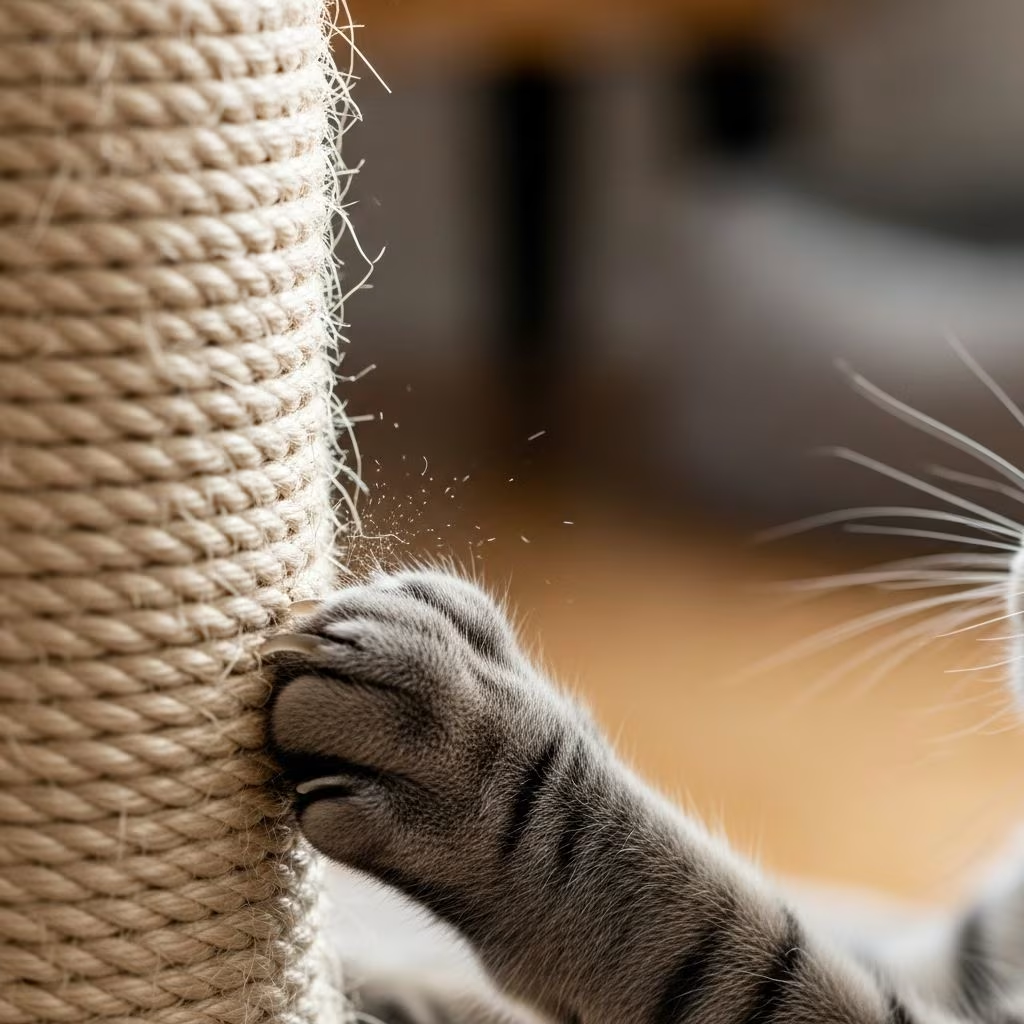
Cat scratchers primarily sharpen and maintain the health of a cat’s claws by peeling away outer layers, rather than dulling them. This natural behavior supports claw condition, territorial marking, physical exercise, and stress relief, making appropriate scratching surfaces essential for feline wellbeing.
The Biology of Feline Claws
Feline claws grow continuously in layered structures, much like an onion’s skin. Unlike dogs, whose nails wear down evenly through walking, cats’ claws do not retract and exfoliate uniformly. Instead, they shed outer sheaths through scratching motions, revealing sharper, healthier tips underneath. This process prevents overgrowth, which could lead to discomfort or snagging on fabrics and surfaces.
The downward dragging action—known as stropping—exposes fresh claw material while honing the edges. Veterinary sources confirm that without this maintenance, retained layers irritate the claw bed and hinder proper growth. Indoor cats, less active than outdoor ones, rely heavily on scratchers to replicate this vital grooming ritual.
Why Cats Scratch: Beyond Nail Care
Scratching fulfills multiple instinctual needs. It serves as a communication tool, leaving visual marks and pheromones from paw glands to signal territory and status to other cats. The full-body stretch during scratching loosens muscles along the spine, forelimbs, and back, promoting flexibility and burning energy.
- Territorial marking: Combines scratches with scent for clear messages.
- Physical conditioning: Enhances muscle tone and range of motion.
- Emotional balance: Triggers endorphin release to alleviate anxiety.
- Grooming efficiency: Keeps claws functional for hunting or play.
Suppressing this behavior can lead to stress-related issues, underscoring the need for suitable outlets.
Do Scratchers Dull Claws? The Reality
A common misconception is that scratchers blunt claws. In truth, they sharpen by friction against rough textures, mimicking natural surfaces like tree bark. Soft fabrics may dull slightly over time, but proper materials—sisal, cardboard, or wood—enhance sharpness. Regular use ensures claws remain at optimal length and point, reducing household damage.
| Scratcher Material | Effect on Claws | Best For |
|---|---|---|
| Sisal Rope | Sharpens effectively | Vertical posts |
| Cardboard | Mild sharpening, peels sheaths | Horizontal pads |
| Carpet | Minimal sharpening, attracts use | Avoid for damage control |
| Wood Logs | Natural sharpening | Multi-cat homes |
Selecting the Perfect Scratching Solutions
Choose scratchers based on your cat’s preferences: vertical for tall stretchers, horizontal for ground-level users. Place them near favored spots like beds or sofas, ensuring stability to encourage use. Multiple options prevent competition in multi-pet households.
Attract cats with catnip sprays or toys initially. If ignored, relocate gradually. Sturdy, tall models (at least 3 feet) suit most adults, while kittens prefer flat, textured mats.
Mastering Safe Nail Trimming Techniques
Even with scratchers, trimming every 2-4 weeks prevents overgrowth and minimizes damage. Kittens adapt best young, but adults can learn with patience.
- Gather cat nail clippers, styptic powder, treats, and a towel for wrapping if needed.
- Acclimate by touching paws daily, rewarding calm behavior.
- Clip only the clear tip beyond the pink quick (blood vessel); one or two nails per session for squirmy cats.
- Praise and treat generously to build positive associations.
Consult a vet for demonstrations if unsure. Frequency varies: active cats every 3-4 weeks, sedate ones biweekly.
Humane Alternatives to Destructive Scratching
Nail caps like Soft Paws offer non-invasive protection, adhering for 1-2 months and shedding naturally. Apply at home or via vet; avoid outdoor use for safety.
Deterrents include pheromone sprays (e.g., Feliway) on furniture and sticky tapes on off-limits areas. Never punish, as it heightens anxiety.
The Dangers of Declawing Exposed
Declawing amputates toe bones, causing chronic pain, altered gait, and behavioral issues like aggression or litter avoidance. Banned in many regions, it’s deemed unethical by major veterinary bodies. Promote wellness through enrichment instead.
Common Myths About Cat Scratching
- Myth: Scratching indicates spite. Fact: It’s innate, not personal.
- Myth: All scratchers work equally. Fact: Match texture and position to preferences.
- Myth: Trimming eliminates need to scratch. Fact: It reduces damage but not the behavior.
FAQs on Feline Claw Care
How often should I trim my cat’s nails?
Every 2-4 weeks, adjusting for activity. Start young for tolerance.
Can scratchers replace nail trimming?
No, they maintain shape but not length.
Are nail caps safe for kittens?
Yes, from 8-12 weeks; check weekly.
What if my cat ignores the scratcher?
Experiment with locations, types, and lures like catnip.
Is declawing ever recommended?
No, due to lifelong health risks.
Building a Claw-Friendly Environment
Integrate scratchers into play routines, trim proactively, and monitor for health changes like reluctance to scratch, signaling pain. Annual vet checks ensure claw integrity. Enriched spaces reduce stress, fostering mutual respect between cats and owners.
References
- Support Appropriate Scratching for Feline Wellbeing — Stack Vet Hospital. 2023. https://stackvethospital.com/support-appropriate-scratching-for-feline-wellbeing/
- Decoding the Claw-some World of Cat Scratching — Willowwood Animal Hospital. 2024. https://willowwoodah.com/decoding-the-claw-some-world-of-cat-scratching/
- The Nail File: Promoting Healthy Scratching Behavior in Cats — Southern Arizona Veterinary Specialists. 2023. https://southernazvets.com/the-nail-file-promoting-healthy-scratching-behavior-in-cats/
- Claw-some Benefits: Why Scratching is Key to Your Cat’s Health — Providence Veterinary Hospital. 2024. https://providencevetva.com/claw-some-benefits-why-scratching-is-key-to-your-cats-health/
- Inappropriate Scratching in Cats — UC Davis School of Veterinary Medicine. 2025. https://healthtopics.vetmed.ucdavis.edu/health-topics/feline/inappropriate-scratching-cats
- Common feline problem behaviors: Destructive scratching — PMC – NIH. 2024-09-01. https://pmc.ncbi.nlm.nih.gov/articles/PMC11373750/
- Cats and Scratching — American Humane Society. 2023. https://www.americanhumane.org/public-education/scratching/



