
Cat Scratch Disease: Causes, Symptoms, and Treatment
Understanding cat scratch disease: symptoms, transmission, and effective treatment options for pet owners.
Understanding Cat Scratch Disease
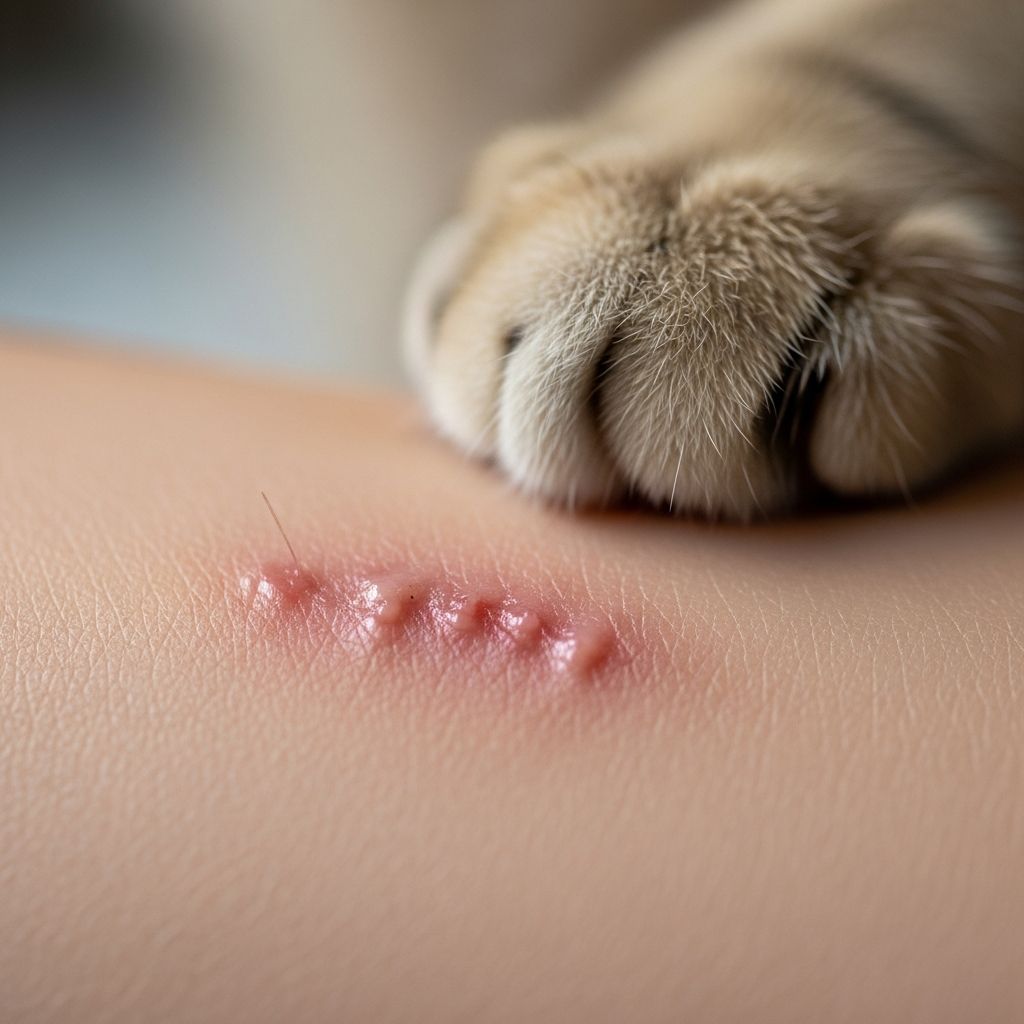
Cat scratch disease, also known as cat scratch fever, is a bacterial infection that humans can contract from cats, particularly through scratches or bites. This condition is caused by the bacterium Bartonella henselae, which is transmitted through the saliva and claws of infected cats. While the disease sounds alarming, most cases resolve naturally without medical intervention. Understanding the causes, symptoms, and treatment options can help cat owners protect themselves and their families from this infection.
What Causes Cat Scratch Disease?
The primary causative agent of cat scratch disease is the bacterium Bartonella henselae. Cats acquire this infection through contact with infected fleas. Approximately 30-40% of cats and kittens carry the bacterium in their mouths, under their claws, or on their fur. When cats scratch or bite at infected fleas, they become infected and can subsequently transmit the bacteria to humans through scratches, bites, or by licking open wounds.
How Cats Get Infected
Cats contract Bartonella henselae primarily through flea infestations. When an infected flea bites a cat, the bacteria enter the cat’s bloodstream. Interestingly, infected cats often display no symptoms and appear completely healthy, making it difficult for owners to know if their pet carries the bacteria. Young kittens and community or stray cats are at particularly high risk for infection, as they are more frequently exposed to fleas.
Transmission to Humans
Humans contract cat scratch disease through direct contact with infected cats in several ways:
- Cat scratches that break the skin
- Cat bites
- Cats licking open wounds or cuts on a person’s skin
- Rubbing eyes after petting an infected cat’s fur
- Contact with flea feces (flea dirt) on the cat’s fur
Symptoms of Cat Scratch Disease
Cat scratch disease symptoms typically develop within 3 to 10 days after exposure to an infected cat, though they can appear as late as two to three weeks after infection. The symptoms are generally mild and self-limiting, with most people recovering without complications.
Primary Symptoms
The most common manifestations of cat scratch disease include:
- One or more swollen, tender lymph nodes (lymphadenopathy)
- Low-grade fever
- A skin rash or bumps at the site of infection
- Fatigue and general malaise
- Headache
- Decreased appetite
- Joint pain
Lymph Node Involvement
The hallmark symptom of cat scratch disease is swollen lymph nodes that develop within one to three weeks after infection. These lymph nodes typically appear near the location of the scratch or bite. For example, if an infected cat bites your arm, the lymph nodes in your armpit or near your elbow may become enlarged and tender. The skin over the affected lymph nodes may become discolored, appearing pink, red, ashen gray, purple, or dark brown depending on your skin tone. Lymph nodes can remain swollen for one to four months.
Initial Skin Manifestation
Often, the first sign of cat scratch disease is a small bump (papule) or blister (pustule) that appears at the site of the scratch or bite. This lesion may not heal normally or may worsen over time, providing an early warning sign of infection.
Diagnosis of Cat Scratch Disease
Diagnosing cat scratch disease involves a combination of clinical evaluation and laboratory testing. Healthcare providers typically consider the patient’s history of cat contact, the characteristic symptoms, and the timeline of symptom development. Blood tests can confirm the presence of Bartonella henselae antibodies, while imaging studies may be used to assess lymph node enlargement and rule out other conditions.
Treatment Options
The good news about cat scratch disease is that most people recover without requiring specific treatment. The infection typically resolves on its own as the immune system clears the bacteria. However, supportive care and medical interventions can help manage symptoms and speed recovery.
Supportive Care
For mild cases, treatment focuses on symptom management. Recommended supportive measures include:
- Over-the-counter nonsteroidal anti-inflammatory drugs (NSAIDs) such as ibuprofen or naproxen to reduce fever and pain
- Warm compresses applied to swollen lymph nodes to reduce swelling and discomfort
- Rest and adequate hydration
- Maintaining good hygiene at the wound site
Antibiotic Treatment
While antibiotics are not necessary for most healthy individuals, they may be prescribed in specific situations. Azithromycin is the most commonly recommended antibiotic for cat scratch disease. Antibiotics are particularly important for:
- Immunocompromised individuals
- People with severe or disseminated symptoms
- Those with complications affecting other organs
- Patients whose symptoms persist beyond eight weeks
Lymph Node Drainage
In cases where lymph nodes become extremely swollen and painful, healthcare providers may drain the affected nodes using a syringe to provide pain relief.
Complications and Risk Groups
While cat scratch disease is generally self-limiting, certain populations face increased risk for complications. Children under five years old and immunocompromised adults are at higher risk for serious complications, which may include the infection spreading to other organs such as the liver, spleen, heart valves, and central nervous system.
Disseminated Disease
In immunocompromised individuals, Bartonella henselae can disseminate beyond the initial lymph nodes and affect multiple organ systems. This serious form of the disease requires prompt medical attention and antibiotic treatment.
Prevention Strategies
The most effective approach to cat scratch disease is prevention. Pet owners can significantly reduce the risk of infection by implementing these protective measures:
- Keep cats indoors: Limiting outdoor exposure reduces flea contact and infection risk
- Regular flea prevention: Treating cats with effective flea and tick preventatives is crucial, as flea control directly reduces Bartonella henselae transmission
- Avoid stray cats: Feral and community cats are more likely to carry the bacteria due to higher flea exposure
- Proper wound care: Immediately wash any cat scratch or bite with soap and water
- Avoid touching face: Refrain from rubbing eyes or touching your face after handling cats
- Vaccination considerations: For immunocompromised individuals, extra precautions and veterinary guidance are essential
Special Considerations for Vulnerable Populations
People with weakened immune systems, including those with HIV/AIDS, organ transplant recipients, and individuals undergoing cancer treatment, should take extra precautions to avoid cat scratch disease. These individuals should:
- Minimize direct contact with cats, especially kittens
- Wear gloves when handling cats or cleaning litter boxes
- Consult healthcare providers before adopting or keeping cats
- Ensure cats receive appropriate flea prevention
- Seek immediate medical attention if scratched or bitten
When to See a Healthcare Provider
While most cases of cat scratch disease resolve without intervention, you should contact a healthcare provider if you experience:
- Persistent fever lasting more than a few days
- Severe lymph node swelling causing pain or difficulty with movement
- Symptoms that worsen or fail to improve within two to three weeks
- Signs of systemic illness including severe fatigue or joint pain
- Any concerning symptoms, especially if you have a compromised immune system
Frequently Asked Questions
Q: How long does cat scratch disease last?
A: Most cases resolve within a few weeks to a few months. However, lymph node swelling can persist for one to four months. Antibiotics may be prescribed for severe cases or immunocompromised individuals to speed recovery.
Q: Can my cat transmit cat scratch disease to other cats?
A: Yes, infected cats can transmit Bartonella henselae to other cats through scratches and bites. Additionally, fleas are the primary mechanism of transmission between cats, so flea control is essential in multi-cat households.
Q: Is cat scratch disease fatal?
A: Cat scratch disease is rarely fatal in otherwise healthy individuals. However, immunocompromised people can develop serious complications if left untreated, making early medical attention important for this population.
Q: Can I get cat scratch disease more than once?
A: While immunity may develop after infection, reinfection is possible, especially if you come into contact with infected cats again. Prevention through flea control and wound care remains important.
Q: Should I have my cat tested for Bartonella henselae?
A: Testing your cat for Bartonella henselae is not typically necessary unless your cat has been diagnosed with the disease. Instead, focus on maintaining regular flea prevention to reduce transmission risk.
References
- Cat-Scratch Fever: Causes, Symptoms, Diagnosis, & Treatment — WebMD. Accessed November 2025. https://www.webmd.com/skin-problems-and-treatments/cat-scratch-fever
- Cat Scratch Fever in Cats: What Is It and How Is It Treated? — PetMD. Accessed November 2025. https://www.petmd.com/cat/conditions/infectious-parasitic/cat-scratch-fever-cats-what-it-and-how-it-treated
- Cat Scratch Disease – StatPearls — NCBI Bookshelf, National Center for Biotechnology Information. Accessed November 2025. https://www.ncbi.nlm.nih.gov/books/NBK482139/
- Cat Scratch Fever: Causes, Symptoms & Treatment — Cleveland Clinic. Accessed November 2025. https://my.clevelandclinic.org/health/diseases/23537-cat-scratch-fever
- Cat Scratch Disease — St. Louis Children’s Hospital. Accessed November 2025. https://www.stlouischildrens.org/conditions-treatments/cat-scratch-disease
- About Bartonella henselae — Centers for Disease Control and Prevention (CDC). Accessed November 2025. https://www.cdc.gov/bartonella/about/about-bartonella-henselae.html
- Cat-scratch disease — MedlinePlus Medical Encyclopedia, National Library of Medicine. Accessed November 2025. https://medlineplus.gov/ency/article/001614.htm
Similar Articles








Read full bio of Sneha Tete




