

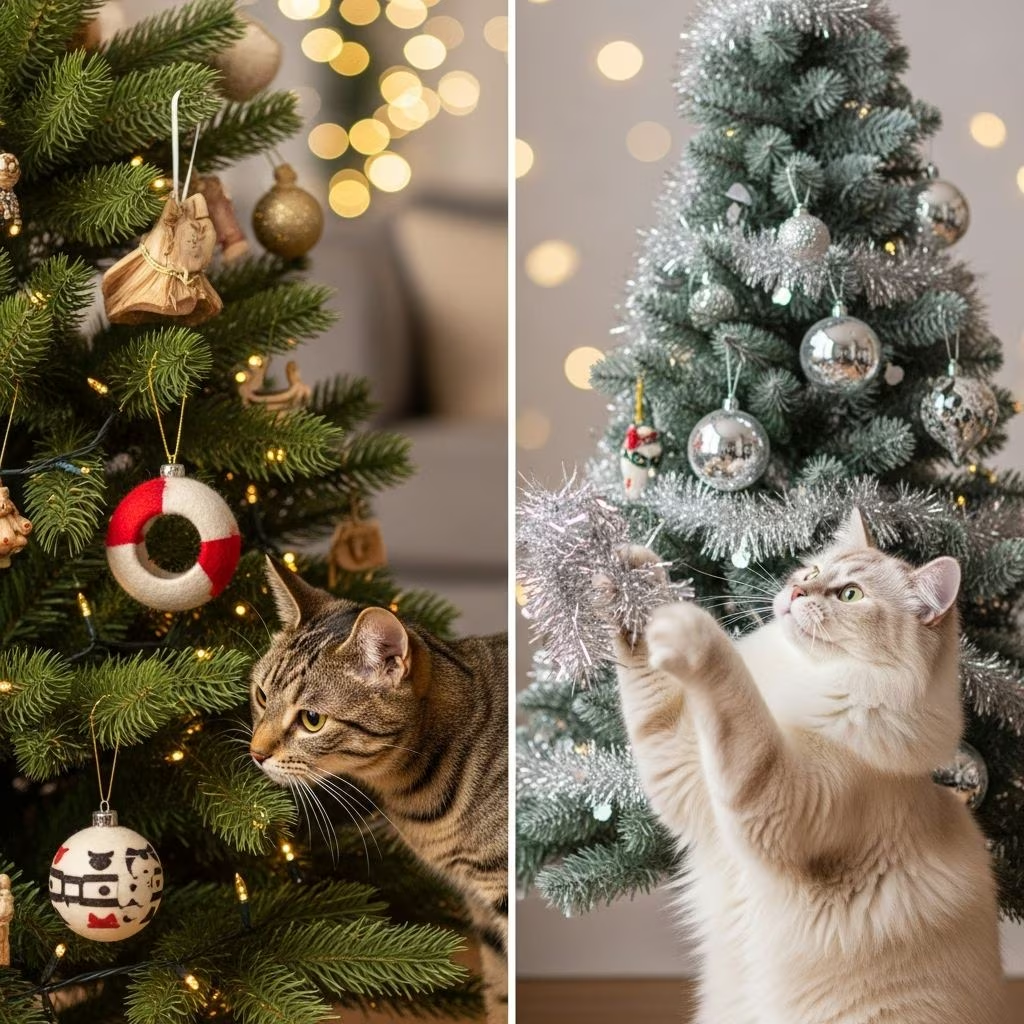
During the holiday season, decorating with a Christmas tree brings joy to many homes, but cat owners often worry about their pets’ safety. Both real and artificial trees present unique challenges, from potential toxicity to physical injuries. This guide examines these risks in detail, offering practical advice to minimize dangers while maintaining festive cheer.
Understanding Feline Behavior Around Holiday Decor
Cats are naturally curious explorers, drawn to novel objects like Christmas trees due to their movement, scents, and textures. They may climb branches, bat at ornaments, or chew on needles and wires, leading to accidents. Adult cats might investigate briefly, but kittens are especially prone to mischief, treating the tree as a giant toy. Recognizing these instincts is the first step in creating a safer environment.
- Climbing tendencies: Cats can leap up to six feet vertically, turning trees into precarious playgrounds.
- Chewing habits: Sharp or unfamiliar materials attract investigative bites.
- Knocking over: A single pounce can topple an unsecured tree, scattering hazards.
Evaluating Real Christmas Trees: Natural Appeal and Hidden Perils
Real trees, sourced from species like Douglas fir, Fraser fir, and Norway spruce, captivate with their fresh pine aroma. Annually, millions of these trees enter U.S. homes, outnumbering artificial alternatives. However, their organic nature introduces specific risks for cats.
Sap and Needle Concerns
The sticky sap from real trees acts as a mild irritant, potentially causing oral sores or stomach upset if ingested. While most common varieties are not highly toxic, the sharp needles pose a greater threat, puncturing mouths or digestive tracts upon swallowing. Water in the stand, often stagnant, can harbor bacteria or absorb fertilizers, becoming a poisoning vector if lapped up.
- Sap irritation: Leads to drooling or vomiting in sensitive cats.
- Needle ingestion: Causes mechanical injury rather than poisoning.
- Stand water: Risk amplified by added preservatives.
Environmental Upsides of Live Trees
Beyond pet safety, real trees offer sustainability benefits. When burned post-holiday, they emit far fewer greenhouse gases than artificial counterparts, which require plastic production and long-term storage. Many communities recycle them into mulch or wildlife habitats, enhancing local ecology.
Assessing Artificial Trees: Convenience with Caveats
Artificial trees promise mess-free holidays, reusable for years without shedding or watering. Crafted from plastics like PVC, metals for wiring, and flame-retardant coatings, they eliminate sap and needle drop but introduce synthetic hazards.
Material Toxicity and Durability
PVC branches can leach chemicals if chewed, prompting gastrointestinal distress. Paints, scents, or preservatives on faux needles may irritate, particularly for teething kittens. Unlike real trees, artificial ones boast firmer attachments, reducing loose part ingestion, but their stability varies by base design.
| Tree Type | Primary Material Risks | Stability Factors |
|---|---|---|
| Real | Sap, sharp needles, stand water | Prone to shedding; needs daily checks |
| Artificial | PVC chemicals, coatings | Often more stable with weighted bases |
Long-Term Environmental Drawbacks
While convenient, artificial trees contribute significantly to plastic waste, with production emitting tenfold the emissions of a real tree disposed in landfills. Opting for durable, high-quality models extends lifespan but doesn’t erase the footprint.
Common Decorations: The Real Holiday Threats
Often overlooked, ornaments and lights eclipse tree-specific risks. Glass baubles shatter into sharp shards, tinsel forms intestinal blockages, and cords invite electrocution.
- Tinsel and ribbons: Linear foreign body obstructions requiring surgery.
- Breakable ornaments: Cuts to paws and mouths.
- Electrical strings: Chewing exposes live wires.
These perils affect both tree types equally, emphasizing decor choices over tree variety.
Proven Strategies for a Secure Festive Setup
Prevention trumps reaction. Secure your tree to walls or ceilings with straps, position it away from jump aids like furniture, and introduce it gradually without decorations.
- Anchoring essentials: Use brackets or guy wires for tip-proofing.
- Placement wisdom: Central, open areas deter leaping.
- Ornament hierarchy: Fragile items high up; plastic or felt low.
- Distraction tactics: Deploy cat trees, tunnels, or holiday-scented toys nearby.
For high-risk cats, consider cat-exclusive zones via baby gates or room separation. Living potted trees, replantable post-season, blend safety with reusability.
Alternative Tree Options for Cat Households
Beyond traditional choices, innovative designs cater to pets:
- Cat-interactive towers: Sisal-wrapped structures with dangling toys, doubling as scratch posts.
- Tabletop minis: Elevated on shelves, minimizing access.
- Stabilized faux models: Wide bases and anti-tip features for climbers.
These hybrids maintain holiday spirit while redirecting feline energy.
Frequently Asked Questions
Are real Christmas trees poisonous to cats?
Most are mildly irritating due to oils and needles, not lethally toxic, but ingestion can cause vomiting or wounds.
Which tree is safer for kittens?
Neither is ideal; artificial avoids sap but adds plastic risks. Supervision is key for young cats.
How do I prevent my cat from climbing the tree?
Anchor firmly, use deterrents like citrus sprays, and provide alternatives like vertical scratchers.
Can tinsel kill a cat?
Yes, by causing blockages; avoid it entirely in pet homes.
What’s the eco-friendlier choice?
Real trees, when recycled, outperform artificial in emissions.
Wrapping Up Holiday Prep
No tree is entirely cat-proof, but informed choices and vigilance ensure safe celebrations. Treat your cat like an adventurous child: secure, observe, and enrich. By prioritizing stability, non-toxic materials, and smart distractions, you protect your pet without sacrificing tradition.
References
- Are Fake Christmas Trees Safer for Cats Than Real Ones? — Catster. 2023. https://www.catster.com/lifestyle/are-fake-christmas-trees-safer-for-cats/
- Choosing a Cat-Safe Artificial Christmas Tree: What You Need to Know — Oreata AI. 2024. https://www.oreateai.com/blog/choosing-a-catsafe-artificial-christmas-tree-what-you-need-to-know/51c5deaa8c55ddc25dd2e1144346621d
- Keep Your Cat Safe at Christmas — Blue Cross. 2025-01-15. https://www.bluecross.org.uk/advice/cat/health-and-injuries/keeping-your-cat-safe-at-christmas
- Pet-friendly? Artificial Christmas tree under review — ArtiTree. 2024. https://artitree.com/en-us/blogs/kunstliche-weihnachtsbaume/sind-kunstliche-weihnachtsbaume-auch-fur-haustiere-geeignet



