

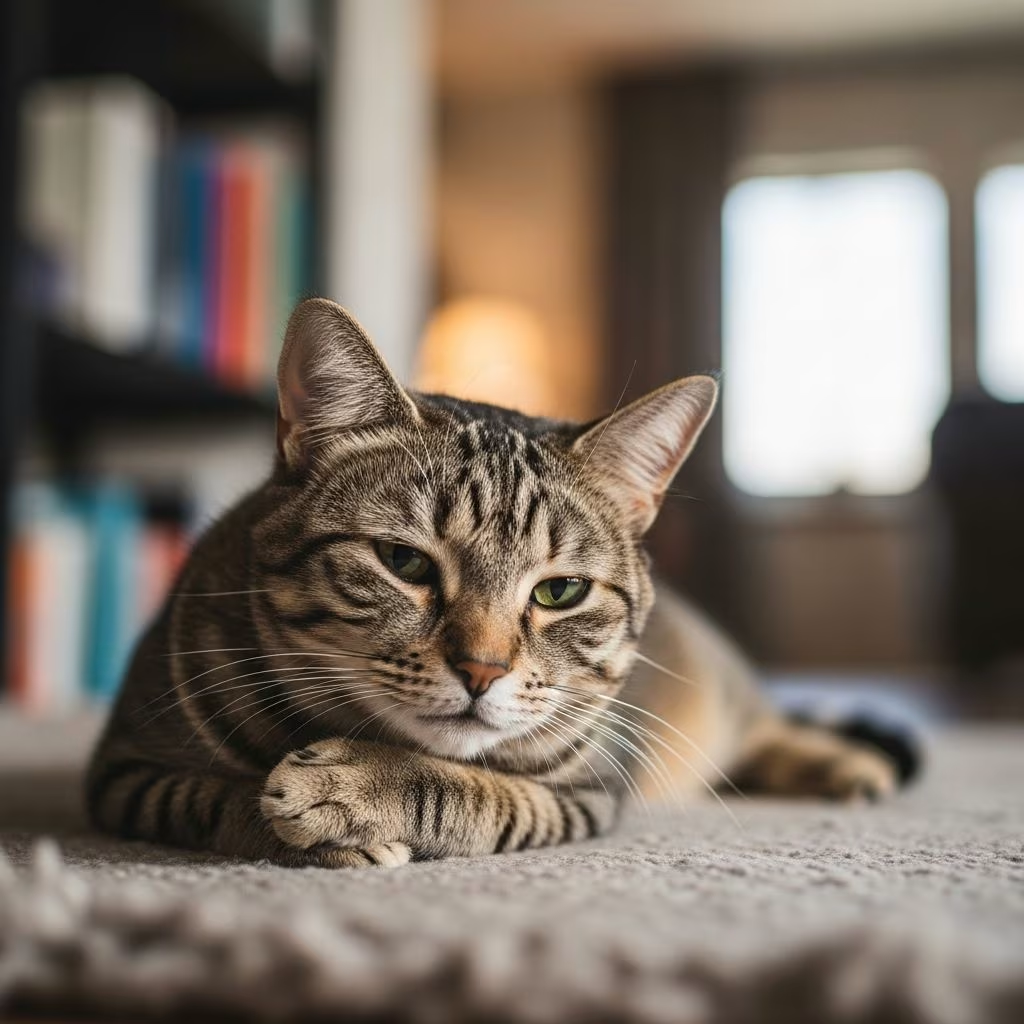
Understanding your cat’s emotional state is crucial for their wellbeing. Cats communicate primarily through body language, but subtle differences between **relaxed** and **bored** can be tricky to spot. A relaxed cat is content, while a bored one may show stress through repetitive behaviours. This article explores signs, causes, and solutions to keep your cat engaged and happy.
Relaxed Cat Body Language: Signs Your Cat is Content
A truly relaxed cat displays open, loose postures indicating safety and comfort. Key indicators include:
- Slow blinking: Known as a ‘cat kiss’, this shows trust and relaxation. Respond by slow-blinking back to strengthen your bond.
- Exposed belly: Cats only show their bellies to trusted individuals. Avoid rubbing it, as it might trigger play or defence.
- Soft ears and whiskers: Ears forward or slightly to the side, whiskers relaxed and not tensed.
- Tail position: Loose tail draped or gently swishing at the tip.
- Purring with kneading: Often called ‘making biscuits’, this mimics kitten nursing and signals deep contentment.
These cues mean your cat feels secure. A study from the University of Adelaide found many owners misread subtle positive signals, leading to unnecessary interventions.
Bored Cat Signs: Spotting Understimulation Early
Boredom in cats arises from insufficient mental and physical stimulation, leading to stereotypic behaviours. Unlike relaxation, boredom manifests as restlessness.
- Excessive meowing or vocalization: Attention-seeking when natural outlets are absent.
- Pacing or zooming: Frantic running indicates pent-up energy.
- Overgrooming: Repetitive licking causing bald patches, a stress response.
- Destructive scratching: Beyond normal claw maintenance, targeting furniture signals frustration.
- Ankle pouncing or aggression: Redirected hunting instincts towards humans or objects.
- Sleeping excessively: Over 18 hours daily might mask boredom, not true rest.
Cat behaviourist Kristyn Vitale notes these as signs of psychological stress from environmental monotony. Joey Lusvarghi adds that winter months exacerbate this due to less natural stimuli.
Relaxed vs Bored: Key Differences in Cat Behaviour
Distinguishing these states prevents misinterpretation. Use this table for quick reference:
| Indicator | Relaxed Cat | Bored Cat |
|---|---|---|
| Posture | Loose, stretched out | Tense, pacing |
| Eyes | Half-closed, slow blinks | Wide, dilated pupils |
| Tail | Still or slow swish | Thrashing or flicking rapidly |
| Vocalisation | Soft purr | Excessive meowing |
| Activity | Calm grooming | Hyperactivity or lethargy |
Subtle cues like tense whiskers or ear twitching often go unnoticed—48.7% of people miss them per recent research.
Why Do Cats Get Bored? Common Causes
Cats are obligate carnivores with strong predatory instincts. Domestic life often lacks outlets for hunting, climbing, and exploring.
- Lack of variety: Static toys lose appeal quickly; cats need novelty.
- Indoor-only lifestyle: No access to outdoor stimuli like birds or scents.
- Insufficient play: Cats require 15-30 minutes of interactive play daily.
- Age factors: Kittens and seniors need tailored stimulation; mismatched pairings (e.g., kitten with senior cat) spark conflicts.
- Seasonal changes: Less daylight reduces natural activity, increasing boredom risks.
Without enrichment, cats redirect instincts destructively, per experts like Albert Colominas.
How to Enrich Your Cat’s Environment: Practical Tips
Enrichment taps into natural behaviours like stalking and pouncing, reducing stress.
1. Interactive Play Sessions
Daily 10-15 minute sessions mimic hunting. Use wand toys like Da Bird for high engagement. End with feeding to simulate capture.
- Rotate toys weekly to maintain interest.
- Avoid automatic toys; they lack unpredictability cats crave.
2. Vertical Space and Climbing
Cats love heights for security. Install multi-level cat trees, wall shelves, and window perches.
3. Puzzle Feeders and Foraging
Turn meals into games. Use food-dispensing balls or DIY puzzles with kibble hidden in boxes.
4. Training with Positive Reinforcement
Clicker training builds mental stamina. Teach ‘sit’, ‘high five’, or leash walking.
- Sit: Lure with treat over head.
- High five: Tap paw gently, reward.
- Goal: Mental panting, not physical exhaustion.
5. Scent and Texture Variety
Introduce catnip, silvervine, or cardboard scratchers. Rotate bedding for new smells.
6. Safe Outdoor Access
Harness training or catios provide controlled exploration.
These strategies prevent obesity, aggression, and destruction while bonding you closer.
Cat Training Tricks to Combat Boredom
Training engages brains, reducing stereotypic behaviours.
- Leash walking: Use treats like Churu to build confidence.
- Target training: Teach touching a stick for rewards, progressing to agility.
- Hide-and-seek: Hide treats around home for foraging fun.
Consistency yields quick results, per Oregon State research.
Health Checks: Rule Out Medical Issues
Boredom mimics conditions like hyperthyroidism (excessive vocalising) or pain (overgrooming). Consult a vet if behaviours persist post-enrichment.
Frequently Asked Questions (FAQs)
Can indoor cats get bored?
Yes, indoor cats are prone to boredom without enrichment. Provide play, puzzles, and vertical spaces daily.
How much play does my cat need?
Aim for 15-30 minutes of interactive play split into 2-3 sessions, ideally dawn/dusk.
What if my cat ignores toys?
Rotate them, add catnip, or use motion-activated prey. Play yourself to model fun.
Is excessive sleeping a boredom sign?
Possibly—monitor for other cues like pacing. Ensure 12-16 hours is active rest.
Does neutering affect boredom?
No, but it reduces roaming; compensate with more home enrichment.
Helping multi-cat homes?
Provide individual resources; watch for play mismatches causing stress.
References
- How Enrichment Helps Bored Cats — PetMD. 2023-05-15. https://www.petmd.com/cat/general-health/how-enrichment-helps-bored-cats
- Why Cats Need Daily Play: Benefits & Expert Tips — Kinship. 2024-01-10. https://www.kinship.com/uk/cat-behaviour/why-cats-need-play-daily
- Is Your Cat Bored? How To Tell And What To Do — YouTube (Jackson Galaxy). 2023-08-20. https://www.youtube.com/watch?v=A2cFsQfxkG8
- 1 in 4 People Don’t Know When Their Cat is Mad, New Study Finds — Kinship. 2024-02-05. https://www.kinship.com/news/cat-body-language-communication-study
- Is My New Cat (or Kitten) Bored? — Adopt a Pet. 2023-11-12. https://www.adoptapet.com/blog/behavior-training/is-my-cat-bored



