

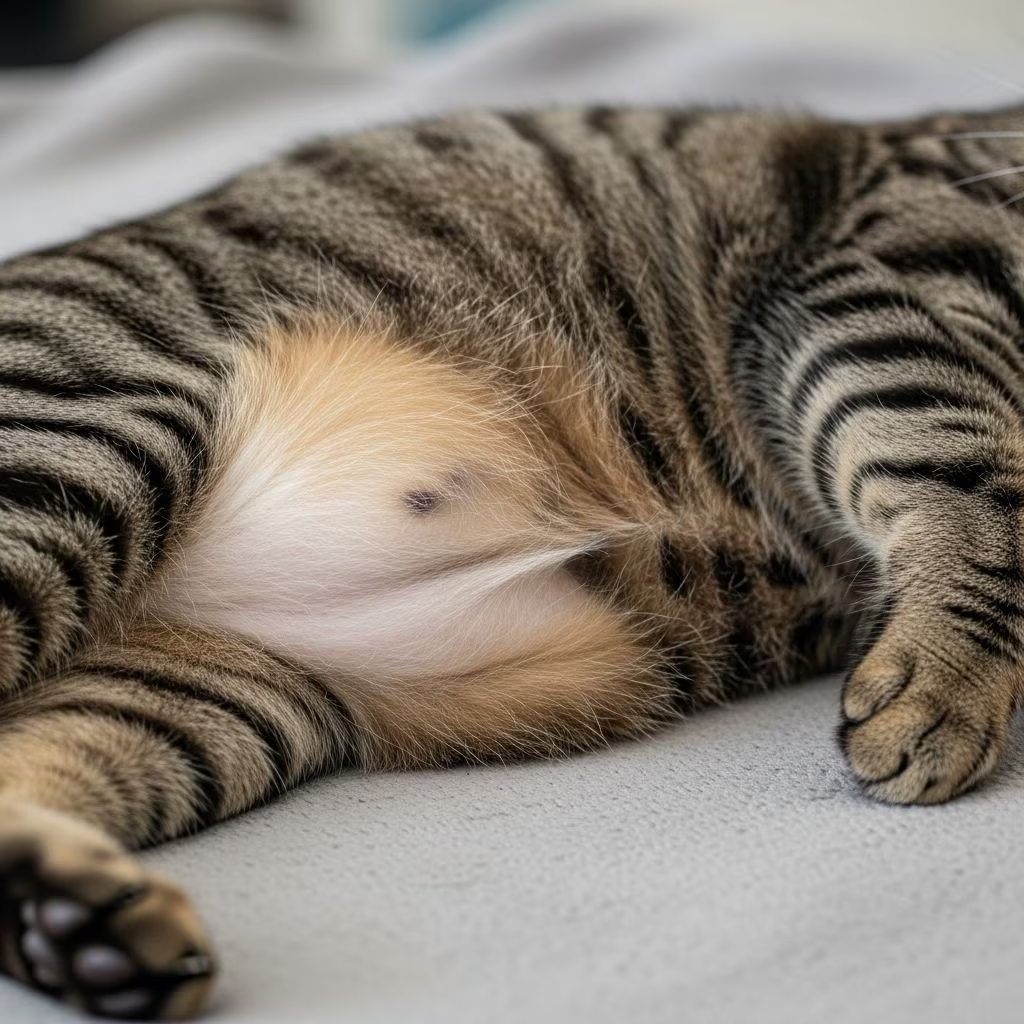
Understanding Your Cat’s Primordial Pouch
If you’ve noticed your feline friend has a sagging belly that swings when they walk or run, you might be wondering what’s going on. This distinctive feature is called a primordial pouch, and it’s completely normal. Rather than being a sign of weight gain or poor health, the primordial pouch is a fundamental part of your cat’s biological composition and something all cats possess. Whether your cat’s pouch is barely noticeable or prominently on display, understanding this feature can help you better care for your pet and distinguish between a healthy pouch and actual weight concerns.
What Is a Primordial Pouch?
The primordial pouch is a flap of loose skin, fatty tissue, and fur that covers your cat’s belly. The term “primordial” refers to the earliest stage of development, as cats are born with this anatomical feature already present. It’s essentially a soft, saggy area of skin that hangs beneath your cat’s abdomen and can vary significantly in size and prominence from one cat to another. Some cats have very noticeable pouches that swing visibly when they move, while others have pouches that are much more subtle and difficult to detect.
This anatomical feature isn’t unique to domestic cats. All cats, both male and female, have primordial pouches, regardless of whether they’ve been neutered or spayed. Even big cats such as lions and tigers possess this characteristic feature, demonstrating that it’s a fundamental aspect of feline evolution rather than a sign of domestication or lifestyle factors.
When Does the Primordial Pouch Develop?
Kittens aren’t born with a prominent primordial pouch. Instead, the pouch develops gradually as cats mature. The pouch typically becomes noticeable when cats are around 6 months old and becomes increasingly pronounced as they reach adulthood, usually between 6 months and 1 year of age. However, the development and prominence of the pouch varies between individual cats, so some may show a more visible pouch earlier or later than others.
As cats age further, the primordial pouch often becomes more saggy and noticeable due to the loss of skin elasticity that occurs naturally with aging. This is a completely normal part of the aging process and nothing to worry about, though it’s an excellent reason to maintain regular veterinary checkups as your cat enters their senior years.
Why Do Cats Have a Primordial Pouch?
While experts aren’t entirely certain about the original purpose of the primordial pouch, several compelling theories explain why cats have evolved and retained this feature:
Protection During Combat and Activity
One leading theory suggests that the loose skin and fatty tissue of the primordial pouch provide extra protection for vital organs such as the liver and other abdominal structures. This protective function would have been especially valuable for wild cats. When cats fight with other animals, they often use their back legs to “bunny kick,” and the pouch creates an additional barrier between sharp claws and a cat’s internal organs. Even for domestic cats, this extra cushioning can help protect against injuries during rough play or accidental trauma.
Enhanced Flexibility and Agility
Another theory proposes that the primordial pouch provides flexibility by allowing the abdomen to stretch during movement. This flexibility could enable cats to cover more ground with each stride, making them even more agile during everyday activities. The pouch’s elasticity might also help cats cut quickly from side to side when escaping predators or chasing prey, abilities that were crucial for their wild ancestors and remain useful for domestic cats during play and hunting behaviors.
Food Storage Capacity
The elasticity of the primordial pouch allows a cat’s abdomen to expand considerably for food storage. Wild cats typically eat one large meal per day, such as an entire gazelle, and the pouch allows their stomachs to accommodate these substantial meals without discomfort. While domestic cats usually eat smaller portions throughout the day, this food storage capacity still comes in handy when cats eat more than usual at a single sitting.
Temperature Regulation
Some experts theorize that the primordial pouch may aid in temperature control by allowing air circulation around the abdomen. This function could have been particularly important for wild cats living in varying climates, helping them regulate body temperature more effectively.
Evolutionary Relic
It’s also possible that the primordial pouch is simply an evolutionary trait that has persisted from a cat’s wild ancestors. Over time, as cats domesticated and their living conditions changed, this feature may have become less functionally necessary but remains present in the feline genome.
Distinguishing Between a Primordial Pouch and Obesity
One of the most common concerns cat owners have is whether their cat’s hanging belly indicates excess weight or is simply a normal primordial pouch. It’s important to understand the difference, as overweight cats face increased risk of health conditions such as diabetes and arthritis that can significantly impact their quality of life and lifespan.
Key Differences Between Primordial Pouch and Fat Belly
| Characteristic | Primordial Pouch | Overweight Cat Belly |
|---|---|---|
| Appearance | Swings and sways freely when walking or running | Round-shaped belly that doesn’t sway as much |
| Rib Visibility | Ribs are easily felt when touching the abdomen | Ribs are difficult to feel due to thick layer of fat |
| Texture | Loose, hanging skin without significant fat padding | Firm feeling with extra fat deposits over ribs |
| Waist Definition | Visible waist indentation when viewed from above | No clear waist indentation; bulges out from behind ribs |
| Fat Composition | Minimal fat layer (even thin cats have a pouch) | Thick, fatty layer throughout the abdomen |
The most effective way to assess whether your cat is overweight or simply has a prominent primordial pouch is to perform a body condition assessment. Start by trying to feel your cat’s ribs and other bony areas when gently touching their abdomen. If you can easily feel these structures, your cat likely has a normal primordial pouch. If the ribs are covered by a thick layer of fat and you cannot easily feel them, your cat may be overweight.
Additionally, observe how your cat’s belly moves. A primordial pouch will swing and sway noticeably when your cat walks, runs, or jumps. An overweight cat’s belly will be much firmer and won’t sway as freely, instead moving as a solid mass with the cat’s body.
Factors That Can Make the Primordial Pouch More Prominent
Obesity and Overfeeding
While the primordial pouch itself is not indicative of weight problems, excess weight can make the pouch appear larger and more pronounced. After neutering or spaying, some cat owners continue feeding their cats the same amount of food they ate before the procedure, even though neutered cats require fewer calories due to decreased energy expenditure. This can lead to weight gain that makes the entire abdominal area appear larger. It’s important to work with your veterinarian to adjust your cat’s food portions after spaying or neutering to prevent unnecessary weight gain.
Aging and Loss of Skin Elasticity
As cats age, they naturally experience a loss of skin elasticity similar to what humans experience. This causes excess skin on the abdominal flap to sag more noticeably, making the primordial pouch increasingly prominent in older cats. Additionally, a cat’s metabolism slows down with age, making it more difficult for senior cats to lose weight if they do become overweight. This makes it especially important to prevent weight gain before your cat reaches their senior years. Starting around age seven, discuss with your veterinarian whether switching to a senior cat food formula might be beneficial for your pet.
When to Call Your Veterinarian
While a primordial pouch is a normal and healthy feature, there are specific situations where you should contact your veterinarian about changes to your cat’s abdomen.
Lumps or Unusual Changes
If you feel lumps in your cat’s primordial pouch and your cat isn’t pregnant, schedule an appointment with your veterinarian right away. While not all lumps are cancerous, female cats can develop breast cancer that presents as lumps in the abdominal area. Some cats also develop benign fatty tumors called lipomas, which are somewhat rare but do occur. Regular observation of your cat’s pouch allows you and your veterinarian to identify any unusual changes early, enabling prompt treatment if necessary.
Sudden Changes in Abdomen
Any sudden changes in your cat’s abdomen should prompt a veterinary visit to rule out medical issues. This includes sudden enlargement, loss of the pouch, or changes in texture or appearance. While many changes are benign, having them evaluated by a professional ensures your cat receives appropriate care if needed.
Regular Senior Cat Checkups
As your cat ages, their abdomen can be a helpful indicator of overall health. It’s a good idea to take your cat to the veterinarian more often as they get older so that any health issues can be spotted early. During these checkups, your veterinarian can assess your cat’s body condition, check for any unusual lumps or changes, and ensure your cat is maintaining an appropriate weight for their age and health status.
Caring for Your Cat With a Healthy Primordial Pouch
Understanding that the primordial pouch is a normal and healthy feature is the first step in caring for your cat appropriately. Here are some key points to remember:
- All cats have primordial pouches regardless of sex, age, or neuter status
- The pouch’s size varies naturally from cat to cat and doesn’t indicate overall health status
- A swaying pouch that you can easily feel through is not a sign of obesity
- Regular body condition assessments help distinguish between a healthy pouch and excess weight
- Aging naturally makes the primordial pouch more prominent due to loss of skin elasticity
- Sudden changes or unusual lumps warrant veterinary evaluation
- Senior cats benefit from more frequent veterinary checkups
Frequently Asked Questions About Cat Primordial Pouches
Q: Is my cat overweight if they have a large primordial pouch?
A: Not necessarily. To determine if your cat is overweight, assess their overall body condition. Try to feel their ribs easily, check if they have a visible waist when viewed from above, and notice whether their belly sways freely. A true primordial pouch will sway when your cat moves, while an overweight belly will be firmer and move as a solid mass. When in doubt, consult your veterinarian for a professional body condition assessment.
Q: Do only spayed or neutered cats have primordial pouches?
A: No, this is a common myth. All cats, both male and female and whether intact or neutered, have primordial pouches. The myth likely arose because neutered cats require fewer calories and may gain weight if fed the same amount as before their procedure, making their belly more prominent. However, the primordial pouch itself is present in all cats regardless of spay or neuter status.
Q: At what age does my cat develop a primordial pouch?
A: Kittens begin developing a noticeable primordial pouch around 6 months old. The pouch becomes increasingly pronounced as cats reach adulthood, typically between 6 months and 1 year of age. However, the timing and prominence vary between individual cats.
Q: Should I be concerned about lumps in my cat’s primordial pouch?
A: Any lumps in your cat’s primordial pouch should be evaluated by a veterinarian, especially if your cat is not pregnant. While some lumps may be benign fatty tumors called lipomas, others could indicate more serious conditions such as breast cancer. Early detection and treatment can make a significant difference in your cat’s health outcomes.
Q: Why does my senior cat’s primordial pouch seem to sag more?
A: As cats age, their skin naturally loses elasticity, similar to aging in humans. This causes excess skin on the abdominal area to sag more noticeably, making the primordial pouch appear larger and more prominent. This is completely normal and not a cause for concern, though regular veterinary checkups become more important as your cat ages.
Q: How can I help my overweight cat lose weight without confusing their diet with a primordial pouch?
A: Work with your veterinarian to develop an appropriate weight management plan. Your vet can perform a body condition assessment to determine if your cat is truly overweight and recommend dietary changes or a specialized weight control cat food. They can also help you understand the difference between a healthy primordial pouch and excess weight through hands-on examination.
References
- What Is a Cat’s Primordial Pouch? — Hill’s Pet Nutrition. 2025. https://www.hillspet.com/cat-care/behavior-appearance/primordial-pouch-in-cats
- Cat Primordial Pouch — Cats Protection. 2025. https://www.cats.org.uk/cats-blog/why-do-cats-have-a-primordial-pouch
- The Primordial Pouch: All About Your Cat’s Adorable Belly Flap — Chewy. 2025. https://www.chewy.com/education/cat/health-and-wellness/yes-your-cats-belly-flap-aka-primordial-pouch-is-adorable-but-what-exactly-is-it
- What Is a Cat’s Primordial Pouch? — PetMD. 2025. https://www.petmd.com/cat/general-health/cat-primordial-pouch
- Cats and Primordial Pouches — Furry Friends. 2025. https://www.furryfriendswa.org/cat-tales/primordial-ct-8-25
- What Is a Cat’s Primordial Pouch? — Fetch Pet Insurance. 2025. https://www.fetchpet.com/the-dig/cat-primordial-pouch



