

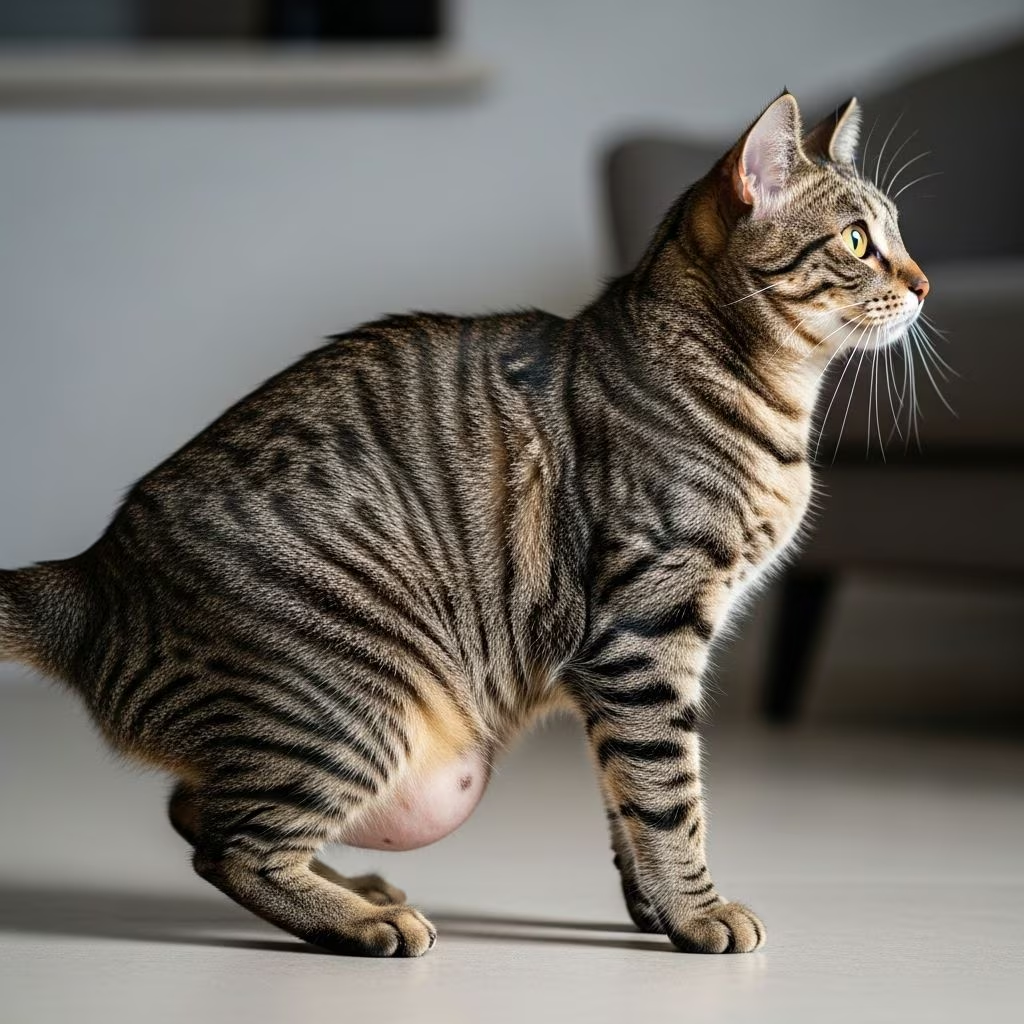
The primordial pouch, often noticed as a swinging flap under a cat’s belly, is a standard anatomical trait present in all felines, from domestic pets to wild lions and tigers. This loose fold of skin and fat serves essential functions rooted in feline evolution.
Defining the Primordial Pouch
This feature consists of excess skin, fatty tissue, and fur located along the abdomen, particularly prominent between the hind legs. It develops naturally as cats mature, typically becoming visible around 6 months of age, and persists throughout life. Unlike uniform belly fat, the pouch feels floppy and jiggles during movement.
All cats possess it, regardless of gender, though visibility varies. Kittens rarely show a pronounced version due to tighter skin elasticity, which loosens with time.
Evolutionary Roles of the Pouch
The pouch offers multiple survival advantages, explaining its conservation across feline species.
- Enhanced Flexibility: It permits extreme extension of the body during sprints, leaps, and pounces, crucial for hunting and evasion.
- Organ Safeguarding: In fights or tackles, the extra layer cushions vital abdominal organs against kicks, scratches, or impacts, akin to the protective scruff on the neck.
- Fat Reserves: Acts as an energy depot for lean times, allowing cats to gorge on prey and store fat for scarcity periods.
- Temperature Control: May facilitate airflow to regulate body heat, though this theory receives less emphasis.
Factors Influencing Pouch Appearance
Several elements determine how noticeable the pouch is on an individual cat.
Age-Related Changes
Younger cats exhibit subtler pouches, but as they age, reduced skin elasticity causes greater sagging. Older felines also face metabolic slowdowns, potentially amplifying the effect alongside any weight fluctuations.
Breed-Specific Traits
Genetics play a key role. Certain breeds display more prominent pouches:
| Breed | Pouch Prominence |
|---|---|
| Bengal | Large and distinct |
| Egyptian Mau | Noticeably evident |
| Pixie Bob | Characteristic feature |
| Thai | Smaller, less visible |
Gender and Reproductive Status
Males and females alike have pouches. Spaying or neutering can lead to weight gain from heightened appetite and hormonal shifts, making the pouch seem fuller, but it does not alter the underlying structure. Unspayed females outdoors may show belly enlargement from pregnancy, mimicking pouch exaggeration.
Differentiating Pouch from Overweight Concerns
Many owners mistake the pouch for obesity. Proper assessment prevents unnecessary worry.
A fit cat shows a defined waist from above, easily palpable ribs without protrusion, and a swinging—not bulging—pouch. Overweight cats display outward-curving sides, hard-to-feel ribs under fat layers, and widespread padding.
| Healthy Pouch Indicators | Obesity Signs |
|---|---|
| Floppy, swinging flap | Firm, rounded belly |
| Visible waistline | No waist indentation |
| Ribs felt easily | Ribs buried in fat |
| Localized to rear abdomen | Fat distributed body-wide |
Consult a vet for body condition scoring (BCS), a standardized evaluation tool.
Health Management for Pouch Owners
Monitoring Weight
Even with a pouch, maintain ideal weight via balanced diet and activity. Opt for weight-control formulas if advised. Interactive toys encourage natural movement mimicking wild behaviors.
Common Misconceptions
- The pouch signals laziness or overeating—false; it’s innate anatomy.
- Only fat cats have it—incorrect; thin cats possess it too.
- It requires surgical removal—no, it’s beneficial and harmless.
Daily Care Tips
Gently palpate the abdomen (avoid if cat objects) to track changes. Schedule regular vet exams for early detection of issues like fluid retention or tumors mimicking pouch swelling.
Primordial Pouch Across Feline Species
Observing big cats confirms the pouch’s universality. Lions’ bellies sag during runs, aiding stride length. Tigers display it prominently, underscoring shared evolutionary heritage with domestics.
This trait bridges wild ancestors and pets, reminding owners of cats’ predatory legacy despite cushy home lives.
Frequently Asked Questions
Is the primordial pouch harmful?
No, it’s a healthy, normal structure providing protection and mobility.
Can I reduce my cat’s pouch size?
Focus on overall fitness; the pouch itself won’t shrink but won’t bulge if weight is managed.
Why is my skinny cat’s pouch large?
Breed, age, or genetics; not indicative of poor health.
Does neutering cause the pouch?
No, but it may contribute to weight gain, enhancing appearance.
Should I pet the pouch?
Proceed cautiously—many cats guard their bellies reflexively.
Conclusion: Embracing Feline Anatomy
Understanding the primordial pouch demystifies a quirky trait, promoting better care. Celebrate it as evolution’s gift, ensuring your cat thrives with informed attention to true health markers.
References
- The primordial pouch in cats: What it is and why they have it — 24Petwatch. 2023. https://www.24petwatch.com/ca/blog/what-is-the-primordial-pouch-in-cats
- Cat primordial pouch | Blog — Cats Protection. 2023. https://www.cats.org.uk/cats-blog/why-do-cats-have-a-primordial-pouch
- The Cat Belly Pooch: What is it and why do cats have it — Meowtel. 2023. https://meowtel.com/blog/post/the-cat-belly-pooch-what-is-it-and-why-do-cats-have-it
- Yes, Your Cat’s Belly Flap (aka Primordial Pouch) Is Adorable—But What Exactly Is It? — Chewy. 2023. https://www.chewy.com/education/cat/health-and-wellness/yes-your-cats-belly-flap-aka-primordial-pouch-is-adorable-but-what-exactly-is-it
- What Is a Cat’s Primordial Pouch? — Hill’s Pet Nutrition. 2023. https://www.hillspet.com/cat-care/behavior-appearance/primordial-pouch-in-cats



