

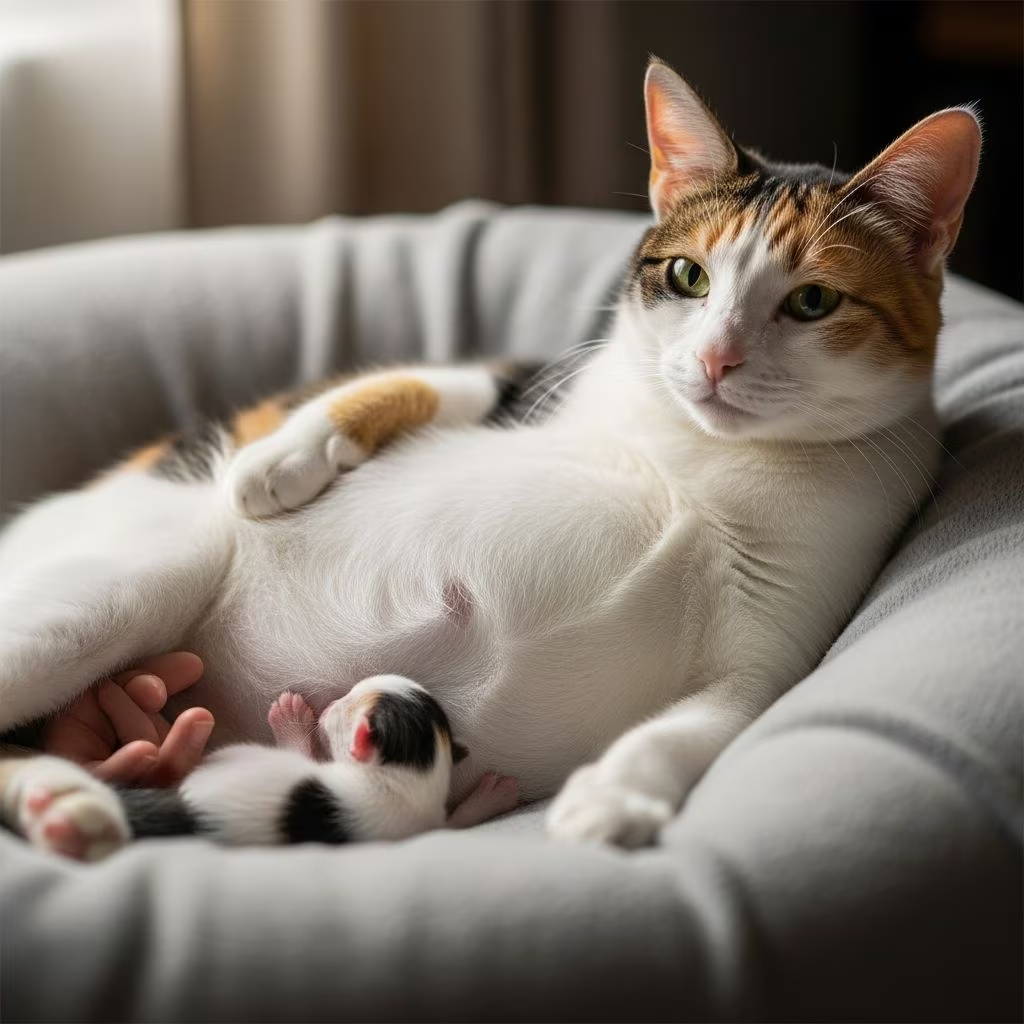
Understanding Cat Pregnancy and Parturition
Cat pregnancy, also known as feline gestation, is a fascinating biological process that results in the birth of adorable kittens. Understanding the stages of pregnancy, recognizing signs of labor, and knowing how to support your cat during parturition are essential responsibilities for cat owners. Whether your cat is expecting her first litter or you’re simply curious about feline reproduction, this comprehensive guide will walk you through every stage of pregnancy and delivery.
How Long Are Cats Pregnant?
The gestation period for cats is approximately 63 to 65 days, which translates to roughly nine weeks or about two months. However, it’s important to note that individual cats may vary slightly, with some pregnancies lasting as short as 52 days and others extending to 74 days. The relatively short gestation period compared to humans means that fetal development progresses rapidly throughout the pregnancy.
The entire pregnancy cycle can be divided into three distinct trimesters, each lasting approximately 20 days. Understanding these trimesters helps pet parents anticipate physical and behavioral changes in their pregnant cats and prepare appropriately for the arrival of kittens.
The Three Trimesters of Cat Pregnancy
First Trimester (Days 1-21)
During the first trimester, detecting pregnancy can be remarkably difficult for most pet parents. Very few visible changes occur during these early weeks, and your cat may behave almost completely normally. However, subtle signs may begin to emerge toward the end of this period.
During this stage, fertilization and embryo formation occur within the first one to seven days after conception. Once the male’s sperm reaches the female’s eggs, fertilization happens within 24 hours. The fertilized eggs then travel to the uterus where they implant into the uterine wall around day 8-14. The embryos begin dividing and developing into a blastula, the earliest stage of embryonic development.
Observable signs during the first trimester may include:
- Subtle increase in appetite
- Slight behavioral changes
- Nipple enlargement and color change (becoming more prominent and pinkish)
- Morning sickness in some cats
Second Trimester (Days 21-42)
The second trimester marks a transition point where pregnancy becomes more apparent to observant owners. Physical changes become more noticeable, and behavioral modifications develop as your cat’s body prepares for motherhood.
During this period, embryogenesis occurs around days 14-28, during which the critical elements of fetal bodies develop. The head and tail become distinguishable, and vital systems including the circulatory and gastrointestinal systems begin forming. Fetuses develop mouths, eyes, ears, and all four limbs. By the end of this phase, embryos transform into fetuses with developed facial features including chins, noses, and cheeks, along with forming paw pads and developing muscles.
Observable changes during the second trimester include:
- Noticeably larger belly and rounded appearance
- Darker, more prominent nipples
- Calmer, more cuddly temperament
- Continued weight gain
- Your veterinarian can typically confirm pregnancy via ultrasound and detect fetal heartbeats around week four
Third Trimester (Days 42-63)
The final trimester brings dramatic changes as the kittens grow rapidly and your cat’s body prepares for labor and delivery. This is the period when pregnancy becomes unmistakably obvious, and your cat will exhibit clear nesting behaviors and other labor-preparation signs.
During the last two weeks, kittens gain most of their weight, causing the mother’s belly to become increasingly distended. The mother cat will show significant behavioral and physical changes as her body prepares for birth.
Observable changes during the third trimester include:
- Dramatically swollen belly
- Increased and prominent breast tissue
- Voracious appetite (to fuel the rapidly growing fetuses)
- Frequent licking of belly and vulva
- Nesting behavior (seeking hidden, safe locations to give birth)
- Restlessness and increased vocalization
- Possible decrease in appetite as kittens take up abdominal space
- Behavioral changes such as anxiety or pacing
Pre-Labor Signs and Preparation
Recognizing pre-labor signs helps you prepare for the delivery and ensure your cat receives appropriate support during this critical time. As parturition approaches, your cat will exhibit specific behavioral and physical indicators that labor is imminent.
About 24 hours before delivery, your cat’s body temperature will drop significantly, typically by 1-2 degrees Fahrenheit, often falling below 100 degrees Fahrenheit. This temperature drop is one of the most reliable indicators that labor will begin within 24 hours and serves as a valuable warning sign for prepared owners.
Other pre-labor signs include:
- Restlessness and pacing
- Intensive nesting behavior and preparation of birthing space
- Possible loss of appetite two days before delivery
- Clear or bloody vaginal discharge 12-24 hours before birth
- Frequent meowing, yowling, or vocalizing
- Anxious behavior, especially in first-time mothers
- Seeking comfort and attention from their owners
The Stages of Labor and Parturition
First Stage of Labor
The first stage of labor is the preparatory phase where the uterus begins contracting, though these contractions may not be visible to the naked eye. During this stage, your cat may appear anxious, nervous, or restless. She may pace around the home, seek attention from her owners, or exhibit unusual behavior. This stage can last from several hours to approximately 24 hours, though it typically lasts around 6-12 hours.
Signs of the first stage of labor include:
- Visible anxiety and restlessness
- Pacing and circling
- Frequent meowing and vocalization
- Excessive grooming of the genital area
- Refusal to eat
- Seeking reassurance from owners
Second Stage of Labor
The second stage of labor is the active delivery phase where visible straining occurs and kittens are actually born. This is when you’ll observe your cat actively pushing to expel each kitten from the birth canal.
For each individual kitten, the delivery typically takes between 5 to 30 minutes of active pushing. Kittens are normally born headfirst, enclosed within a protective sac of fetal membranes. Most cat litters are completely delivered within four to six hours, with individual kittens typically arriving approximately 15-20 minutes apart.
During this stage:
- Visible contractions and straining are evident
- Kittens are born one at a time, usually headfirst
- Each kitten arrives in an amniotic sac that the mother typically breaks
- The mother instinctively cleans each kitten and stimulates breathing
- Delivery of each kitten takes 5-30 minutes of active labor
Third Stage of Labor
The third stage of labor is more passive and involves the expulsion of fetal membranes and the placenta after each kitten is born. During this stage, the remaining placental tissues and membranes are delivered, completing the birthing process for each individual kitten.
Important details about the third stage:
- The afterbirth (placenta and fetal membranes) appears greenish-black in color, which is completely normal
- One placenta should be passed for every kitten born
- The mother may eat the placental tissues, which is a natural behavior
- This stage is typically much less dramatic than the second stage
- Most mothers instinctively know how to manage this stage without assistance
Complete Labor Timeline Summary
| Stage | Duration | Key Characteristics |
|---|---|---|
| First Stage | 6-12 hours (up to 24 hours) | Anxiety, pacing, restlessness, no visible contractions |
| Second Stage | 5-30 minutes per kitten | Active straining, kittens born, visible contractions |
| Third Stage | Passive delivery | Expulsion of placenta and membranes after each kitten |
| Total Delivery | 4-6 hours total | All kittens and afterbirth delivered |
When to Contact Your Veterinarian
While most cat pregnancies and deliveries proceed normally, certain situations warrant immediate veterinary attention. Understanding these warning signs helps ensure the health and safety of both mother and kittens.
Contact your veterinarian immediately if:
- Labor continues for more than 24 hours without delivering a kitten
- Your cat strains heavily for more than 30 minutes without delivering a kitten
- More than two hours pass between kitten deliveries after the second stage has begun
- Your cat shows signs of extreme distress or pain
- Vaginal discharge is foul-smelling or appears abnormal
- The mother cat refuses to eat or seems lethargic after delivery
- Signs of infection appear (fever, lethargy, loss of appetite)
- A kitten fails to breathe or respond after delivery
- Your cat has difficulty delivering the first kitten (dystocia)
Supporting Your Cat During Pregnancy and Labor
Prenatal Care
Before and during pregnancy, proper veterinary care and nutrition are essential for the health of both mother and developing kittens. Before pregnancy begins, ensure your cat receives:
- Appropriate vaccinations
- Deworming treatment
- Overall health assessment
During pregnancy, provide:
- High-calorie diet specifically formulated for pregnant cats
- Increased portions as pregnancy progresses
- Fresh, clean water at all times
- Regular veterinary check-ups to monitor fetal development
- A quiet, safe space for nesting and preparation
During Labor
When your cat enters labor, provide a calm, quiet environment and minimal interference. Most cats naturally know what to do and prefer to labor privately. However, remain nearby to monitor progress and be available if assistance is needed. Ensure your veterinarian’s contact information is readily available in case complications arise.
Frequently Asked Questions About Cat Pregnancy and Parturition
Q: At what age can cats become pregnant?
A: Cats can reach sexual maturity and become pregnant as early as 4-6 months of age. This is why early spaying is recommended to prevent unwanted pregnancies.
Q: How many kittens do cats typically have?
A: The average reported litter size is approximately 4.0 kittens per litter, though litter size can vary based on the individual cat and other factors.
Q: Can a litter have kittens from multiple fathers?
A: Yes, a single litter of kittens can have different fathers depending on how many male cats the female has mated with during her heat cycle.
Q: What should I do if I suspect my cat is in labor but shows no progress?
A: If your cat has been in active labor for more than 30 minutes without delivering a kitten, or if more than two hours pass between kitten deliveries, contact your veterinarian immediately as this may indicate complications requiring professional assistance.
Q: Is it normal for a pregnant cat to lose her appetite before delivery?
A: Yes, it is completely normal for a cat to lose her appetite about two days before giving birth as the kittens take up significant abdominal space and hormonal changes occur preparing her body for labor.
Q: What should I prepare for the birth of kittens?
A: Prepare clean blankets, towels, a comfortable and quiet birthing space, a heating source for newborn kittens, and have your veterinarian’s contact information readily available. Around day 60 of pregnancy, begin gathering these supplies and preparing the birthing area.
References
- Cat Pregnancy: Signs, Stages and Care — PetMD. 2024. https://www.petmd.com/cat/conditions/reproductive/cat-pregnancy-and-kittens-complete-guide
- Clinical management of pregnancy in cats — PMC (PubMed Central). 2020. https://pmc.ncbi.nlm.nih.gov/articles/PMC7103129/
- Cat Pregnancy Timeline: Signs & Stages — Dutch. 2024. https://www.dutch.com/blogs/cats/cat-pregnancy-timeline
- Cat Pregnancy: Timeline, Signs and Stages — Chewy. 2024. https://www.chewy.com/education/cat/health-and-wellness/cat-pregnancy
- Cat Pregnancy Stages: A Week-by-Week Guide — Canna-Pet. 2024. https://canna-pet.com/articles/cat-pregnancy-stages-a-week-by-week-guide/
- Caring for your pregnant cat — Cats Protection. 2024. https://www.cats.org.uk/help-and-advice/pregnancy-and-kitten-care/caring-for-your-pregnant-cat
- How Long Are Cats Pregnant and What Are the Stages? — Lake City Animal Hospital. 2024. https://lakecityanimalhospital.com/blog/how-long-are-cats-pregnant/



