

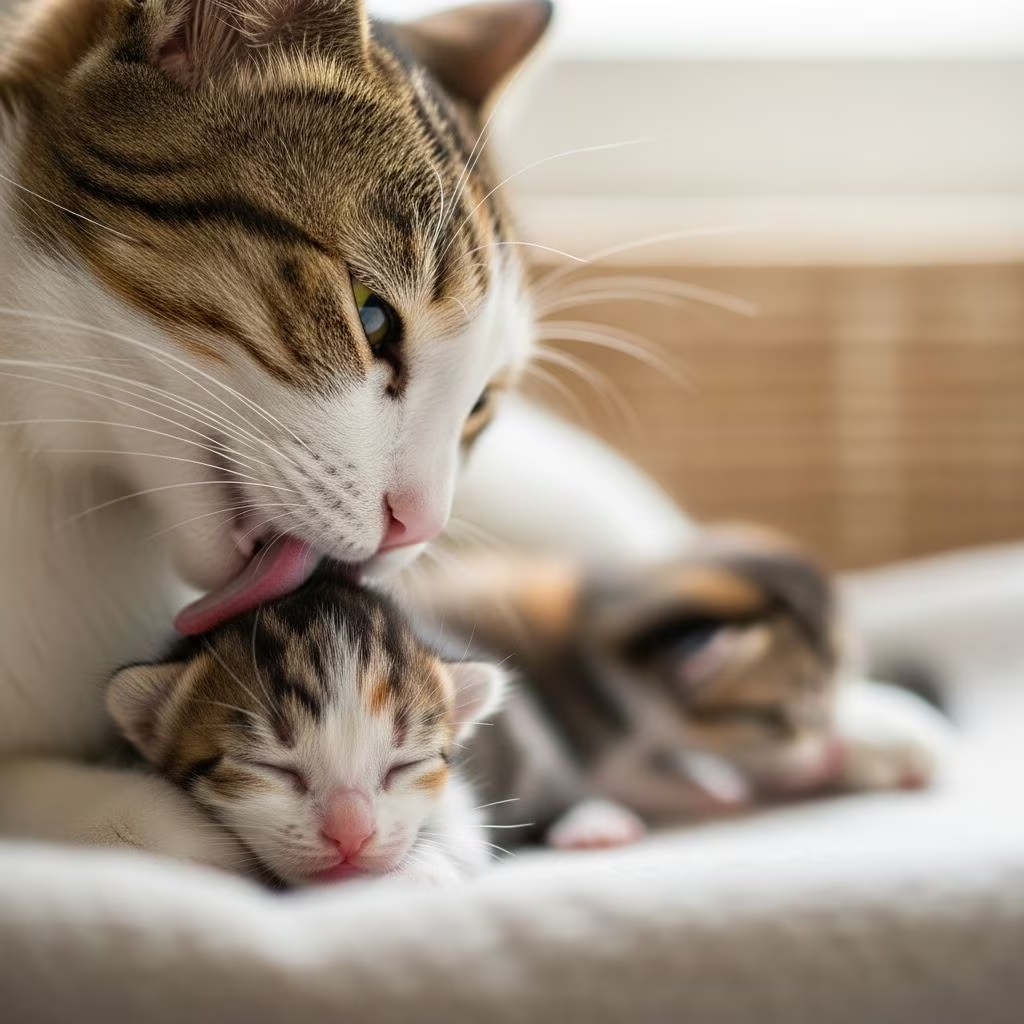
Cats exhibit remarkably swift reproductive recovery after giving birth, often entering a fertile heat cycle within days to weeks, which underscores the importance of timely spaying to manage population and health.
The Rapid Reproductive Cycle of Female Cats
Female cats, known as queens, possess one of the fastest reproductive turnaround times among mammals. Unlike humans or dogs, where postpartum anestrus provides a recovery buffer, queens can resume ovarian activity almost immediately post-delivery. This trait evolved to maximize survival in feral populations but poses challenges for pet owners facing unplanned litters.
The average cat gestation lasts 63-65 days, divided into three roughly 20-day trimesters. During the first trimester (days 1-21), fertilization occurs with minimal visible changes. The second (days 21-42) brings abdominal swelling and behavioral shifts like increased affection. By the third (days 42-65), nesting begins, nipples enlarge and pinken, and appetite surges.
Post-birth, lactation does not reliably suppress ovulation. A queen’s next estrus can emerge as early as 4-10 days after weaning or even while nursing if stimulated by a tomcat. In non-nursing scenarios, heat returns within 1-2 weeks. This rapid cyclicity means a cat could theoretically produce multiple litters annually, straining her health.
Understanding Feline Heat Cycles and Postpartum Onset
Cats are seasonally polyestrous, cycling multiple times from spring to fall in temperate climates, or year-round with artificial lighting. Each estrus lasts 4-10 days, recurring every 2-3 weeks if unmated. Ovulation is induced by mating, occurring 24-48 hours post-copulation.
After parturition, hormonal shifts from progesterone drop trigger quick follicular development. Studies indicate 70-80% of queens ovulate within two weeks postpartum, with fertility peaking if nursing kittens are weaned early. Key factors accelerating return include:
- Young age: Juveniles cycle faster.
- Environmental cues: Male pheromones hasten estrus.
- Litter size: Smaller litters correlate with quicker recovery.
Owners often miss these signs, mistaking vocalizing or rubbing as stress rather than fertility cues.
Health Implications of Consecutive Pregnancies
Back-to-back litters deplete calcium, leading to eclampsia (milk fever), characterized by tremors, fever, and seizures. Chronic malnutrition risks uterine infections (metritis), anemia, and weakened immunity, shortening lifespan by years.
| Risk Factor | Consequences | Prevention |
|---|---|---|
| Calcium Deficiency | Eclampsia, hypocalcemia | Calcium-rich diet, vet monitoring |
| Nutritional Drain | Anemia, poor milk quality | High-protein kitten food |
| Uterine Exhaustion | Metritis, dystocia | 6-week spay interval |
| Population Overload | Shelter strain |
Queens birthing before one year old face 2-3x higher dystocia rates. Ideal inter-litter gap: 6+ months with veterinary oversight.
Postpartum Recovery Timeline for Queens
Immediate post-birth (0-24 hours): Expel placentas (one per kitten), sever cords, lick kittens clean. Monitor for hemorrhage or retained tissue.
Weeks 1-2: Lochia (bloody discharge) normalizes; appetite rebounds. Introduce kitten food gradually.
Weeks 3-4: Kittens open eyes, nurse vigorously; queen’s weight stabilizes.
Weeks 5-8: Weaning begins; spay window opens post-weaning to minimize mammary cancer risk.
Veterinary check 24-48 hours post-birth assesses hydration, anemia, and kitten vitality. Deworming and vaccines follow at 2 weeks if needed.
Recognizing and Managing Postpartum Heat Signs
Subtle cues include:
- Excessive meowing, especially evenings.
- Rolling, tail elevation, urine spraying.
- Aggression toward kittens or hiding.
- Escaping attempts near intact males.
Isolate from toms immediately. Pheromone diffusers calm behavior. Consult vet for progesterone suppressants if persistent, though spaying is definitive.
Nutritional and Environmental Support During Recovery
Queens require 2-3x maintenance calories, emphasizing protein (30%+), fats, and taurine. Feed 3-4 meals daily in quiet areas.
Nesting box: Low-sided, lined with towels, in dim, warm (80-85°F) space away from litter box and traffic.
Hygiene: Spot-clean without disturbing; full change post-weaning.
Supplements: Omega-3s for milk quality, probiotics for digestion.
Spaying Recommendations: Timing and Benefits
Prevents 7-year average lifespan extension by averting pyometra (fatal uterine infection, 25% unspayed risk), cancers, and roaming injuries. Optimal: Before first heat, but post-litter at 8 weeks when kittens are independent.
Procedure recovery: 10-14 days; monitor incision, restrict jumping.
Benefits table:
| Advantage | Impact |
|---|---|
| Cancer Reduction | 91% mammary drop if pre-first heat |
| Infection Prevention | No pyometra risk |
| Behavioral Calm | Eliminates heats |
| Population Control | Averts millions shelter euthanasias yearly |
Low-cost clinics and trap-neuter-release aid accessibility.
Kitten Development and Weaning Strategies
Kittens gain 100g/week initially, eyes open day 7-14, walking by day 21. Wean gradually weeks 4-8 with gruel transitioning to solids.
Socialize weeks 2-7 for temperament. Vaccinate at 6-8 weeks, spay/neuter at 8-12 weeks (pediatric programs).
When to Seek Veterinary Intervention
Red flags post-birth:
- Foul discharge >3 days.
- Fever, lethargy, inappetence.
- Kittens crying excessively (cold, rejected).
- Straining >30 min without kitten.
Labor stages: Stage 1 (restlessness, 12-24h), Stage 2 (deliveries q10-60min, total <6h), Stage 3 (placentas). Dystocia if >4h between kittens.
FAQs on Cat Postpartum Fertility
How soon after birth can a cat get pregnant? Potentially within days if nursing minimally; typically 1-4 weeks post-weaning.
Does nursing prevent pregnancy in cats? No, unlike some mammals; queens ovulate readily.
What’s the ideal spay time after litter? 8 weeks post-birth, after weaning.
Can a cat have kittens year-round? Yes, indoors; seasons influence outdoors.
How many litters yearly possible? Up to 3-4 without intervention, 5-7 kittens each.
Long-Term Reproductive Health Management
Track cycles via apps; annual exams detect issues early. For breeders, retire queens after 3-4 litters, ensuring health screens. Community education cuts stray overpopulation—each spay prevents dozens descendants.
Holistic supports like herbal calmers complement vet care, but never substitute. Informed ownership ensures thriving feline families.
References
- Cat Pregnancy: Signs, Stages and Care — PetMD. 2023. https://www.petmd.com/cat/conditions/reproductive/cat-pregnancy-and-kittens-complete-guide
- How Long Are Cats Pregnant and What Are the Stages? — Lake City Animal Hospital. 2023. https://lakecityanimalhospital.com/blog/how-long-are-cats-pregnant/
- How Long Are Cats Pregnant? — Chewy. 2023. https://www.chewy.com/education/cat/health-and-wellness/how-long-are-cats-pregnant
- Cat Reproduction: Heat Cycles, Pregnancies, and More — Bond Vet. 2023. https://bondvet.com/blog/cat-reproduction
- How Long Are Cats Pregnant? — Westmoreland Animal Hospital. 2024-08-30. https://www.westmorelandah.com/site/blog/2024/08/30/how-long-cats-pregnant
- How Long Are Cats Pregnant? Seattle Vet — Northgate Veterinary. 2024-08-15. https://www.northgateveterinary.com/site/blog/2024/08/15/cat-pregnancy



