

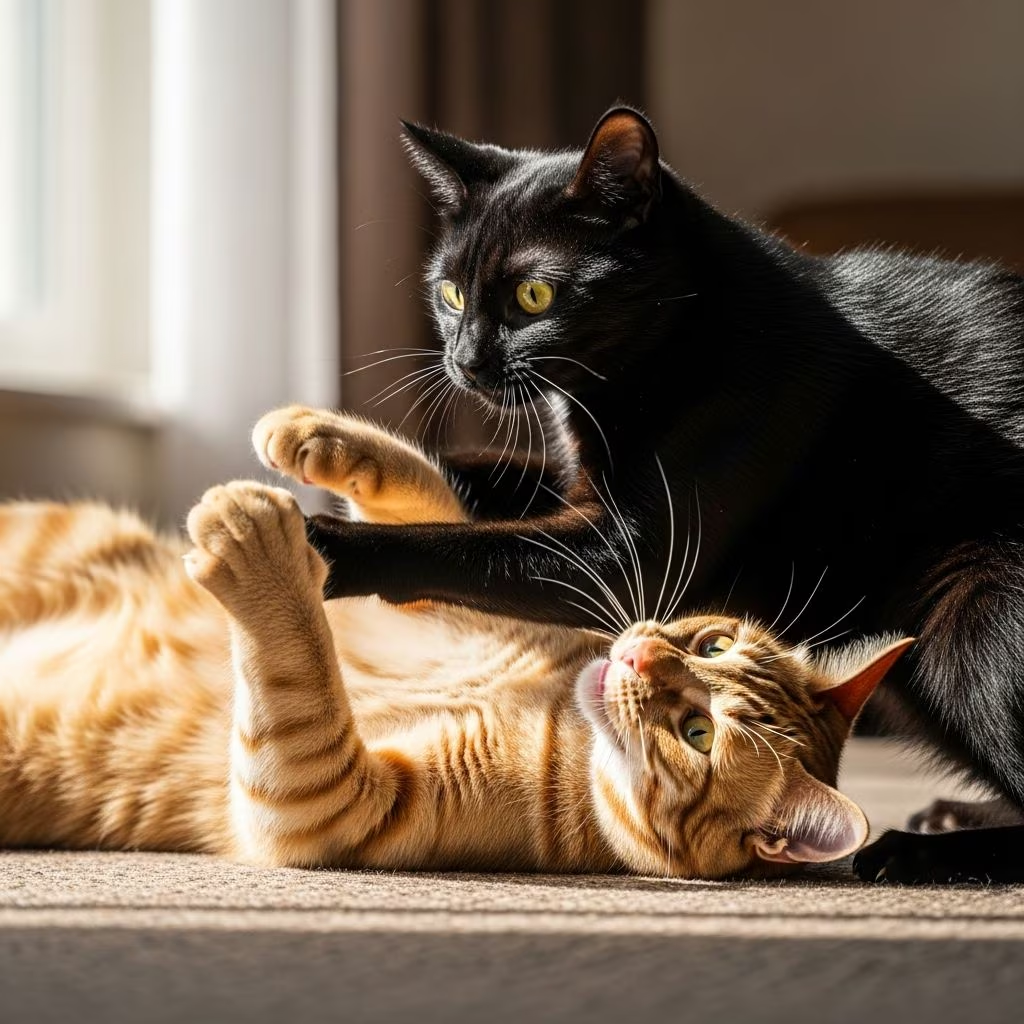
Play fighting in cats serves as a vital mechanism for physical exercise, skill development, and social bonding. This behavior mimics hunting and survival instincts, allowing felines to practice essential abilities in a safe context.
The Instinctive Roots of Feline Play
Cats engage in play fighting primarily to hone their predatory skills. Kittens, in particular, use these interactions to develop coordination, timing, and strength, much like wild felines preparing for hunts. This natural drive persists into adulthood, providing mental stimulation and stress relief.
In multi-cat environments, play fighting strengthens relationships by establishing boundaries and communication. Cats learn through trial and error, adjusting intensity based on responses from playmates. Single cats often redirect this energy toward toys or humans, which requires careful management to prevent misunderstandings.
Key Indicators of Playful vs. Aggressive Encounters
Distinguishing play from genuine aggression is crucial for cat owners. Playful sessions feature relaxed body language, such as forward-facing ears, upright tails, and intermittent pauses where cats groom or rest. Aggressive interactions, conversely, show stiff postures, flattened ears, dilated pupils, and continuous intensity without breaks.
- Relaxed ears and whiskers: Forward or slightly to the sides during play; pinned back in aggression.
- Tail position: Gently swishing or held high in play; thrashing or puffed in hostility.
- Vocalizations: Chirps, meows, or trills indicate fun; hisses, growls, or yowls signal distress.
- Biting and clawing: Gentle, retracted claws and soft bites in play; hard bites with extended claws in fights.
- Pauses and role reversal: Frequent breaks and switching attacker roles confirm play; one-sided pursuit suggests problems.
Observing these cues helps intervene appropriately, ensuring safety without stifling natural behaviors.
Play Fighting in Kittens: A Developmental Milestone
Kittens peak in play aggression during mornings and evenings, aligning with crepuscular hunting patterns. Littermates teach bite inhibition through retaliatory responses, a lesson solitary kittens may miss. This can lead to overly rough play with owners if not addressed early.
Healthy kitten play includes chasing, pouncing, and wrestling, which build muscle tone and agility. Owners should provide ample toys to channel this energy, preventing boredom-induced mischief. Consistent routines reinforce that human skin is not prey.
Adult Cats and Persistent Play Behaviors
While less intense than in youth, adult cats retain play fighting for fitness and enrichment. High-energy breeds or understimulated pets may escalate to unwanted aggression. Environmental enrichment, like scratching posts and puzzle feeders, mitigates this.
| Age Group | Common Play Styles | Potential Issues | Solutions |
|---|---|---|---|
| Kittens (under 6 months) | Chasing, ambushing, batting | Lack of bite control | Littermate play, toy redirection |
| Juveniles (6-18 months) | Wrestling, hind-leg kicking | Hyperactivity peaks | Scheduled sessions, interactive toys |
| Adults (over 18 months) | Stalking, short bursts | Boredom escalation | Enrichment, vertical spaces |
This table summarizes age-specific patterns, aiding tailored interventions.
Encouraging Safe and Beneficial Play
To promote healthy play fighting, schedule 15-20 minute sessions twice daily using wand toys that simulate prey movement. Avoid hands as targets to prevent learned aggression. When bites occur, end play immediately by withdrawing attention, teaching boundaries.
For multi-cat homes, monitor sessions for equity. Unequal play styles can spark real conflicts; introduce compatible playmates gradually. Vertical territories, like cat trees, reduce resource tension.
- Rotate toys to maintain novelty.
- Use feather or string lures for instinctual engagement.
- End sessions on a positive note with treats or affection.
- Provide solo options like kick toys for independent play.
Addressing Play Turned Problematic
If play escalates, identify triggers like insufficient exercise or territorial stress. Never punish physically, as it fosters fear or intensified responses. Instead, redirect to appropriate outlets and consult veterinarians to rule out medical issues.
High-energy cats benefit from clicker training to refine play signals. Consistency across household members is key for lasting change.
Health Advantages of Regular Play Fighting
Play fighting combats obesity by burning calories and builds cardiovascular health. Mentally, it reduces anxiety and prevents destructive behaviors. Stronger human-cat bonds emerge from shared activities, enhancing trust.
Frequently Asked Questions
Is it normal for my cat to play fight with me?
Yes, but ensure claws stay retracted and bites gentle. Redirect to toys if roughness increases.
How do I stop my kitten from biting my hands?
Withdraw immediately and ignore for 5-10 minutes. Offer toys instead to reinforce alternatives.
What if my two cats play fight too roughly?
Separate if ears flatten or tails thrash. Increase individual playtime to diffuse energy.
Can older cats still play fight healthily?
Absolutely, in moderated bursts. Adapt toys for mobility limitations.
Does neutering reduce play aggression?
It may temper intensity but doesn’t eliminate natural play instincts.
Building a Play-Enriched Environment
Transform your home into a feline playground with tunnels, perches, and window seats. Automated toys suit busy schedules, while human-led sessions deepen connections. Track behaviors in a journal to spot patterns and progress.
Incorporate scent games using catnip or silver vine for added engagement. These elements ensure play fighting remains a positive force.
References
- Understanding Cat Play Behavior: Signs of Aggression vs. Healthy Play — Repounce. 2023. https://repounce.com/blogs/news/understanding-cat-play-behavior-signs-of-aggression-vs-healthy-play
- Play Aggression (Cats) — San Francisco SPCA. 2024-02-15. https://www.sfspca.org/resource/play-aggression/
- Feline Behavior Problems: Aggression — Cornell University College of Veterinary Medicine. 2023-05-10. https://www.vet.cornell.edu/departments-centers-and-institutes/cornell-feline-health-center/health-information/feline-health-topics/feline-behavior-problems-aggression
- Cat-Cat Play: The Good, the Bad, and the Ugly — IAABC Journal. 2022-11-01. https://journal.iaabcfoundation.org/play-the-good-the-bad-and-the-ugly/
- How to Tell if Cats Are Playing or Fighting — Psychology Today. 2023-02-14. https://www.psychologytoday.com/us/blog/animal-emotions/202302/are-cats-playing-fighting-or-unsure



