

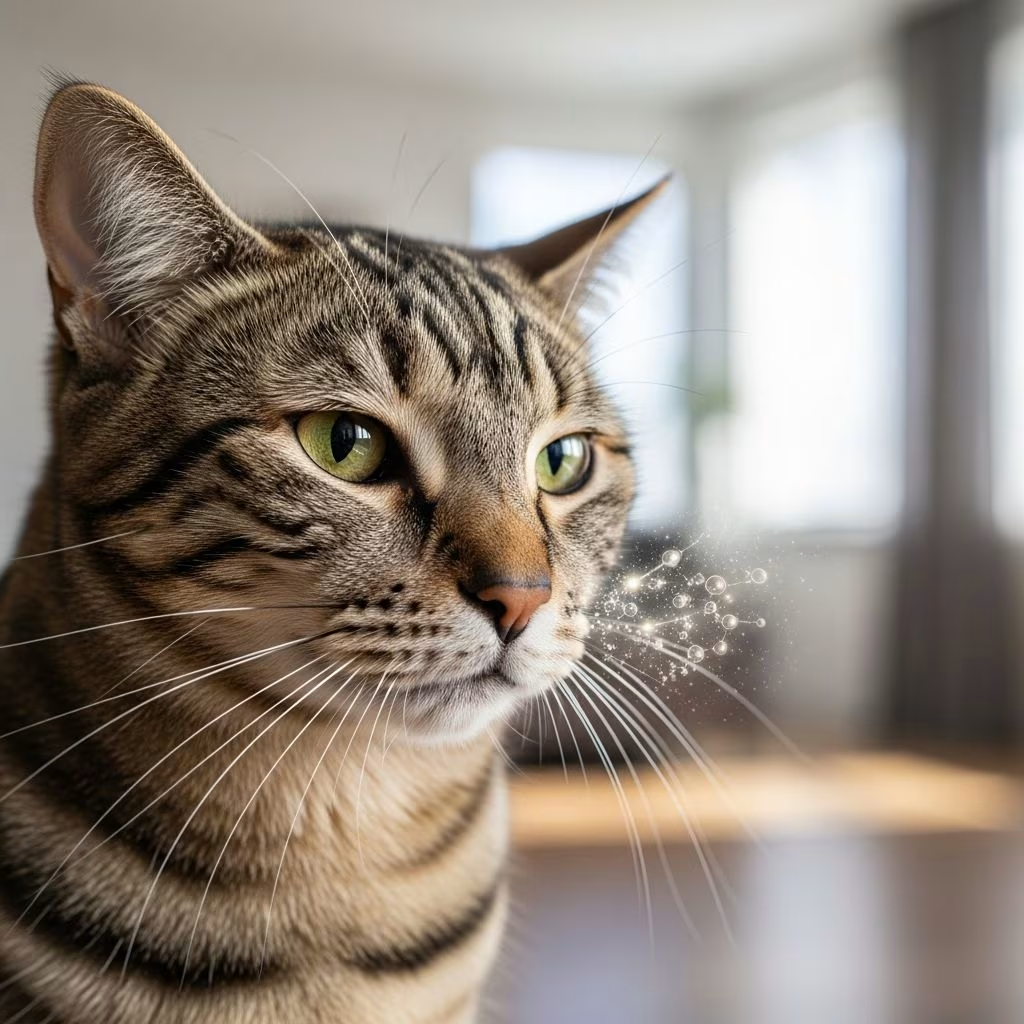
Cat pheromones offer a natural, non-invasive way to manage aggression in cats, particularly in multi-cat households where tensions can escalate into hissing, growling, or fighting. Synthetic versions mimic calming signals cats produce naturally, helping to restore peace without medications.
What Are Cat Pheromones?
Cat pheromones are chemical signals secreted by specialized glands to communicate emotions, territory, and social status. Produced in areas like the face, paws, tail base, and mammary glands, they are deposited via rubbing, scratching, spraying, or nursing.
Cats detect these via the vomeronasal organ (VNO), linked to social behaviors. Inflammation in the VNO’s sensory epithelium correlates with inter-cat aggression, underscoring pheromones’ role in feline-feline communication rather than human-directed issues.
- Facial pheromones (FHP): From cheek, chin, and lip glands; used in rubbing to mark safe spaces.
- Interdigital pheromones: From paw pads; involved in scratching for territorial claims.
- Feline Appeasing Pheromone (FAP): From mammary glands during lactation; promotes bonding and calm.
How Do Cat Pheromones Work for Aggression?
Pheromones influence the brain’s limbic system, reducing stress and aggression triggers. In multi-cat homes, synthetic FAP mimics maternal calming signals, signaling safety and lowering conflict. This helps cats re-establish positive interactions, decreasing stares, fleeing, hissing, and fights.
Unlike punishers like water sprays, pheromones address root emotional states, supporting behavior modification. They don’t sedate but create an environment conducive to learning calmer responses.
Types of Cat Pheromones for Aggression
Several synthetic pheromones target aggression:
| Type | Source | Primary Use |
|---|---|---|
| Feline Facial Pheromone (FHP) | Facial glands | Comfort, territory marking |
| Feline Appeasing Pheromone (FAP) | Mammary glands | Reduces stress and aggression |
| Feline Interdigital Pheromone (FIP) | Paw pads | Scratching/urine marking reduction |
FAP is most studied for household aggression, while FHP combinations like Feliway Optimum address multiple issues.
Do Cat Pheromones Really Work for Aggression?
Yes, clinical evidence supports efficacy. A double-blind, placebo-controlled study of 42 multi-cat households (2-5 cats) used FAP diffusers for 28 days alongside behavior training. Aggression scores (OFSIS-Aggression) dropped significantly faster in the treatment group by day 21, with benefits persisting 2 weeks post-treatment.
In the study, 17 pheromone households vs. 25 placebo showed:
- 84% of treated owners reported cats “getting along better” vs. 64% placebo (significant).
- Common pre-treatment behaviors: staring, fleeing, hissing/growling.
- No adverse effects; excluded severe cases or medical issues.
Another trial confirmed FAP reduced aggression within 21 days, suggesting it initiates a “new balance” in interactions. Pheromone collars also halved problem behaviors in 28 days vs. controls.
Best Pheromone Products for Aggressive Cats
Popular, vet-recommended options include:
- Feliway Optimum Diffuser: FAP + FHP; plugs into rooms, covers 700 sq ft. Ideal for multi-cat aggression.
- Feliway Classic Spray/Diffuser: FHP-focused for stress marking.
- Comfort Zone Multi-Cat: FAP analog; affordable diffuser for households.
- Sentry Calming Pheromones: FAP-based collars/sprays for portability.
Choose based on need: diffusers for whole-home coverage, collars for travel/outdoor cats.
How to Use Pheromones for Cat Aggression
Step-by-Step Guide:
- Assess the situation: Rule out medical issues (pain, thyroid) via vet visit. Identify triggers like resources or introductions.
- Select product: Start with FAP diffuser in high-conflict areas (living rooms, near litter boxes).
- Plug in and maintain: Use continuously 24/7; replace refills every 30-60 days. One per 250-700 sq ft.
- Combine with behavior mod: Provide separate resources (bowls, boxes, beds), use positive reinforcement, desensitize interactions.
- Monitor progress: Track incidents daily; expect improvement in 7-21 days. Adjust placement if needed.
- Territorial intact males: Study excluded them; neuter first.
- Pain/medical aggression: Treat underlying issues.
- Improper rehoming: Traumatic intros overwhelm pheromones.
- Severe cases: May need meds + therapy; long-term effects unproven beyond 30 days.
- What are Cat Pheromones and What Do They Do? — American Veterinary Society of Animal Behavior (AVSAB). 2023. https://avsab.org/what-are-cat-pheromones-and-what-do-they-do/
- Pheromones and Household Cat Aggression — dvm360 (Natalie Stilwell, DVM, MS, PhD). 2023. https://www.dvm360.com/view/pheromones-and-household-cat-aggression
- Pheromone diffusers for aggression in multi-cat households — EveryCat Health Foundation. 2023. https://everycat.org/cat-health/pheromone-diffusers-for-aggression-in-multi-cat-households/
- Efficacy of a pheromone-impregnated collar in controlling feline behaviors — Frontiers in Veterinary Science. 2024-10-01. https://www.frontiersin.org/journals/veterinary-science/articles/10.3389/fvets.2024.1468634/full
- Tools for managing feline problem behaviors: Pheromone therapy — PMC (PubMed Central). 2024. https://pmc.ncbi.nlm.nih.gov/articles/PMC11343345/
- Pheromone Therapy — Cats Protection (cats.org.uk). 2023. https://www.cats.org.uk/help-and-advice/cat-behaviour/pheromone-therapy
Tips: Place away from food/doors; clean pheromone-mimicking scents don’t interfere. For severe cases, consult a veterinary behaviorist.
When Pheromones Might Not Work
Pheromones excel for mild-moderate redirected/fear aggression but may fall short for:
Declawed cats showed aggression trends, possibly from stress. If no change in 4 weeks, reassess.
Safety and Side Effects of Cat Pheromones
Safe for cats, dogs, humans; no toxicity reported. Collar trials on 621 cats showed ~7-8% minor events (e.g., collar intolerance), similar to controls. Rare reactions: excessive rubbing (switch products). Pregnancy/lactation safe.
Alternatives to Pheromones for Cat Aggression
| Method | Pros | Cons |
|---|---|---|
| Environmental Enrichment | Multiple resources, play; low-cost | Time-intensive |
| Behavior Modification | Addresses causes; long-term | Requires consistency |
| Medications (e.g., fluoxetine) | Fast for severe cases | Side effects, vet Rx |
| Rehoming/Separation | Eliminates conflict | Emotional toll |
Pheromones complement these best.
Frequently Asked Questions (FAQs)
How long do cat pheromones take to work for aggression?
Improvements often seen in 7 days, significant by 21 days per studies.
Are pheromone diffusers safe around kids and other pets?
Yes, non-toxic and odorless to humans/dogs.
Can pheromones stop cat fights completely?
They reduce frequency/intensity; combine with training for best results. Severe cases may need more.
What if pheromones don’t help my aggressive cat?
Consult vet for medical checks or behaviorist; try different products or add meds.
Do pheromones work for single-cat aggression?
Less studied; better for inter-cat issues, but aid stress-related solo aggression.



