

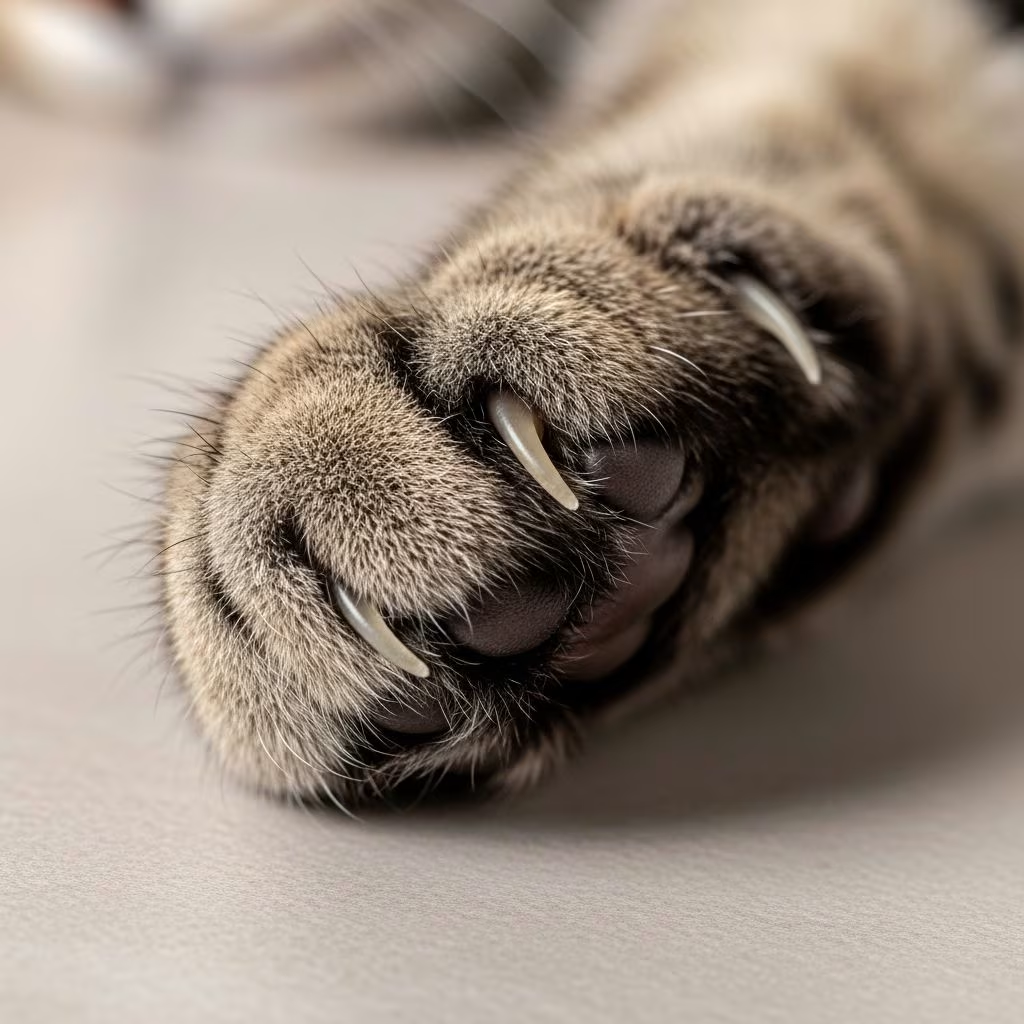
Cat paws, often affectionately called **toe beans**, are marvels of evolutionary design that enable stealthy hunting, agile climbing, and silent stalking. Technically termed paws, these structures consist of toes, claws, and specialized pads that serve multiple sensory and mechanical purposes.
The Building Blocks of Feline Paws
A standard cat possesses five toes on each front paw and four on each hind paw. The front paws feature a distinctive **dewclaw**, positioned higher on the leg, which aids in gripping prey and scaling surfaces rather than weight-bearing during locomotion. Beneath these toes lie the **digital pads**, one per toe, providing individual cushioning. The larger central pad is known as the **metacarpal pad** on front paws and **metatarsal pad** on rear paws, acting as the primary contact point with the ground. Front paws also include a unique **carpal pad** located higher on the leg, assisting with braking and navigation over rough terrain.
Internally, paw pads comprise layers of **adipose tissue** (fat) encased in **collagen fibers**, topped by thick, stratified squamous epithelium for durability. This composition forms fluid-filled compartments rich in blood vessels, nerves, and **sweat and scent glands**, allowing cats to regulate temperature, leave chemical markers, and sense vibrations. Microstructural analysis reveals a tri-layered setup: epidermis for protection, dermis for support, and subcutaneous fat for shock absorption.
Biomechanical Marvels: How Paws Absorb Impact
Cat paws excel in **impact resistance**, a critical adaptation for high jumps and falls. The metacarpal pads, being larger and positioned under key joints, bear the brunt of landing forces. Studies using mechanical testing and finite element modeling demonstrate nonlinear viscoelastic properties, where ellipsoid-shaped adipose compartments deform under pressure, dissipating energy through shape changes and fluid dynamics.
This layered flexibility ensures stability, damping vibrations, and efficient force transfer. For instance, during a jump, pads compress to cushion up to 5-7 times the cat’s body weight, preventing injury while maintaining balance. Comparative anatomy shows similarities to human hands, with phalanges (toe bones) and keratin-covered claws analogous to fingernails, though cat claws feature bony cores for retraction and sharpness.
| Paw Component | Front Paws | Hind Paws | Primary Function |
|---|---|---|---|
| Toes | 5 (incl. dewclaw) | 4 | Gripping, climbing |
| Digital Pads | 5 small pads | 4 small pads | Precision contact |
| Main Pad | Metacarpal | Metatarsal | Shock absorption |
| Extra Pad | Carpal (wrist) | None | Braking, sensing |
Sensory Superpowers: Beyond Walking
Paws are sensory hubs. Thousands of nerves detect textures, temperatures, and vibrations, enabling cats to judge safe landings from heights up to five times their body length. **Scent glands** in pads deposit pheromones, marking territory during kneading or walking—a behavior linked to comfort and communication. Sweat glands, absent from most furred skin, allow cooling via **paw sweating** during stress or heat.
Claws, retractable via elastic ligaments, stay sharp for traction. The **dermal papillae** in pads enhance grip, much like tire treads, preventing slips on varied surfaces. These features underscore paws’ role in hunting: silent steps, precise pounces, and territorial claims.
Daily Paw Care Essentials
Maintaining paw health prevents cracks, infections, and mobility issues. Inspect weekly for cuts, swelling, or foreign objects like thorns. Gently trim claws every 2-4 weeks using cat-specific clippers, avoiding the **quick** (blood vessel inside the claw).
- Cleaning: Wipe pads with a damp cloth to remove litter or dirt; avoid harsh soaps.
- Moisturizing: Apply vet-approved balms for dry pads, especially in winter.
- Exercise: Encourage scratching posts to naturally shed claw sheaths and strengthen pads.
- Protection: Booties for extreme weather, but introduce gradually to avoid stress.
Polydactyl cats (extra toes) require extra attention to prevent overgrown nails. Nutrition matters: diets rich in omega-3s support pad elasticity and claw health.
Common Paw Problems and Solutions
Issues like **pododermatitis** (pad inflammation) or **hyperkeratosis** (thickened skin) signal allergies, infections, or autoimmune conditions. Symptoms include limping, redness, or licking. Seek vet care for persistent problems; treatments range from antibiotics to steroids.
In cold climates, **frostbite** risks pads—keep cats indoors. Hot pavements cause burns; test surfaces with your hand before walks. Overgrown litter can embed in pads, leading to abscesses.
Evolutionary Insights into Feline Feet
Cat paws evolved from padded ancestors in the Felidae family, optimizing for predation. Unlike plantigrade humans (heel-to-toe walking), cats are **digitigrade**, walking on toes for speed and power. This, combined with flexible spines and free-floating clavicles, enables their acrobatics. Fossil records and modern big cats (tigers, leopards) confirm conserved pad structures for similar lifestyles.
Fun Facts About Cat Paws
- Cats have unique paw prints, like fingerprints, usable for ID in some cases.
- Kneading (“making biscuits”) stems from kittenhood nursing, releasing feel-good pheromones.
- Some breeds, like Sphynx, have extra-sensitive pads due to minimal fur.
- Pads change color with temperature: pink (warm), black/pigmented (cool).
FAQs
Why do cats lick their paws excessively?
Often grooming, but constant licking may indicate allergies, pain, or parasites. Monitor and consult a vet if skin irritates.
Can cats feel pain in their pads?
Yes, densely innervated pads are highly sensitive. Injuries cause limping; never ignore.
How often should I check my cat’s paws?
Weekly inspections catch issues early. Daily for outdoor cats.
What if my cat’s pads are cracked?
Apply petroleum-free ointment; if bleeding or infected, see a vet promptly.
Do all cats have pink toe beans?
No, colors vary by breed and genetics: black, pink, mottled, or multi.
Training Tips for Paw Handling
Desensitize kittens to paw touches with treats, preparing for vet visits or trims. Positive reinforcement builds trust, reducing stress during care.
References
- Cat Paw Pads: Vet-Verified Anatomy & Functions Explained — Catster. 2023. https://www.catster.com/lifestyle/cat-paw-pads-anatomy/
- Comprehensive Biomechanism of Impact Resistance in the Cat’s Paw Pad — PMC (Peer-reviewed). 2019-08-15. https://pmc.ncbi.nlm.nih.gov/articles/PMC6699342/
- Cat Anatomy — Wikipedia (background; primary sources referenced). 2026. https://en.wikipedia.org/wiki/Cat_anatomy
- Skeletal Structure of Human Versus Cat Hand — 3D Anatomy Studios. 2023. https://3danatomystudios.com/portfolio/skeletal-structure-of-human-versus-cat-hand/
- The Ultimate Guide to Your Cat’s Paws — Comforted Kitty. 2024. https://comfortedkitty.com/understanding-cat-paws-guide/



