

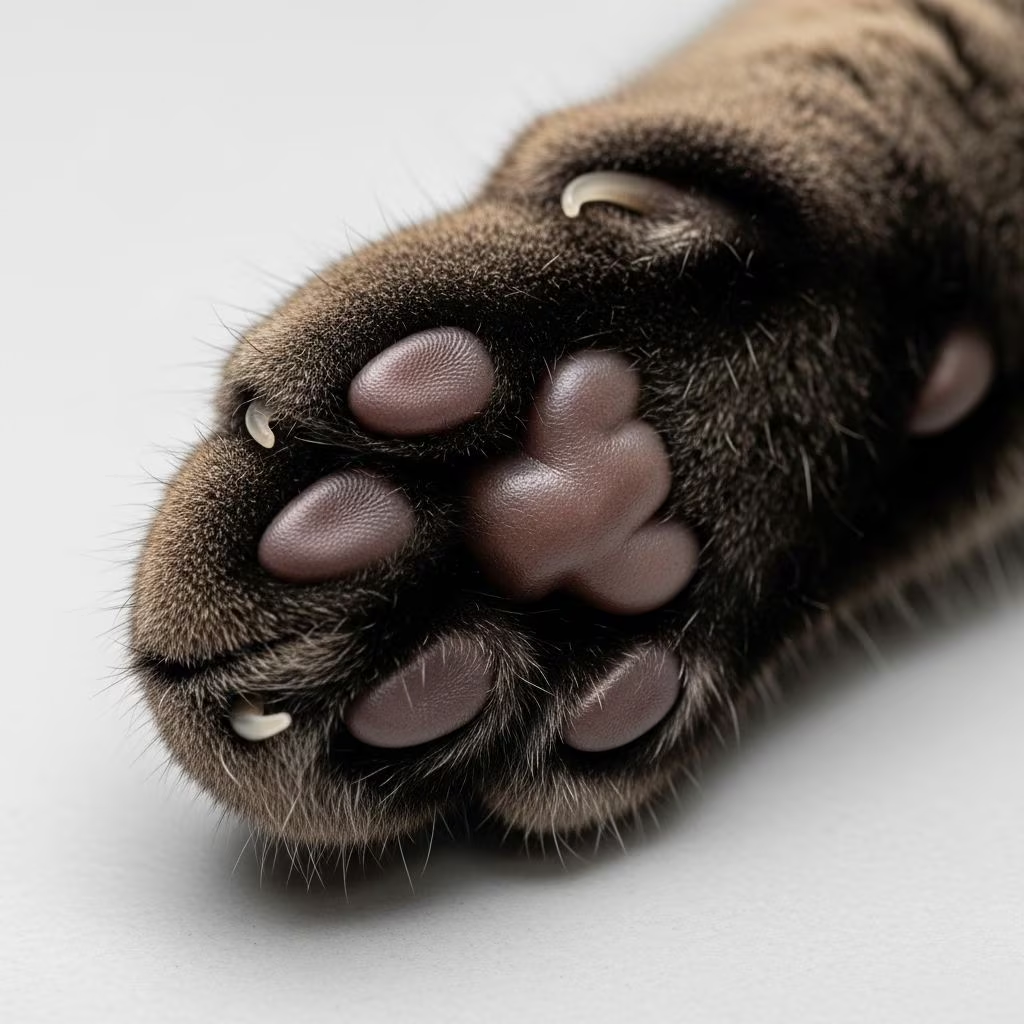
Cat paw pads are specialized structures that provide cushioning, support, and sensory feedback, enabling cats to navigate diverse terrains with remarkable agility. Composed of fatty tissue, collagen, and tough skin, these pads play crucial roles in shock absorption, traction, thermoregulation, and more.
Cat Paw Pad Anatomy
Understanding the anatomy of cat paw pads reveals why felines are such athletic marvels. Each paw features multiple pads designed for specific functions, allowing cats to jump from heights, climb, and stalk prey silently.
The front paws have four digital pads (one per toe), a larger central metacarpal pad, and a unique carpal pad higher on the leg. Hind paws mirror this with four digital pads and a metatarsal pad, but lack the carpal pad. These pads consist of adipose (fat) tissue encased in collagen fibers and covered by thick, keratinized epithelium, forming fluid-filled sacs rich in blood vessels, nerves, and scent glands.
- Digital Pads: Smaller pads at the base of each toe, aiding precise grip and balance.
- Metacarpal/Metatarsal Pad: The large central pad bearing most weight during movement.
- Carpal Pad: Exclusive to front paws, provides extra cushioning during high-impact landings.
Histological analysis shows a layered structure: epidermis (tough outer layer), dermis (connective tissue), and subcutaneous fat partitioned by collagen, enhancing impact resistance.
Roles of Cat Paw Pads
Cat paw pads serve multifaceted roles beyond mere walking surfaces, contributing to survival instincts and daily agility.
1. Stability and Cushioning
Paw pads act as natural shock absorbers, dissipating impact forces during jumps and landings. Their viscoelastic properties—stiffness increasing with strain—protect joints and bones. Micro-CT scans reveal ellipsoid adipose compartments that deform under load, distributing stress evenly.
This explains cats’ ability to leap from heights without injury; the pads compress like hydrostatic systems, converting kinetic energy into heat and deformation.
2. Traction and Grip
The textured, keratinized surface provides superior friction, allowing cats to climb sheer surfaces, leap gaps, and balance on narrow ledges. Sweat glands between pads secrete moisture for enhanced grip on slick terrains.
3. Sensory Detection
Packed with nerves and mechanoreceptors, paw pads function like tactile sensors, detecting textures, temperatures, and vibrations. This heightened sensitivity aids hunting by sensing prey vibrations and navigating in low light.
4. Thermoregulation
Blood vessels in the pads dilate in heat to dissipate warmth or constrict in cold to conserve it, helping maintain core temperature. This is vital for cats, which have limited sweat glands elsewhere.
5. Scent Marking
Eccrine glands in the pads release pheromones, leaving scent trails for territory marking and communication. This subtle communication is key to feline social behavior.
How Do Cat Paw Pads Work?
During movement, pads flex and compress rhythmically. On landing, the metacarpal pad contacts first, absorbing 70-80% of impact via fat compartments. Digital pads then engage for stability. Nerves fire signals to the brain for immediate adjustments, ensuring silent, precise steps.
Mechanical tests show pads exhibit nonlinear stiffness, impervious to strain rates, ideal for variable impacts from pouncing to high falls.
Healthy vs. Unhealthy Cat Paw Pads
| Healthy Paw Pads | Unhealthy Paw Pads |
|---|---|
|
|
Healthy pads indicate good nutrition and hygiene; changes signal issues like allergies, obesity, or diabetes.
Cat Paw Pad Problems and Treatments
Common issues include hyperkeratosis (excess keratin), burns from hot surfaces, frostbite, infections, and autoimmune pododermatitis. Overgrown pads from inactivity mimic “bunny paws.”
- Hyperkeratosis: Moisturize with vet-approved balms; trim excess.
- Burns/Injuries: Clean, bandage, antibiotics if infected.
- Pododermatitis: Biopsy for diagnosis; steroids or cyclosporine.
- Pre-Cancerous: Surgical removal if squamous cell carcinoma suspected.
Always consult a vet for persistent issues; early intervention prevents lameness.
Cat Paw Pad Colors
Paw pad color correlates with nose and fur pigmentation, determined by genetics:
- Black: Common in black cats or pointed breeds.
- Pink: Light-furred cats, sensitive to sun.
- Multi-Colored/Piebald: Patchy pigmentation.
- Flesh-Toned: Orange or tabby cats.
Color doesn’t affect function but can indicate breed or health (e.g., pink pads more burn-prone).
Cat Paw Pad Care Tips
Maintain pad health through routine care:
- Inspect Weekly: Check for cuts, swelling, or debris.
- Trim Fur: Prevent matting between toes.
- Moisturize: Use pet-safe balms for dry pads.
- Protect Outdoors: Booties for extreme weather.
- Diet: Omega-3s for skin health.
- Exercise: Natural wear prevents overgrowth.
Avoid human products; they can irritate.
Frequently Asked Questions (FAQs)
What are cat paw pads made of?
Cat paw pads consist of fatty adipose tissue, collagen fibers, blood vessels, nerves, sweat glands, and tough keratinized skin.
Do cats have sweat glands in their paws?
Yes, eccrine sweat glands between pads aid grip and cooling.
Why do cats have rough paw pads?
Rough texture from keratin provides traction; it wears naturally but may thicken with age or illness.
Can you cut a cat’s paw pads?
Never cut healthy pads; overgrown keratin needs gentle trimming by a vet or groomer.
Why are my cat’s paw pads black?
Genetic pigmentation; common in darker cats, no health concern.
Do cats have paw pad fingerprints?
Yes, each pad’s pattern is unique, like human fingerprints, due to sensory ridge patterns.
References
- Exploring the Mysteries of Cat Pads: Understanding Their Purpose and Function — TICA. 2023. https://tica.org/blogs/exploring-the-mysteries-of-cat-pads-understanding-their-purpose-and-function/
- Cat Paw Pads: Vet-Verified Anatomy & Functions Explained — Catster. 2024. https://www.catster.com/lifestyle/cat-paw-pads-anatomy/
- Comprehensive Biomechanism of Impact Resistance in the Cat’s Paw Pad — PMC (Peer-reviewed). 2019-08-14. https://pmc.ncbi.nlm.nih.gov/articles/PMC6699342/
- Structure and Function of the Claw and Foot Pad in Cats — PetPlace. 2023. https://www.petplace.com/article/cats/pet-health/structure-and-function-of-the-claw-and-foot-pad-in-cats
- Fun Facts and Functions of a Cat’s Paws — Picart Petcare. 2024-03-12. https://picartpetcare.com/en/2024/03/12/curiosidades-y-funciones-de-las-patas-de-los-gatos/



