

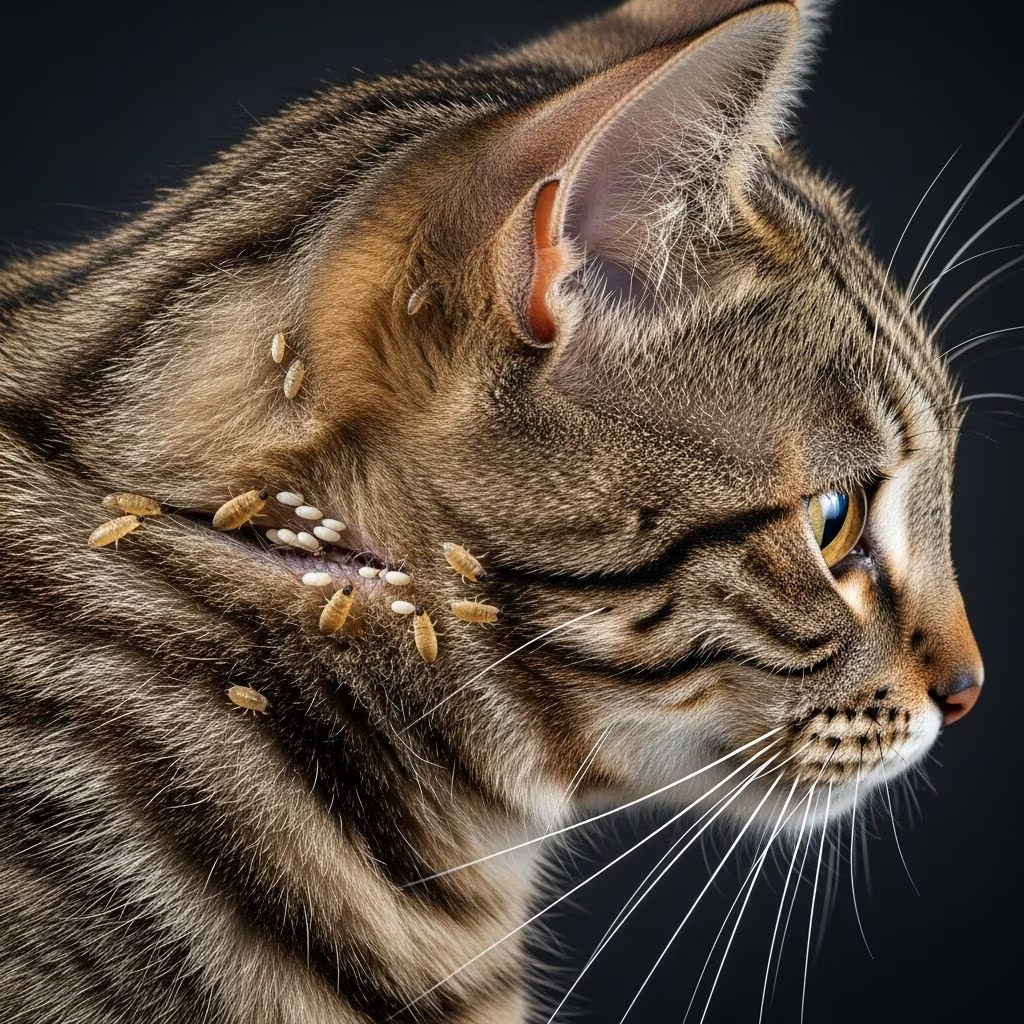
Parasitic infestations represent one of the most common health challenges facing cat owners. Among the various external parasites that can affect felines, two insects frequently cause confusion due to their similar size and appearance: lice and fleas. Despite sharing certain characteristics, these parasites differ significantly in their behavior, transmission methods, and treatment requirements. Understanding these distinctions is essential for cat owners seeking to protect their pets from discomfort and potential health complications.
Identifying the Parasite: Basic Characteristics
When examining a cat suspected of harboring parasites, the initial step involves careful observation to determine which pest is responsible for the infestation. Lice and fleas, while both small wingless insects that feed on blood, present distinct visual and behavioral characteristics that can help distinguish one from the other.
Physical Appearance and Size
The physical dimensions of these parasites vary considerably. Lice are typically smaller, measuring approximately 1 to 2 millimeters in length, whereas fleas are noticeably larger, ranging from 1.5 to 4 millimeters. This size difference can be significant when using a magnifying glass to examine your cat’s fur or skin.
Beyond size, the body shape and coloration provide additional clues. Lice appear gray or whitish in color and maintain a somewhat rounded oval body shape. Fleas, conversely, display a darker reddish-brown coloration and possess a flattened oval body structure that allows them to move more efficiently through fur. When examining your cat, fleas often appear as small dark specks that may jump or move quickly, while lice are less conspicuous and stationary.
Behavioral Patterns and Movement
The mobility differences between these parasites are substantial. Fleas possess remarkable jumping ability, capable of leaping considerable distances to transfer between hosts. This enhanced mobility makes fleas more efficient at spreading from one animal to another. Lice, lacking this jumping capacity, can only crawl from host to host, requiring direct contact or proximity for transmission.
Lice have evolved special claws on their legs that enable them to cling firmly to hair shafts, keeping them anchored in one location. This adaptation explains why lice infestations typically remain localized to specific areas of the body rather than dispersing widely across the skin.
Habitat Preferences and Living Patterns
Understanding where these parasites establish themselves on a cat’s body can aid in identification. Lice prefer areas with dense hair coverage and direct access to skin, making them common on older cats with longer coats. They thrive in colder months and become less prevalent during warmer seasons.
Fleas, by contrast, tend to concentrate in warm, protected areas of the body such as the armpits, ears, and the lower abdomen. They remain active year-round in homes with climate control but show increased activity during summer months outdoors. This distinction in habitat preference can help narrow down which parasite is affecting your cat.
Lifecycle and Reproduction: The Complete Picture
The reproductive cycles and lifespans of lice and fleas differ dramatically, with significant implications for treatment duration and environmental management.
Flea Development and Population Growth
Fleas exhibit an extraordinarily rapid reproductive cycle. Female fleas can begin laying eggs within one to two days of obtaining their first blood meal. A single female flea produces approximately 50 eggs daily, potentially generating 2,000 eggs during her lifetime. This explosive reproduction rate explains why flea infestations escalate so quickly.
Flea eggs are tiny, oval-shaped, and pearly white in appearance, often falling from the cat onto bedding, furniture, and carpeting. These eggs hatch within one to six days, releasing larvae that feed on organic debris in the environment. The entire lifecycle from egg to adult can complete in as little as two weeks under optimal conditions.
Lice Reproduction and Development Timeline
Lice reproduction proceeds at a considerably slower pace. Female lice cement their eggs, called nits, directly to hair shafts close to the skin surface. This attachment method makes nits extremely resistant to removal through regular bathing or shampooing. The maturation process from egg to adult takes approximately three to four weeks.
Unlike flea eggs that disperse into the environment, lice nits remain attached to individual hairs, requiring direct contact with an infested animal or contaminated materials for transmission. The adult lifespan of lice outside a host is brief—only one to two days—compared to fleas which can survive twelve to fourteen days without a host, and up to 350 days in favorable conditions.
Recognition and Symptom Management
Visual Indicators of Each Infestation Type
Detecting the presence of parasites requires knowing what to observe. For fleas, look for small dark specks moving through the fur or visible on the skin. These insects appear as tiny black dots, often leaving behind dark debris that resembles ground pepper—actually flea feces composed of digested blood. This distinctive black residue serves as a reliable diagnostic marker for flea presence.
Lice infestations present differently. The parasites themselves are challenging to spot due to their pale coloration and stationary nature. Instead, focus on identifying nits—tiny white dots firmly attached to individual hair shafts near the skin. These nits are more visible than the adult lice themselves and can be detected by running a fine-toothed comb through the affected areas.
Behavioral and Physical Changes in Affected Cats
Cats experiencing parasitic infestations exhibit recognizable behavioral changes and physical symptoms. The most obvious sign is increased scratching and grooming behavior. Cats may appear restless, frequently licking or chewing at affected areas.
Extended infestations lead to visible skin damage including hair loss, bald spots, and skin irritation. Some cats develop secondary bacterial infections from constant scratching and breaking the skin barrier. In severe cases, particularly with flea infestations, cats may experience lethargy and display pale gums, indicating potential anemia from blood loss. Fleas generally cause more pronounced discomfort than lice, with cats showing more severe behavioral distress.
Treatment Approaches and Veterinary Solutions
Managing Flea Infestations
Treating flea infestations requires prompt action due to their rapid reproduction cycle. Veterinarians offer multiple treatment modalities, each with specific advantages. Topical treatments applied directly to the skin between the shoulder blades represent one common approach. Oral medications provide an alternative for cats that resist topical applications. Flea collars containing active ingredients, flea powders, and flea sprays round out the available options.
Veterinarian-prescribed treatments consistently outperform over-the-counter alternatives in effectiveness and safety. Professional treatments typically eliminate adult fleas quickly while providing ongoing protection against new infestations. Many modern preventive medications also protect against other parasites including ticks and certain mites.
Beyond treating the cat, comprehensive flea management requires addressing the home environment. Washing all bedding, blankets, and soft furnishings in hot water kills flea eggs and larvae. Vacuuming carpeted areas regularly removes flea stages from the environment, and treating furniture where the cat rests is essential for complete elimination.
Eliminating Lice Infestations
Lice treatment differs fundamentally from flea management. Home remedies and over-the-counter products prove ineffective against lice. Professional veterinary care is mandatory for successful treatment. Veterinarians prescribe specialized topical preventative medications formulated to eliminate lice and prevent reinfestation.
The treatment protocol must account for the lice lifecycle. Because nits remain attached to hairs and resist chemical penetration, treatment typically requires application at specific intervals to target newly hatched parasites as eggs mature. Environmental management is also crucial—washing all soft furnishings in hot water eliminates any lice eggs dislodged during treatment.
The good news regarding lice is that their relative rarity in modern cats stems from the widespread adoption of monthly flea-and-tick preventative medications. These treatments simultaneously protect against multiple parasites, making lice infestations increasingly uncommon in well-cared-for cats.
Transmission and Infection Risk
How Parasites Spread Between Cats
Understanding transmission methods helps prevent future infestations. Lice transmission requires direct contact with infested animals or contaminated grooming equipment and bedding. Lice remain species-specific, meaning cat lice cannot infect dogs, humans, or other species. This specificity limits transmission risk in multi-pet households.
Fleas spread far more readily. Their jumping ability enables rapid transfer between cats and even to humans, though fleas prefer animal hosts. Cats can acquire fleas from wildlife, contaminated environments, or contact with infested animals. A single flea that reaches a cat can initiate a rapid population explosion.
Secondary Health Complications
Parasite infestations can trigger serious secondary health issues. Cats experiencing repeated flea bites may develop allergic reactions to flea saliva, causing severe dermatitis beyond the direct irritation of bites. This allergic response can persist even with low parasite numbers.
Additionally, fleas frequently carry tapeworms. When cats groom themselves and ingest infected fleas, they risk developing internal parasite infections. This dual-parasite situation complicates treatment and requires addressing both external and internal infestations.
Preventative Strategies and Long-Term Management
Preventing infestations proves far more effective than treating established infections. Monthly preventative medications prescribed by veterinarians provide year-round protection against multiple parasites. These medications work through various mechanisms—some kill parasites on contact, others prevent reproduction, and some repel parasites entirely.
Regular grooming helps identify early infestations before they become severe. Bathing cats monthly with flea-preventative products can reduce infestation risk, though this approach works best as a supplementary measure alongside professional preventatives. Maintaining clean bedding, regular vacuuming, and limiting outdoor exposure—particularly to areas frequented by wildlife—reduce environmental parasite exposure.
For multi-cat households, treating all cats simultaneously prevents reinfestation cycles. Even if only one cat shows clinical signs, others may harbor parasites without obvious symptoms.
Frequently Asked Questions
- Can humans catch lice or fleas from cats?
- Cat lice are species-specific and cannot infect humans. While fleas occasionally bite humans, they cannot reproduce on human hosts and do not establish permanent infestations.
- How quickly do flea populations grow?
- With reproduction beginning one to two days after feeding and each female producing 50 eggs daily, flea populations can explode exponentially within weeks, making rapid intervention essential.
- Are lice as uncomfortable for cats as fleas?
- Fleas generally cause more pronounced discomfort than lice. Flea bites are painful and trigger intense scratching, while lice cause itching and irritation that is typically less severe.
- Why are cat lice now uncommon?
- The widespread use of monthly flea-and-tick preventatives that also protect against lice has dramatically reduced lice incidence in domestic cats.
- Can over-the-counter treatments eliminate lice?
- No. Lice treatment requires prescription-strength topical preventatives available only through veterinarians. Over-the-counter products are ineffective against lice.
Conclusion and Recommendations
While cat lice and fleas share superficial similarities as small parasitic insects, they differ substantially in appearance, behavior, lifecycle, and treatment requirements. Accurate identification enables appropriate intervention—whether through rapid flea treatment to break the reproduction cycle or prescription lice medications to eliminate established infestations. The most effective approach remains prevention through regular veterinary-prescribed preventative medications that protect against multiple parasites simultaneously. By understanding these distinctions and maintaining consistent preventative care, cat owners can protect their feline companions from the discomfort and health risks associated with parasitic infestations.
References
- Cat Lice vs Fleas: Vet-Reviewed Key Differences — Catster. 2024. https://www.catster.com/cat-health-care/cat-lice-vs-fleas/
- Fleas, Ticks, Lice and Mites – Cat Parasites — Royal Canin US. 2024. https://www.royalcanin.com/us/cats/health-and-wellbeing/fleas-ticks-lice-mites
- Lice — Companion Animal Parasite Council. 2024. https://capcvet.org/guidelines/lice/
- Lice vs. Fleas: How to Tell Them Apart and Health Risks — Healthline. 2024. https://www.healthline.com/health/lice-vs-fleas
- Lice vs. Fleas: Pictures, Symptoms, Treatments & Prevention — MedicineNet. 2024. https://www.medicinenet.com/lice_vs_fleas/article.htm



