

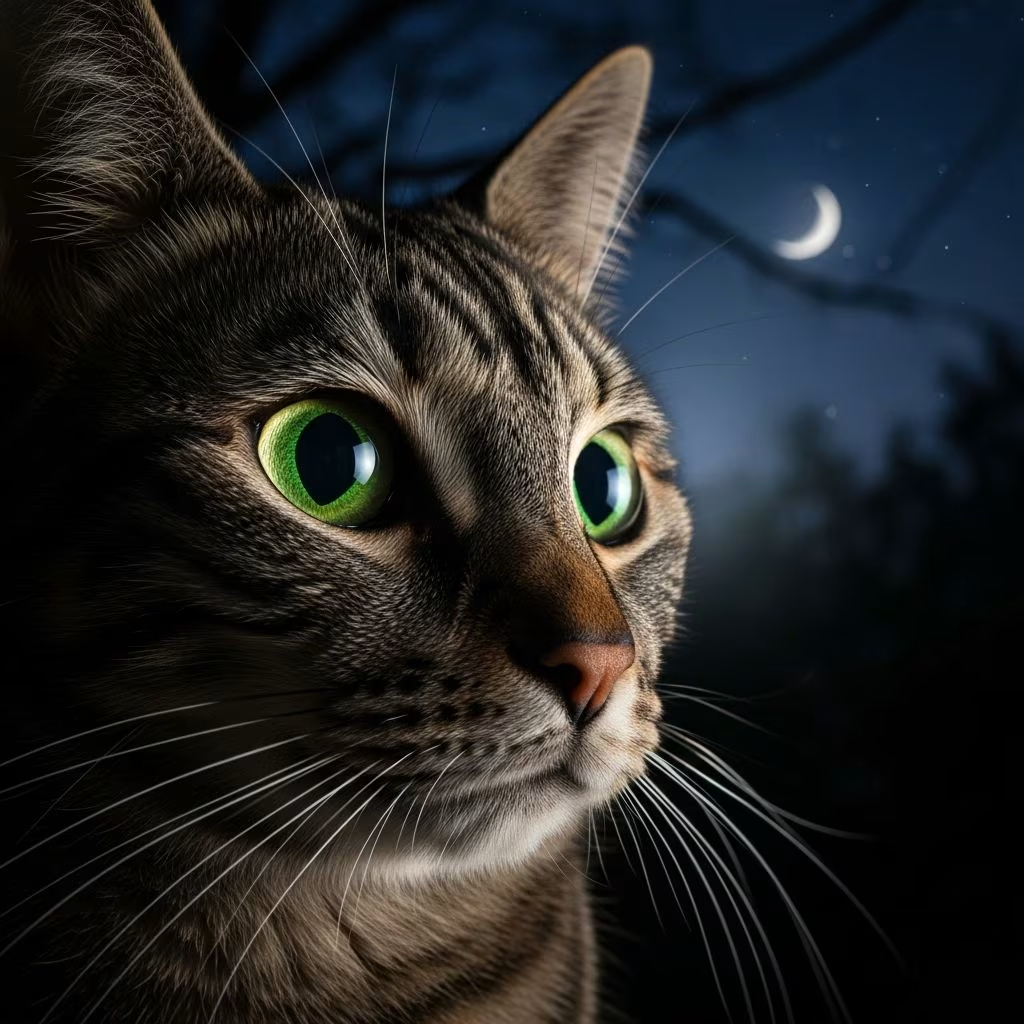
Cats possess extraordinary low-light vision capabilities due to unique anatomical features that allow them to navigate and hunt effectively in dim environments, though they cannot see in absolute darkness.
The Evolutionary Edge of Feline Eyesight
Cats are naturally crepuscular, meaning they are most active during twilight hours when light levels are low. This lifestyle shaped their visual system to excel in such conditions, providing a significant advantage over prey and competitors. Unlike humans, who rely heavily on bright daylight for clear vision, cats’ eyes are optimized to capture minimal light, making them adept nocturnal prowlers in homes and outdoors alike.
Their vision surpasses human capabilities by approximately six times in low light, enabling them to detect subtle movements that would escape our notice. This adaptation stems from millions of years of evolution as skilled hunters, where spotting rodents or birds at dawn or dusk was crucial for survival.
Key Components Powering Cat Low-Light Sight
Several specialized structures in the feline eye work synergistically to amplify available light and enhance perception in darkness.
- Abundant Rod Cells: Rods are photoreceptors sensitive to low light and motion. Cats have six to eight times more rods than humans, prioritizing dim-light detection over color discernment.
- Tapetum Lucidum Layer: This reflective membrane behind the retina acts as a mirror, redirecting unabsorbed light back through the photoreceptors for a second chance at detection. It boosts light efficiency by over 50% and causes the characteristic eyeshine.
- Expansive Pupils and Corneas: Vertical slit pupils dilate into near-perfect circles in low light, admitting maximum photons. Paired with large corneas, this design funnels more light into the eye than in humans or even dogs.
Why Feline Eyes Glow in Dim Light
The eerie glow from a cat’s eyes at night results from the tapetum lucidum reflecting incoming light, such as from a flashlight or car headlights. Light passes through the retina, hits the tapetum, and bounces back, creating the illumination we observe. This phenomenon not only enhances vision but also reveals the cat’s position to observers.
Humans lack this layer, so unused light simply exits the eye. In cats, this reflection increases photon absorption, vital for vision in light levels one-sixth of what humans require. The glow is most pronounced in complete darkness with a direct light source, underscoring its role in low-light amplification.
Visual World Through Cat Eyes at Night
In dim conditions, cats perceive a world of high-contrast grays and blues with sharp motion outlines but reduced color vibrancy and some blurriness compared to daylight. Their reliance on rods means excellent shape and movement recognition, ideal for hunting.
| Aspect | Human Vision (Low Light) | Cat Vision (Low Light) |
|---|---|---|
| Light Sensitivity | Requires brighter conditions | 6x better; sees in 1/6th the light |
| Color Perception | Full spectrum fades | Muted blues/grays; limited cones |
| Motion Detection | Moderate | Superior for prey tracking |
| Detail Sharpness | Blurry | Clearer shapes, less fine detail |
This table illustrates the stark differences, highlighting why cats confidently navigate dark rooms while humans fumble for lights.
Comparing Cat and Human Visual Systems
Human eyes favor cones for color and detail in bright light, with fewer rods for night. Cats invert this: fewer cones limit color range to blues and yellows, but rods dominate for twilight prowess. Pupil shape further differentiates—human round pupils adjust modestly (15-fold change), while cat slits enable 135-300-fold dilation for extreme adaptability.
Cats also outperform dogs in night vision due to proportionally larger eyes and more efficient tapetum, despite dogs sharing similar traits. These adaptations make cats unparalleled in their ecological niche.
Myths and Realities of Feline Darkness Vision
A common misconception is that cats see perfectly in pitch black. Reality: they need some ambient light, like moonlight or streetlamps, to function. Total darkness renders their vision ineffective, relying then on whiskers, hearing, and smell.
- Myth: Cats have infrared or heat vision. Fact: Purely light-based; no thermal detection.
- Myth: Glowing eyes mean full night sight. Fact: Glow indicates light reflection for enhancement, not independent vision.
- Myth: Cats see colors like humans. Fact: Dichromatic vision; reds appear gray.
Practical Implications for Cat Owners
Understanding cat night vision helps create supportive home environments. Provide night lights or leave curtains open for moonlight to aid navigation. Avoid sudden bright flashes, which overwhelm their sensitive retinas. Toys mimicking prey movement engage their motion detection instincts effectively.
In multi-pet homes, cats’ edge over dogs in dim areas can prevent resource conflicts at night. Regular vet checks ensure eye health, as conditions like cataracts impair this superpower.
Scientific Insights into Feline Pupil Dynamics
Slit pupils not only control light intake but sharpen depth perception for pouncing. In daylight, they narrow to slits, protecting against glare and enhancing vertical acuity for jumping. Research shows slit-pupiled animals, like cats, are typically ambush predators close to the ground, aligning with feline hunting styles.
Frequently Asked Questions
Can cats see in complete darkness?
No, cats require minimal light; their eyes amplify it but cannot create it from nothing.
Why do cat eyes glow green or yellow?
The tapetum lucidum’s pigments reflect specific wavelengths, varying by individual cat.
Do all cats have equal night vision?
Most do, but breeds with lighter fur may have slightly less efficient tapetum; health issues can affect it.
How much better is cat vision than human at night?
About six times better in low light, per studies on photoreceptor density.
Can kittens see in the dark from birth?
Newborns have poor vision overall; night vision develops over weeks as eyes mature.
Enhancing Your Cat’s Nighttime Experience
Position food bowls and litter boxes in low-light accessible spots. Interactive lasers or glowing toys leverage their skills. Observe pupil dilation: wide in dark means they’re straining for light; provide subtle illumination.
Cat vision research inspires tech, like low-light cameras mimicking tapetum and slit pupils for better night photography. This cross-pollination highlights the ingenuity of feline design.
References
- How Do Cats See In The Dark? The Science Behind Your Cat’s Night Vision — Sams Cats and Dogs. 2023. https://samscatsanddogs.com/everett/blog/how-do-cats-see-in-the-dark-the-science-behind-your-cats-night-vision
- Why do cats’ eyes glow in the dark? — Popular Science. 2023-10-31. https://www.popsci.com/environment/why-cat-eyes-glow/
- Can Cats See in the Dark? — The International Cat Association. 2024. https://tica.org/blogs/can-cats-see-in-the-dark/
- Can Cats See in the Dark? — Chewy. 2024. https://www.chewy.com/education/cat/general/can-cats-see-in-the-dark
- Cat Eyes: A Fascinating Look at Feline Vision — Fulton County Vet Clinic. 2023. https://fultoncountyvetclinic.com/blog/cat-eyes/
- Can Cats See in the Dark? Cat Night Vision Facts — Purina South Africa. 2024. https://www.purina.co.za/care-and-advice/cat/behaviour-and-training/cat-see-in-dark
- The Spooky Science of Glowing Eyes in Cats — Panthera. 2023. https://panthera.org/blog-post/spooky-science-glowing-eyes-cats



