

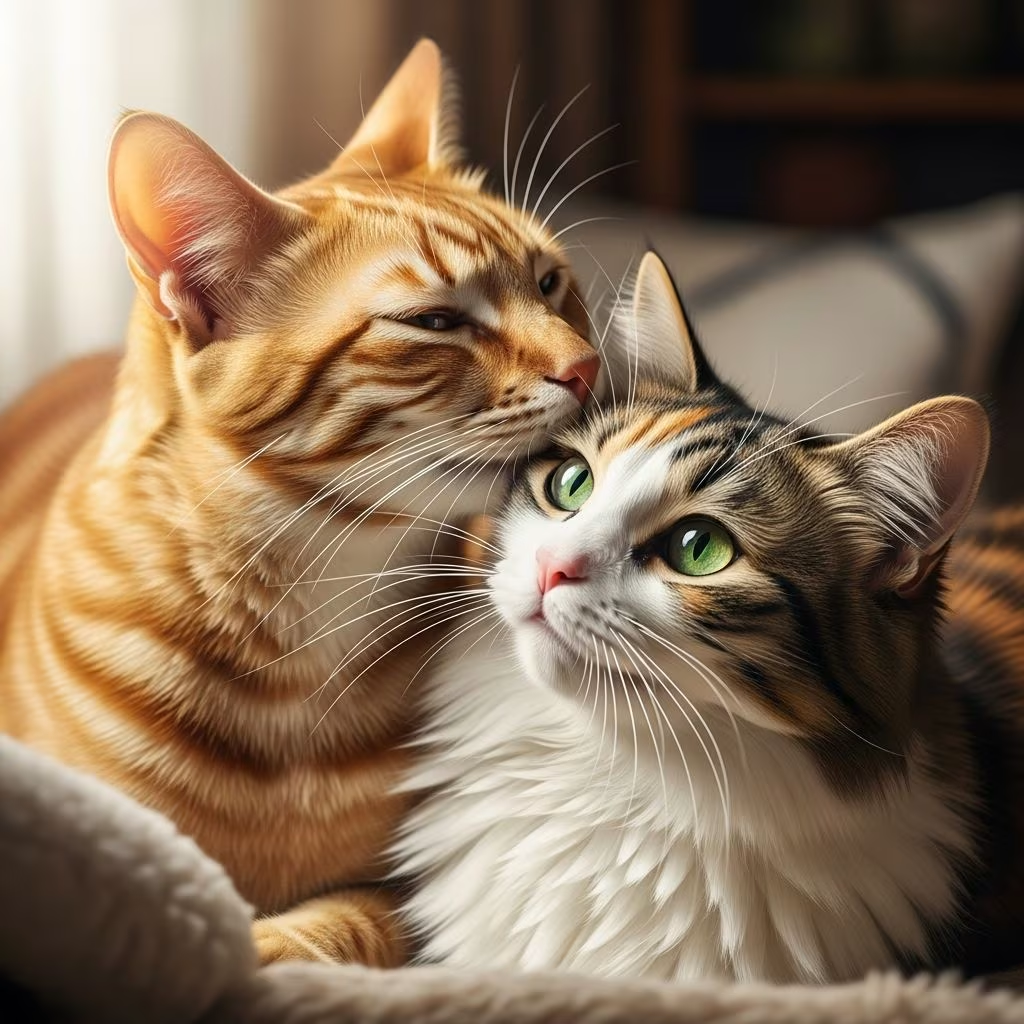
Feline reproduction is a fascinating blend of instinct, biology, and seasonal triggers that drive cats to propagate their species with remarkable efficiency. Domestic cats, whether pets or ferals, exhibit complex mating behaviors shaped by evolution to ensure survival in varied environments. Understanding these patterns helps owners manage their cats’ health, prevent unwanted litters, and reduce behavioral issues.
The Biological Clock: When Cats Reach Sexual Maturity
Cats typically become sexually mature between four to six months of age, though this can vary by breed and environment. Females, known as queens, enter their first estrous cycle around this time, marking the onset of reproductive capability. Males, or toms, also mature early, developing strong territorial instincts tied to mating urges.
Indoor cats under artificial lighting may cycle year-round, but natural daylight influences most, peaking in spring and summer. This seasonality aligns with longer days, boosting hormone production like estrogen in queens and testosterone in toms.
- Age factor: Puberty hits as early as 4 months in some breeds.
- Environmental trigger: 12+ hours of daylight accelerates cycles.
- Health note: Early maturity increases risks if not managed.
Signs Your Cat is in Heat: Decoding Feline Signals
Queens in estrus display unmistakable behaviors to attract mates. They vocalize loudly—a persistent yowling called ‘calling’—that can echo for days, signaling availability far and wide. Physical changes include vulvar swelling and clear discharge, preparing the reproductive tract.
Behavioral shifts are dramatic: increased affection, rolling on floors, rubbing against furniture or legs, and the hallmark lordosis posture—arching the back, lowering the chest, and deflecting the tail to expose the genitals. These actions are hardwired invitations for mounting.
| Behavior | Description | Purpose |
|---|---|---|
| Loud calling | Persistent meows and yowls | Attract distant toms |
| Rolling & rubbing | Writhing on ground, leg friction | Release pheromones, show receptivity |
| Lordosis | Raised hindquarters, tail aside | Direct mating position |
| Affection surge | Extra cuddling with owners | Mimic mating readiness |
Males respond with urine spraying—rich in pheromones—to mark territory, often traveling miles to reach a calling queen. Restlessness and escape attempts are common in intact toms.
The Mating Act: Swift, Intense, and Functional
Once a receptive queen meets a tom, courtship is brief. The male bites her neck scruff, mounts, and achieves intromission in seconds. Ejaculation follows rapidly, triggered by the tom’s uniquely barbed penis—covered in 150+ tiny spines.
These barbs scrape the vaginal walls, inducing ovulation in this induced ovulator species. Queens rarely ovulate spontaneously; stimulation is key. Post-mating, the queen emits a sharp ‘coital cry,’ flees, and may swat the tom while rolling and licking her genitals. This violent detachment looks painful—and likely is for the female—yet hormones compel repetition.
- Duration: Each copulation lasts 10-30 seconds.
- Frequency: 3-40 times daily over 1-4 days for ovulation.
- Pain factor: Barbs cause screams but ensure fertility.
Toms may mate multiple times, but queens accept several partners per cycle, leading to superfecundation—litters with multiple fathers.
Estrous Cycles: The Relentless Rhythm of Reproduction
Cats are seasonally polyestrous, cycling every 14-21 days during breeding season unless pregnant. Each heat lasts 3-10 days; without mating, it recurs quickly. Outcomes include:
- Pregnancy: Gestation ~63 days, return to heat post-weaning.
- Pseudopregnancy: Mating without conception causes false pregnancy signs; heat resumes in 4-6 weeks.
- No mating: Cycle repeats in 1-2 weeks.
Free-roaming queens can produce 2-3 litters yearly, each with 3-6 kittens, exploding populations rapidly. One unspayed female’s descendants can number thousands in years.
Genetic Diversity: Multiple Fathers in One Litter
Superfecundation allows a single litter to have kittens from different sires—up to all varying in paternity. In urban ferals, over 70% of litters show multiple fathers; rural rates are lower (~22%). Queens may selectively avoid close kin, promoting genetic health.
This strategy maximizes viable offspring, as sperm competition ensures robust genes prevail.
Health Risks of Intact Cats: Beyond Overpopulation
Uncontrolled breeding invites dangers. Queens face mammary tumors, pyometra (uterine infection), and exhaustion from constant cycles. Toms risk prostate issues, injuries from fights, and STDs like feline leukemia.
Behavioral woes include spraying, aggression, and roaming, straining owner-cat bonds. Feral overpopulation burdens shelters, with kittens overwhelming capacity by spring.
Spaying and Neutering: The Responsible Choice
Sterilization before first heat (ideally 6-8 months) prevents reproduction, slashes cancer risks, and curbs behaviors. Spayed queens live 1-2 years longer on average; neutered toms are calmer, healthier.
Procedure costs are modest versus lifetime care or shelter impacts. Early intervention yields best outcomes.
| Procedure | Benefits | Timing |
|---|---|---|
| Spay (females) | No heats, no cancers, calmer | Before 6 months |
| Neuter (males) | No spraying, less roaming, healthier prostate | Before 6 months |
FAQs on Cat Mating Behavior
Q: Do cats enjoy mating?
A: Males are driven by hormones, but females likely find it painful due to barbs, often screaming and fleeing.
Q: How often do female cats go into heat?
A: Every 2-3 weeks in season, lasting 3-7 days, until pregnant.
Q: Can a cat litter have different fathers?
A: Yes, via superfecundation—common in multi-male encounters.
Q: Why do male cats spray urine?
A: To mark territory with mating pheromones during breeding season.
Q: Is neutering expensive?
A: Costs vary but prevent far higher expenses from litters or health issues.
Owner Tips for Managing Mating Season
- Provide extra play and attention to distract heat behaviors.
- Keep doors/windows secure to prevent escapes.
- Consult vets on pheromone diffusers for calming.
- Schedule sterilization promptly.
- Monitor ferals and support TNR (trap-neuter-release) programs.
Grasping cat mating demystifies the chaos of spring yowls and spraying. Proactive ownership through education and sterilization fosters healthier, happier felines and communities.
References
- Do Cats Enjoy Sex & Mating? — cats.com. 2023. https://cats.com/do-cats-enjoy-mating
- Scientific Understanding and Proper Handling of Cat Mating Behavior — oreataai.com. 2024. https://www.oreateai.com/blog/scientific-understanding-and-proper-handling-of-cat-mating-behavior/991f25252de13e555dbb8dbf1296bb59
- How Cats Make Babies? The Hidden Science of Cat Mating — YouTube (Vets & Pets). 2023-02-15. https://www.youtube.com/watch?v=0GmryIXvjlE
- Female Reproduction — PMC (NCBI). 2020-04-01. https://pmc.ncbi.nlm.nih.gov/articles/PMC7158189/
- Spring Is Here – And It’s Mating Time for Cats — Four Paws USA. 2023. https://www.fourpawsusa.org/our-stories/publications-guides/spring-is-here-and-its-mating-time-for-cats
- Normal feline reproduction: The queen — SAGE Journals. 2022. https://journals.sagepub.com/doi/10.1177/1098612X221079706



