

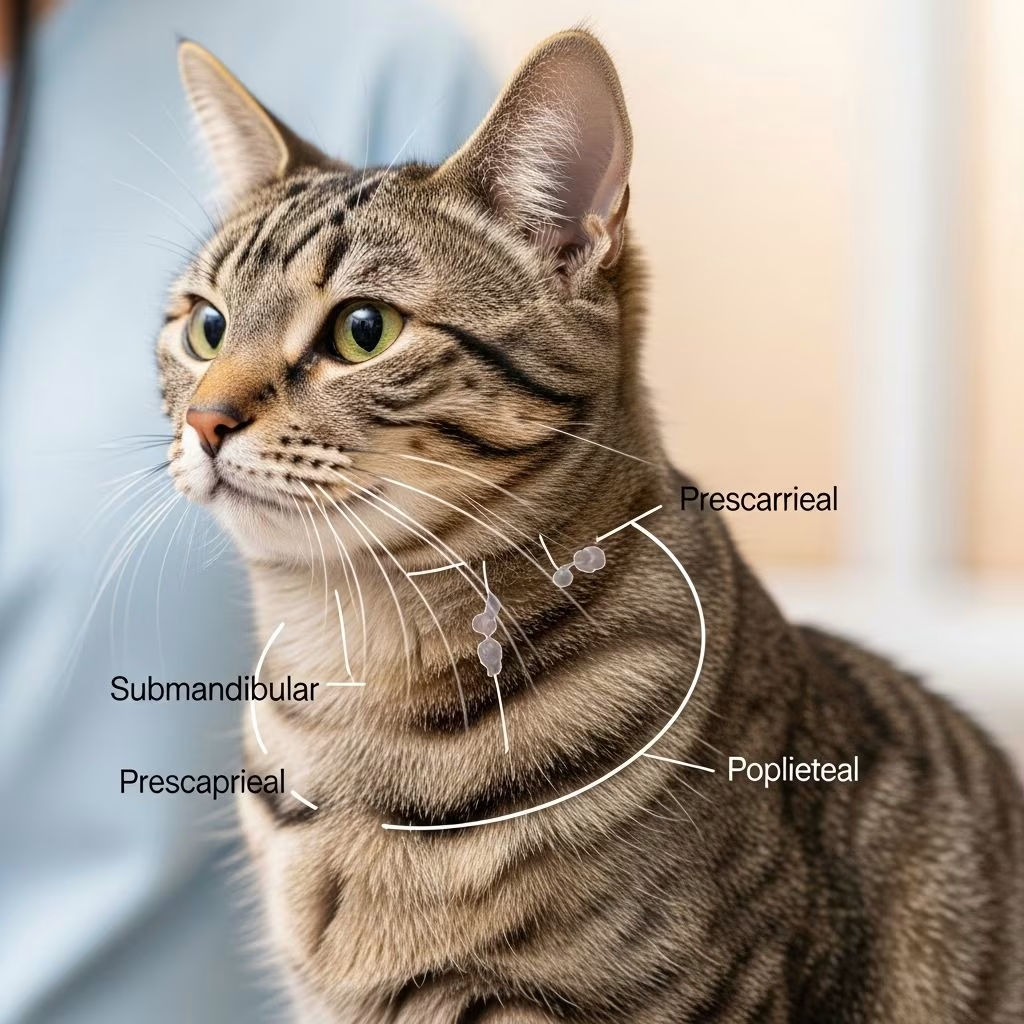
The lymphatic system in cats serves as a critical network for immune defense and fluid balance, with lymph nodes acting as key filtering stations throughout the body. These small structures help protect against infections and maintain overall health by processing lymph fluid loaded with immune cells.
Understanding the Feline Lymphatic Network
Cats possess a sophisticated lymphatic system that parallels the circulatory system but focuses on clear fluid called lymph. This network includes vessels, nodes, and organs like the spleen and thymus, all working to transport lymph, absorb nutrients, and combat pathogens. Lymph nodes, often bean-shaped and ranging from a few millimeters to over a centimeter in healthy states, cluster in strategic body regions to monitor lymph flow efficiently.
Lymph originates from interstitial fluid escaping blood capillaries, collecting waste, proteins, and fats before entering lymphatic capillaries. These merge into larger ducts, eventually draining into major veins near the heart. Without this system, tissues would swell from fluid buildup, and immune responses would falter.
Key Components Beyond Lymph Nodes
- Bone Marrow: Produces lymphocytes and other immune cells within its spongy cavities, supplying the lymphatic system with fresh defenses.
- Spleen: The largest lymphatic organ, it filters blood, stores blood cells, and initiates responses to blood-borne threats.
- Thymus: Trains T-lymphocytes for cell-mediated immunity, crucial in young kittens.
- Gut-Associated Lymphoid Tissue (GALT): Monitors intestinal contents for pathogens entering via digestion.
Strategic Locations of Lymph Nodes in Cats
Lymph nodes are distributed to cover drainage from specific body areas, with peripheral ones accessible for routine checks and deeper ones requiring imaging. Veterinarians prioritize palpable sites during exams.
| Lymph Node Group | Location | Drains Primarily |
|---|---|---|
| Submandibular | Under the jaw | Head and oral cavity |
| Cervical | Along the neck near trachea | Neck and throat |
| Prescapular | Front of shoulder | Forelimbs and chest wall |
| Axillary | Armpit area | Upper forelimbs and thorax |
| Inguinal | Groin, inner rear leg base | Hindlimbs and abdomen |
| Popliteal | Behind knees | Lower hindlimbs |
Deeper nodes, such as retropharyngeal (behind throat), mediastinal (chest), and mesenteric (abdomen), handle internal drainage and often evade manual detection.
Primary Functions in Feline Health
Lymph nodes filter lymph, trapping debris, bacteria, viruses, and abnormal cells via resident macrophages and lymphocytes. They proliferate immune cells during threats, producing antibodies and coordinating attacks. Additionally, the system returns excess tissue fluid to circulation, preventing edema, and absorbs dietary fats in the intestines.
In action, lymph enters a node through afferent vessels, passes through sinuses packed with immune cells, and exits via efferent vessels if cleared. Swelling occurs when nodes activate, signaling activity rather than always disease.
Recognizing Abnormal Lymph Node Changes
Healthy nodes feel firm, smooth, and small—typically under 1 cm. Enlargement, termed lymphadenomegaly, arises from reactive hyperplasia (infection/inflammation), neoplasia (cancer like lymphoma), or immune disorders. Reactive nodes are often symmetric and soft; neoplastic ones may be firm, asymmetric, or fixed.
- Infections: Bacterial (abscesses), viral (FeLV, FIV), fungal—cause rapid, painful swelling.
- Cancer: Lymphoma common in cats, leading to generalized enlargement.
- Other: Allergies, autoimmune diseases provoke milder reactions.
Owners might notice lumps under jaw, in armpits, or groin, alongside lethargy, fever, appetite loss, or limb swelling (lymphedema).
Diagnostic Approaches for Lymph Node Evaluation
Vets start with physical palpation of peripheral nodes. Advanced tools enhance accuracy:
- Fine-Needle Aspiration (FNA): Extracts cells for cytology, distinguishing inflammation from cancer non-invasively.
- Ultrasound: Reveals size, shape, echogenicity; nodes appear hypoechoic with central hilus.
- CT Scans: Superior for deep nodes, showing length, enhancement patterns; isoattenuating to muscle.
- Biopsy: Gold standard for architecture analysis in ambiguous cases.
Studies confirm CT identifies nodes like medial retropharyngeal in 100% of cases, outperforming ultrasound for thoracic sites.
Treatment Strategies for Lymph Node Disorders
Management targets underlying causes:
| Condition | Treatments |
|---|---|
| Reactive/Infectious | Antibiotics, antifungals, drainage; resolves swelling post-treatment. |
| Lymphoma | Chemotherapy (e.g., CHOP protocol), steroids; remission in 60-70% cases. |
| Lymphedema | Massage, compression, address blockages surgically if needed. |
Prognosis varies; early intervention boosts outcomes. Regular FeLV/FIV testing aids prevention.
Preventive Monitoring for Cat Owners
Monthly home checks of palpable nodes promote early detection. Note changes in size, texture, or number, especially with illness signs. Annual vet exams include node palpation; seniors need biannual checks. Vaccinations and parasite control reduce infection risks.
FAQs on Cat Lymph Nodes
Are swollen lymph nodes always cancer in cats?
No, most often due to infections; cytology differentiates.
Can I feel my cat’s lymph nodes at home?
Yes, gently palpate submandibular, axillary, inguinal sites; consult vet for concerns.
What if one lymph node is enlarged but others normal?
Indicates localized issue like abscess; still warrants vet evaluation.
How does FeLV affect lymph nodes?
Causes chronic enlargement, immunosuppression, raising lymphoma risk.
Is surgery common for lymph node issues?
Rarely; reserved for biopsies or localized tumors like lymphadenectomy.
References
- Structure and Function of the Lymphatic System in Cats — PetPlace.com. 2023-05-15. https://www.petplace.com/article/cats/pet-health/structure-and-function-of-the-lymphatic-system-in-cats
- The head, neck, thorax, and forelimb lymph nodes in adult cats: Dimensions and imaging features — PMC (PubMed Central). 2021-07-01. https://pmc.ncbi.nlm.nih.gov/articles/PMC8273603/
- The Anatomy and Function of Your Pet’s Lymph Nodes — FirstVet. 2024-02-20. https://firstvet.com/us/articles/the-anatomy-and-function-of-your-pets-lymph-nodes



