

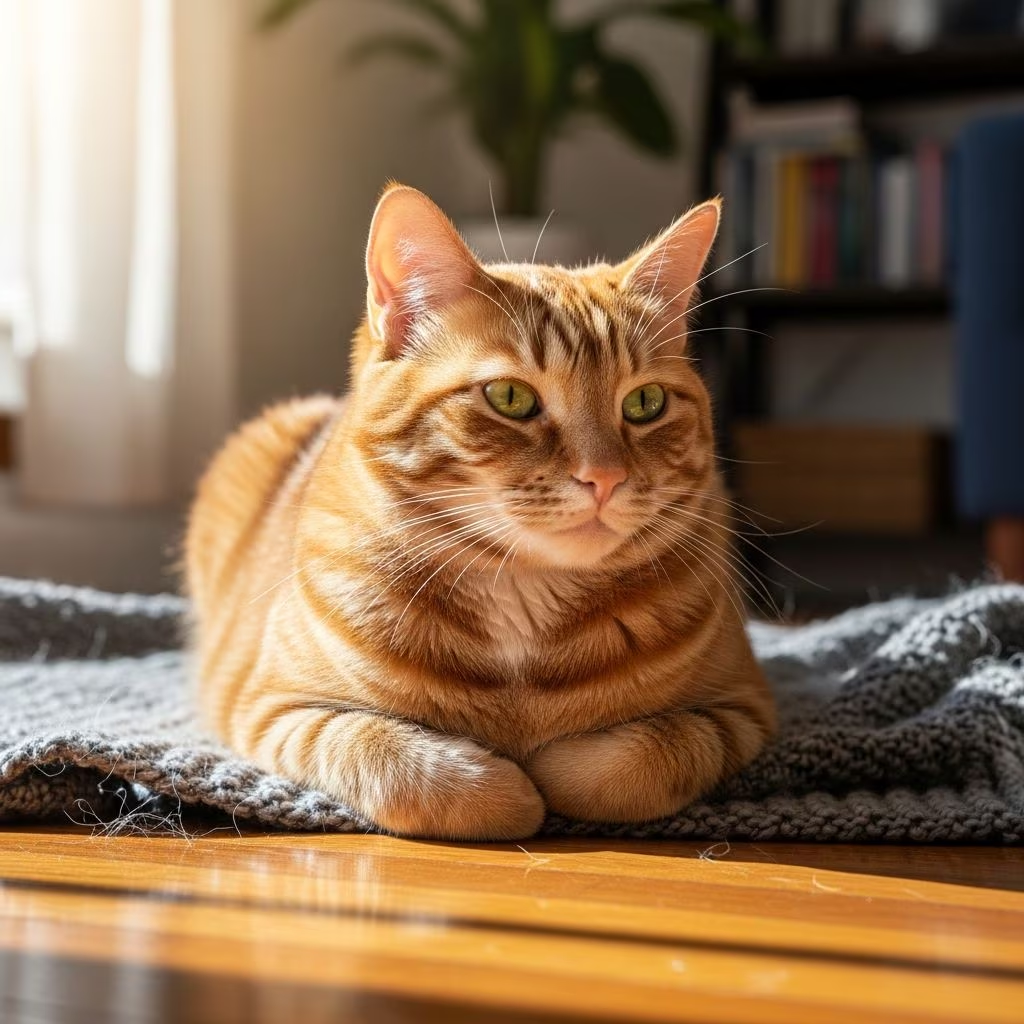
The cat loaf position, where felines tuck their paws beneath their body resembling a compact bread loaf, is one of the most endearing sights for pet owners. This posture reveals much about a cat’s emotional state, physical comfort, and instincts rooted in their wild ancestry. Far from random, loafing serves practical purposes like conserving heat, signaling trust, or preparing for quick action. Understanding these nuances helps owners interpret their cat’s needs and well-being more effectively.
The Origins and Instincts Behind the Cat Loaf
Cats have evolved as both predators and prey, shaping behaviors that balance rest with readiness. In the wild, ancestors like the African wildcat rested in compact forms to minimize exposure while staying poised to flee or hunt. Domestic cats retain this trait, loafing to shield vulnerable areas such as the belly, which houses vital organs.
This position reduces the body’s surface area, aiding thermoregulation by trapping warmth—especially useful for cats with less fur on paws and legs, which cool quickly. Experts note that loafing also allows rapid deployment of limbs, unlike fully prone positions that hinder quick escapes.
Common Variations of the Cat Loaf Position
Not all loaves are identical; subtle differences reflect context or mood. Recognizing these helps discern relaxation from caution.
- Classic Loaf: All paws tucked under, body rounded like bread. Indicates peak relaxation and security.
- Sphynx Loaf: Front paws extended forward, back paws tucked. Mimics the statue’s poised alertness, common when observing surroundings.
- Partial Loaf: Only back paws hidden, front paws out. A transitional rest, blending comfort with mild vigilance.
- Meatloaf or Face Loaf: Head lowered to the ground, paws tucked. Often linked to conserving energy or subtle discomfort.
- Attack or Spring Loaf: Paws ‘loaded’ under body, tail raised. Prepares for pounce, seen near toys or windows.
- Group Loaf: Multiple cats loafing together. Rare but signifies strong social bonds in multi-cat homes.
These variations highlight cats’ adaptability, with each form optimizing for the moment’s demands.
Primary Reasons Cats Adopt the Loaf Posture
Loafing stems from intertwined physical, emotional, and environmental factors. Here’s a breakdown:
| Reason | Explanation | Contextual Signs |
|---|---|---|
| Relaxation & Contentment | Cats feel safe enough to expose less of their body, trusting their environment. | Purring, slow blinks, relaxed ears. |
| Thermoregulation | Tucks extremities to retain heat, as paws lose warmth fastest. | Cooler rooms, winter months. |
| Protection/Threat Response | Shields belly from perceived dangers while staying launch-ready. | Vet visits, new pets, loud noises. |
| Joint Comfort | Eases pressure on aging joints or sore muscles during rest. | Senior cats, post-play. |
Veterinarians like Dr. Bonnie Beaver emphasize that the classic loaf signals comfort akin to humans reclining, while defensive loaves appear in stressful settings.
When the Loaf Might Indicate Health Issues
While usually benign, persistent or altered loafing can flag problems. Monitor for:
- Head-down meatloaf with extended front paws: Linked to kidney issues or abdominal pain.
- Sudden increase in loafing paired with lethargy, appetite loss, or hiding: Possible illness or injury.
- Loafing with hunched back, rapid breathing, or vocalizing: Signs of pain, arthritis, or urinary problems.
Dr. Sarah J. Wooten notes cats loaf at vets to protect organs under stress, but home changes warrant a vet check. Kidney disease, for instance, prompts protective postures to guard distressed areas. If loafing replaces normal activity, consult a professional promptly.
How Environment Influences Loafing Habits
Your home setup impacts loaf frequency. Cats loaf more on soft surfaces like beds or heated mats, which enhance comfort. Place resting spots in quiet, elevated areas to encourage relaxed loaves, fostering trust.
For warmth-loving loafers, provide micro-fleece blankets or window perches with sun exposure. Multi-cat households see group loaves in shared safe zones, strengthening bonds. Avoid forcing interactions during loafing, as it signals a need for undisturbed rest.
Age and Breed Differences in Loafing
Loafing transcends demographics but varies by life stage and genetics.
- Kittens: Practice compact postures for warmth and security while exploring.
- Adults: Peak loafing during prime relaxation years.
- Seniors: Favor loaves for joint relief and heat retention amid slower metabolism.
- Breeds: Sphynx cats loaf creatively due to hairlessness, while fluffy Persians tuck deeply for efficiency.
This universality underscores loafing’s biological roots, observable across all felines.
Encouraging Healthy Loafing in Your Cat
Promote positive loafing with these tips:
- Offer varied textures: Plush beds, cardboard scratchers, and heated pads.
- Maintain stable temperatures: 68-77°F ideal for felines.
- Reduce stressors: Use pheromone diffusers in anxious areas.
- Regular vet checkups: Catch posture shifts early.
- Enrich environment: Toys and perches balance rest with activity.
Observe patterns—happy cats loaf diversely without other symptoms.
Frequently Asked Questions About Cat Loafing
Is cat loafing always a good sign?
Mostly yes, indicating comfort, but watch for illness cues like lethargy.
Why does my cat loaf with paws out?
Sphynx or partial loaf shows semi-alert relaxation.
Do all cats loaf?
Yes, it’s instinctive across ages and breeds.
Should I worry if my cat loaves a lot?
Not if eating and playing normally; otherwise, vet visit.
Can I train my cat to loaf?
No need—it’s natural. Create cozy spots to invite it.
Expert Insights on Feline Posture
Veterinary behaviorists confirm loafing blends instinct with emotion. Dr. Beaver likens it to human lounging, while others highlight its defensive utility. Studies on feline thermoregulation support heat-conservation theories. Owners gain deeper bonds by respecting these signals.
References
- Why Do Cats Loaf? Is It Normal? — Chewy. 2023. https://www.chewy.com/education/cat/training-and-behavior/why-do-cats-loaf
- Why Do Cats Loaf? — PetMD. 2024. https://www.petmd.com/cat/behavior/why-do-cats-loaf
- Cat Loaf Pose: What is it & Why Do Cats Loaf? — Purina US. 2024. https://www.purina.com/articles/cat/behavior/understanding-cats/why-do-cats-loaf
- What Is a Cat Loaf and Why Do Cats Do It? — Under the Weather. 2023. https://www.undertheweatherpet.com/blogs/under-the-weather/what-is-a-cat-loaf-and-why-do-cats-do-it
- The Cat Loaf: What Is It and Why Do Cats Do It? — Hill’s Pet. 2024. https://www.hillspet.com/cat-care/behavior-appearance/what-is-a-cat-loaf



